

Best Commute Routes From Charles County to D.C. and Northern Virginia
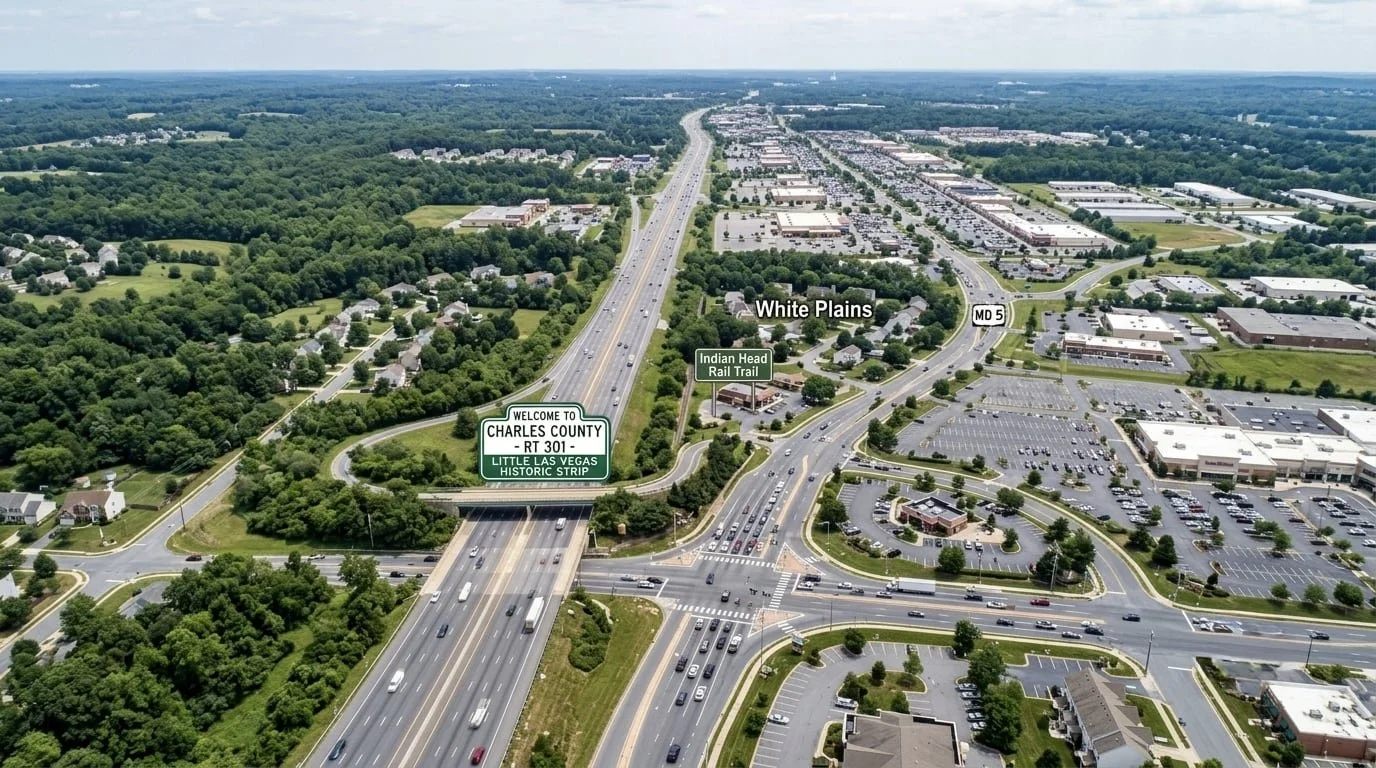
If you’ve ever said, “I like the space and prices in Charles County, but what’s this commute really going to feel like?”, you’re asking the exact right question. It’s easy to fall in love with a house, then realize later that your new “amenity” is an extra hour a day in the car.
Most of my buyers ask some version of: “What are the main routes from Charles County into D.C. and Northern Virginia, and how do I pick a neighborhood that doesn’t make my life miserable Monday through Friday?” You’re trying to balance commute, budget, and lifestyle—in Southern Maryland that always means looking at the map as much as the kitchen.
I’m Amanda Holmes, your Southern Maryland real estate resource, working across Charles, St. Mary’s, and Calvert Counties. Let’s walk through the core commute routes from Charles County to D.C. and Northern Virginia, and how they affect where you might choose to live.
What to Expect From a Charles County Commute
First, some big‑picture expectations. From much of Charles County, a typical D.C.‑bound commute:
- Often falls somewhere in the 45–90+ minute range one way, depending on where you start, where you’re going, and when you leave.
- Moves faster outside peak rush hours and on some Fridays or summer days.
- Varies significantly if you’re driving into downtown D.C. versus stopping at a Metro station or working in a Beltway‑adjacent office.
That range can sound wide, but once we look at your specific starting point and destination, it becomes much more concrete.
MD‑5 (Branch Avenue): The Spine for Many Waldorf and La Plata Commuters
If you’re in or near Waldorf or La Plata, MD‑5 is often the main north‑bound route. From there, commuters typically:
- Drive north through southern Prince George’s County along Branch Avenue.
- Either continue by car into D.C. or park at a Green Line Metro station and ride in.
- Use side routes and timing strategies to avoid the most congested stretches when possible.
When we’re looking at homes in central or northern Charles County, we’ll always consider how easily they connect to MD‑5 and how much “pre‑commute” local driving you’ll do before you even hit the main corridor.
MD‑210 (Indian Head Highway): Key Route From Bryans Road and Indian Head
If you’re living on the Potomac‑side of Charles County—Bryans Road or Indian Head—MD‑210 is usually your lifeline north. Residents in these areas:
- Drive directly up MD‑210 through southern Prince George’s County toward D.C.
- Experience a relatively straightforward route, with congestion building near major intersections and as they approach the city.
- Sometimes pair MD‑210 with park‑and‑ride or Metro access to avoid the last leg of city driving.
Choosing Bryans Road or Indian Head often makes the most sense if you know MD‑210 is your primary route and you want to keep that starting point as close as possible.
US‑301 and Beltway Connections: For Beltway and Virginia‑Focused Jobs
US‑301 is another key player, especially if:
- Your job is off the Beltway rather than in the D.C. core.
- You’re heading toward I‑95/I‑495 to then loop into Northern Virginia.
From parts of Charles County, commuters:
- Take US‑301 north to connect with major interstate routes.
- Use this path to reach offices around the Beltway or to position themselves for Potomac River crossings toward Virginia.
If your office is in Northern Virginia or along the Beltway, we’ll pay particular attention to how your neighborhood links into US‑301 and related connectors.
Drive‑to‑Transit and Commuter Bus Strategies
Because rail doesn’t run deeply into Charles County, many Southern Maryland commuters use a drive‑to‑transit pattern. Common strategies include:
- Driving to southern Prince George’s County Metro stations (often along the Green Line), then riding in to D.C.
- Using park‑and‑ride lots in or near Charles County to catch commuter buses operating toward downtown D.C.
- Combining bus or rail with biking or short last‑mile connections once in the city.
If you hate the idea of white‑knuckling through downtown traffic every day, we’ll look at neighborhoods that pair well with these transit options.
How Neighborhood Choice in Charles County Changes the Commute
Your address in Charles County is just as important as your route:
- Waldorf/St. Charles: Strong access to MD‑5 and US‑301, popular with D.C. and Andrews commuters.
- La Plata: Slightly farther south but still well‑positioned for MD‑5, good middle ground if you want a town feel.
If you're specifically weighing La Plata as your home base, Living in La Plata, MD covers the town itself in more depth, from neighborhoods to local restaurants and parks.
- Bryans Road/Indian Head: Best positioned for MD‑210 commutes straight toward D.C.
- More rural southern or western areas: Quieter living, but longer local drives before you even hit major commuter roads.
This is why, when I’m showing homes, we’re always talking about your job location and schedule—not just whether you like the kitchen.
Strategies to Make the Commute More Livable
People who are happiest with their Charles County commute usually don’t leave it to chance. They:
- Adjust their hours to avoid the peak of rush hour when possible.
- Use hybrid schedules so they’re not on the road five days a week.
- Leverage park‑and‑ride and commuter buses to swap some drive time for bus or rail time.
- Test‑drive routes at realistic times before committing to a specific neighborhood.
We’ll talk through which of these tools you can realistically use so you’re not just hoping the commute works—you’re planning it.
People Also Ask
1. How long is the commute from Charles County to D.C. during rush hour?
For many drivers, a one‑way commute falls somewhere between about 45 and 90+ minutes, depending on the starting point in Charles County, route choice (MD‑5, MD‑210, US‑301), and destination in D.C. The more central and northern your starting point, the more you can usually trim that window.
2. Is it realistic to live in Charles County and work in Northern Virginia?
It’s possible, especially if your office is near the Beltway or you can time your commute outside peak hours. You’ll likely use a mix of US‑301, I‑95/I‑495, and possibly park‑and‑ride or transit connections, so we’ll factor that into where you choose to live.
3. Are there commuter buses from Charles County into D.C.?
Yes. Commuter buses operate from Southern Maryland into Washington, D.C., with service typically focused on weekday peak hours. Many residents drive to a park‑and‑ride lot, then use these buses to avoid driving and parking downtown.
4. Which areas of Charles County are best for commuters?
“Best” depends on your job location, but many full‑time D.C. commuters favor neighborhoods with efficient access to MD‑5 or MD‑210. If your work is more Beltway‑ or Virginia‑focused, connections to US‑301 and major interstates become more important.
5. How should commute factor into my home search compared with price and size?
Commute is as much a quality‑of‑life factor as square footage or yard size. A slightly smaller or differently located home that saves you 30–40 minutes a day can feel much bigger in terms of energy and time. I always encourage clients to weigh commute and lifestyle alongside price, not after the fact.
If you're still building your understanding of how the buying process works in this market, my Southern Maryland buyer's guide covers the full picture from start to finish.
Need Help Balancing Commute and Home in Charles County?
If you’re trying to decide whether the commute from Charles County to D.C. or Northern Virginia is worth the lifestyle and space you gain, you don’t have to piece it together alone. I’m Amanda Holmes, working with buyers and sellers across Charles, St. Mary’s, and Calvert Counties, and throughout Maryland and Virginia.
When you’re ready, we can look at homes that fit your budget, trace the actual routes you’d use, and find that spot where your work life and Southern Maryland lifestyle both make sense.
If you're still figuring out which county makes the most sense based on where you work, mySouthern Maryland commute guide maps out the realistic drive times and trade-offs by corridor.