

Best Commute Routes From St. Mary’s County to D.C. and Northern Virginia
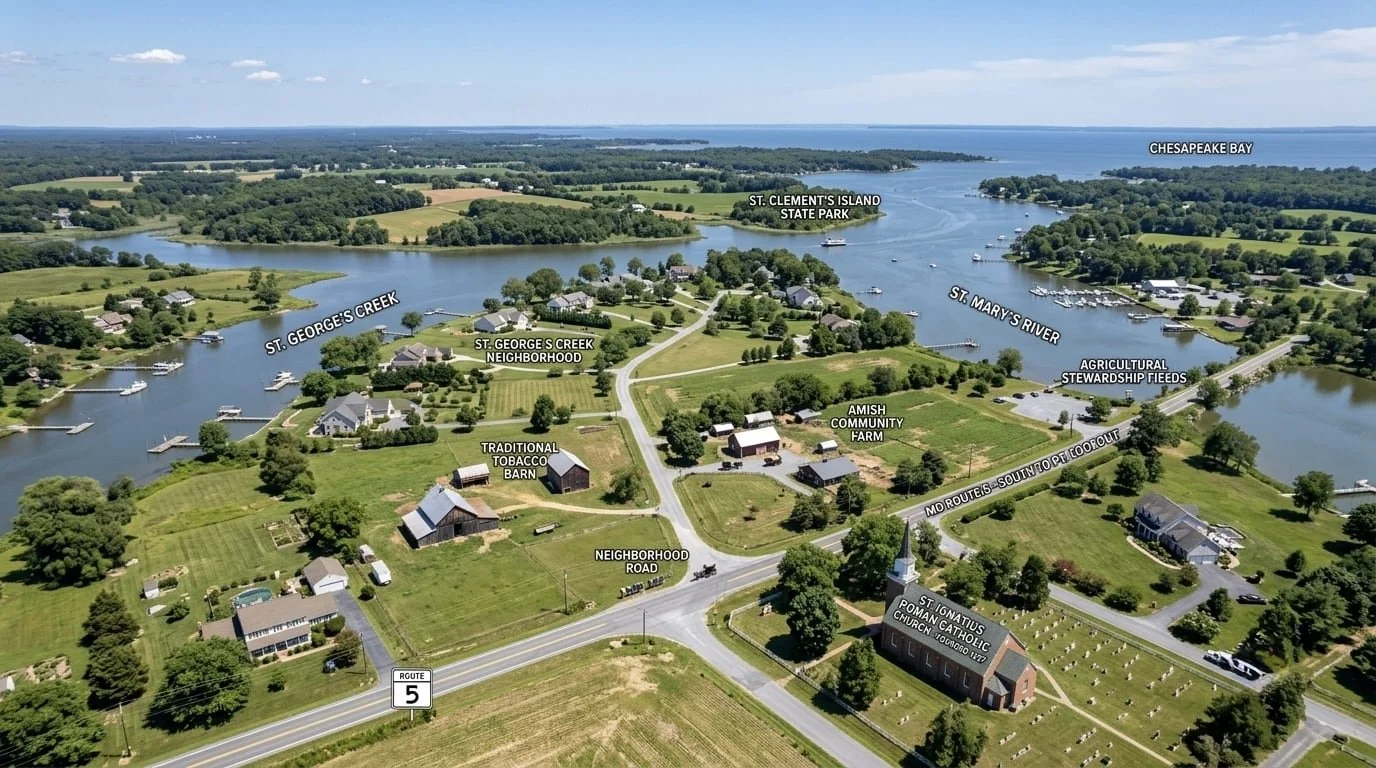
If you’ve ever thought, “I love Southern Maryland, but how realistic is this commute to D.C. or Northern Virginia?”—you’re asking the right question. You want the space, quieter pace, and community feel of St. Mary’s County, but you also don’t want every workday to feel like a road trip.
I hear this all the time from buyers who are moving to St. Mary’s for the lifestyle but still have jobs that pull them toward downtown D.C., Arlington, or other parts of the metro area. The good news: plenty of people make this work every day. The key is choosing the right route, the right schedule, and, ideally, the right part of Southern Maryland to call home.
I’m Amanda Holmes, your local Southern Maryland real estate guide, and I help buyers in St. Mary’s, Calvert, and Charles Counties think through the commute before they fall in love with a house. Let’s walk through the main ways people get from St. Mary’s County to D.C. and Northern Virginia—and what you should know about each.
The Big Picture: What to Expect From a Southern Maryland Commute
Most St. Mary’s County commuters driving to D.C. or Northern Virginia can expect roughly 75–110 minutes each way, depending on where they start, what time they leave, and where exactly they’re headed. Early departures and hybrid/remote schedules help a lot.
Your main choices usually come down to:
- Driving the whole way via key Southern Maryland corridors
- Using commuter buses and park‑and‑ride lots
- Pairing your drive with Metro or rail connections closer to the city
When we talk about where you’ll live in St. Mary’s County—Leonardtown, California, Great Mills, Mechanicsville, or more rural areas—we’ll look at how that lines up with your commute target: D.C., Northern Virginia, or other parts of the region.
Core Driving Route: MD‑5 and US‑301
For many St. Mary’s County residents headed toward D.C. or Northern Virginia, the backbone of the commute is MD‑5 and US‑301 through Charles County.
A typical route looks like this:
- Head north on MD‑5 from St. Mary’s County
- Connect with US‑301 as you move through Charles County
- Continue toward the D.C. metro area and link up with the Beltway or other major roads, depending on your final destination
This path is straightforward and familiar to most Southern Maryland commuters, but it can get heavy during peak hours—especially as you move through Charles County and into Prince George’s County. If you’re going to drive daily, we’ll want to factor in where you live in St. Mary’s to minimize your “local” drive time before you even hit the main corridors.
Park‑and‑Ride and Commuter Bus Options
If you’d rather not drive the entire way to D.C, commuter buses and park‑and‑ride lots can take some of the stress off your plate.
From St. Mary’s County and neighboring Calvert and Charles Counties, many commuters:
- Drive to designated park‑and‑ride lots
- Take commuter buses that run into D.C. during peak hours
- Use the bus time to work, read, or simply not stare at brake lights
These options can be especially attractive if your office is near central D.C. and you’d rather avoid the cost and hassle of downtown parking. When we’re planning your move, I’ll encourage you to check current schedules and routes so you can see how the timing lines up with your workday.
Pairing Your Drive With Metro or Rail
Some Southern Maryland commuters prefer a hybrid strategy: drive part of the way, then switch to Metro or commuter rail closer to the city. This can help you:
- Avoid the most congested sections of the Beltway or downtown streets
- Park at a Metro or rail station and ride in from there
- Trade some driving time for more predictable transit time
Depending on where you live in St. Mary’s County, you may find it easier to drive into Charles or Prince George’s County, park, and then hop on Metro or a commuter rail line that takes you into D.C. or Northern Virginia. It adds a transfer, but for some people, it makes the overall commute less stressful and more predictable.
Commutes to Northern Virginia From St. Mary’s County
Heading to Northern Virginia—places like Arlington, Alexandria, or the broader NOVA job centers—usually involves a combination of:
- Driving north out of St. Mary’s County toward the D.C. Beltway
- Crossing into Virginia via one of the Potomac River crossings
- Navigating the last leg on major roads or Metro, depending on your office location
Some commuters choose to drive all the way, while others park on the Maryland side or in D.C. and use rail or Metro for the final leg into Virginia. It really depends on whether you value a single continuous drive or don’t mind a transfer if it means avoiding the most congested downtown stretches.
How Your Home Location in St. Mary’s County Changes the Commute
Not all St. Mary’s County addresses are equal when it comes to commuting north. This is a big part of the conversation I have with buyers who know they’ll be heading to D.C. or Northern Virginia regularly.
In general:
- Northern areas of St. Mary’s (like Mechanicsville and Charlotte Hall) shave time off the overall commute compared to deeper southern or waterfront areas.
- More central locations (like Leonardtown or Hollywood) balance lifestyle and commute but still require a longer drive than the northern edge of the county.
- Southern and more rural points of St. Mary’s County offer a quieter lifestyle and often more land, with the trade‑off of extra time before you even reach the main northbound routes.
If you’re splitting household commutes—say, one person going to NAS Pax River and another to D.C. or Northern Virginia—we’ll look closely at which part of Southern Maryland keeps everyone’s drive within reason.
Practical Ways to Make the Commute Work
If you’re worried the commute will wear you out, there are real‑world strategies that help my clients make it manageable:
- Adjust your hours: Starting earlier or later than the typical 9–5 pattern can dramatically change your experience on the road.
- Hybrid or remote days: Many St. Mary’s County residents build in a few work‑from‑home days to cut down weekly drive time.
- Carpooling and ride‑sharing: Splitting the drive with coworkers can make long stretches feel less draining.
- Plan your home choice with the commute in mind: When we look at houses, we’re not just admiring kitchens—we’re calculating what your Tuesday morning will feel like six months from now.
The goal isn’t to pretend the commute is nothing; it’s to make sure it’s a conscious, informed trade‑off for the lifestyle you’re getting in Southern Maryland.
People Also Ask
1. How long is the commute from St. Mary’s County to Washington, D.C.?
For many drivers, a typical one‑way commute lands somewhere around 75–100 minutes, depending on where in St. Mary’s County you start and what time you leave. Traffic, weather, and your final D.C. destination can shift that window, which is why I recommend test‑driving your route during your real commute hours before committing to a specific area.
2. Is it realistic to live in St. Mary’s County and work in D.C. full‑time?
People do it, but it takes planning. Many long‑term commuters rely on early start times, flexible schedules, or a mix of on‑site and remote days. If you want a traditional 9–5 downtown with no flexibility, we’ll talk honestly about how that will feel over time and whether a specific part of St. Mary’s—or nearby Calvert or Charles Counties—fits better.
3. Are there commuter buses from Southern Maryland into D.C.?
Yes, there are commuter bus routes and park‑and‑ride options that many Southern Maryland residents use to get into D.C. They can be a good alternative if you prefer not to drive all the way into the city or pay for downtown parking. I always suggest checking current schedules and pickup locations as part of your home search planning.
4. What’s the best part of St. Mary’s County to live in if I have to commute north?
“Best” depends on your priorities. Northern St. Mary’s locations generally shorten the overall drive, while more central or southern areas may offer different lifestyle benefits. When we talk, we’ll map your likely route and compare a few areas so you can see how the commute changes with each option.
5. How does commuting from St. Mary’s compare to commuting from Calvert or Charles Counties?
Calvert and Charles Counties are physically closer to D.C., so many people see shorter overall drive times from those areas. St. Mary’s County offers more distance—and often more space and a different lifestyle feel—with the trade‑off of a longer commute. That’s why I always recommend looking at a few options across St. Mary’s, Calvert, and Charles before deciding what balance works for you.
Need Help Balancing Commute and Lifestyle in Southern Maryland?
If you’re trying to decide whether the commute from St. Mary’s County to D.C. or Northern Virginia is worth it, you don’t have to figure it out by guesswork and Google Maps alone. I’m Amanda Holmes, a real estate agent focused on Southern Maryland, helping buyers and sellers across St. Mary’s, Calvert, and Charles Counties—as well as the rest of Maryland and Virginia.
Together, we can look at homes, routes, and real‑world drive times so you can choose a place that works for both your work life and your actual life. When you’re ready, reach out and we’ll start matching neighborhoods and commute options to what your weekdays—and weekends—need to look like.