

What Price Should I List My Home For in Southern Maryland?
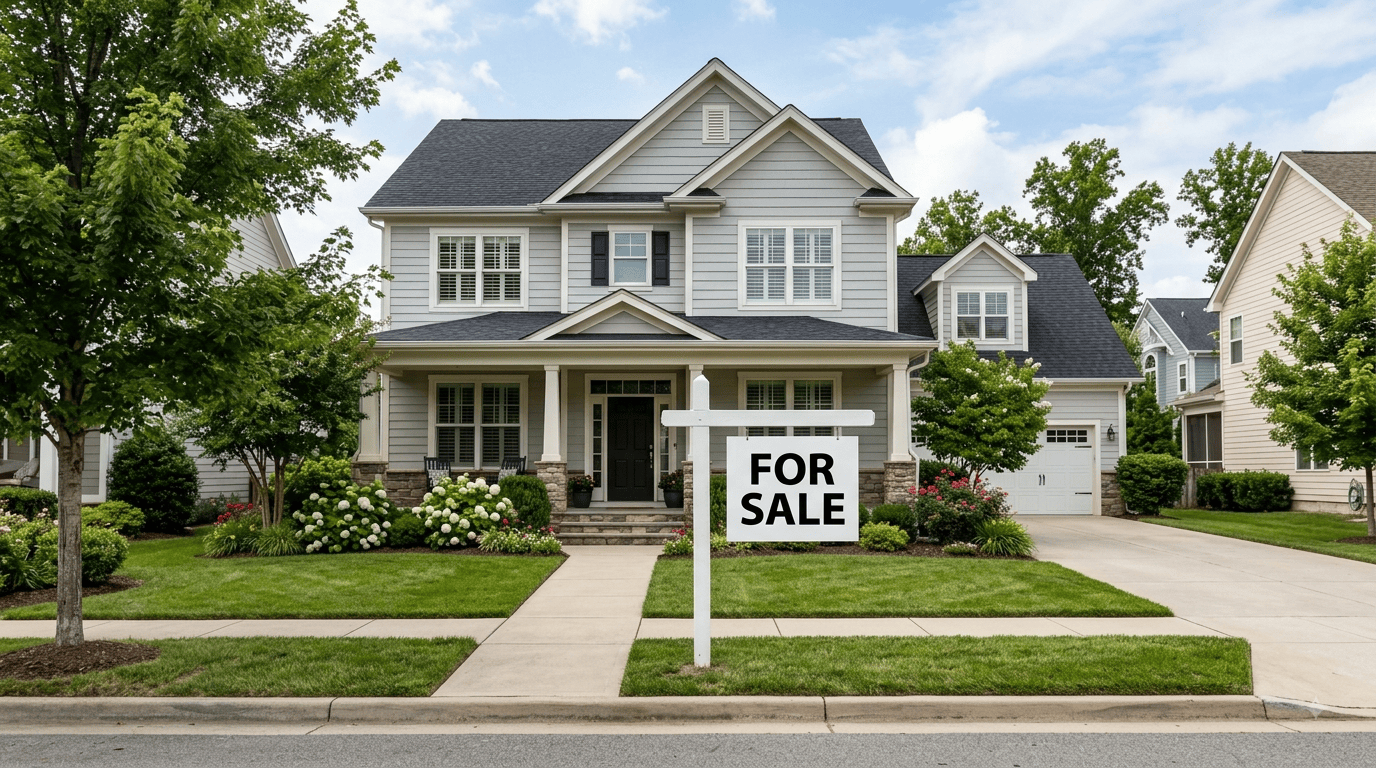
If you’re like most sellers, at some point you’ve stared at your calculator and said something like, “Okay, but what price should I actually list this thing for?”
You’ve probably seen a few online estimates, heard what your neighbor “got,” and maybe even had a friend say, “Just price high and see what happens.”
Here’s the problem: in Southern Maryland, that “let’s just see” approach can easily turn into weeks of silence, awkward price drops, and less money in your pocket than if you’d priced it right from day one.
The goal isn’t to guess a number you like—it’s to choose a price that real buyers will respond to in St. Mary’s, Calvert, or Charles County right now.
I’m Amanda Holmes, a full‑time Southern Maryland real estate agent, and I’ve walked a lot of sellers through this exact decision.
Let’s talk about how to pick a smart list price that helps you sell smoothly without leaving money on the table.
Step 1: Understand Your True Market Range, Not Just One Magic Number
Before you pick a list price, you need a realistic value range for your home.
That usually comes from a comparative market analysis (CMA) that looks at:
- Recent sold homes near you in St. Mary’s, Calvert, or Charles (not just active listings).
- Similar style and size (rambler vs. colonial, townhome vs. single‑family, etc.).
- Similar age, features, and lot size.
- Adjustments for upgrades, condition, and any special features.
Instead of saying “My home is worth exactly X,” I like to give sellers a range—something like “We’re realistically between $460,000 and $480,000 based on the comps.”
Your list price should live strategically inside that range, based on your timeline and your risk tolerance.
How I Actually Build Your CMA
A CMA isn't a single lookup — it's a process. Here's what I actually do when I put one together for you:
Local data review. I pull recent and pending sales in your micro-area — think a few streets or a specific community, not just the whole county.
Adjust for reality. We account for the differences that matter: renovations, acreage, basement finishes, waterfront setbacks, and anything else that separates your home from the raw comps.
Analyze buyer behavior. I look at how long comparable homes actually took to sell and whether they needed price reductions to get there.
Set a strategic range. We land on a price that positions you competitively against what's active right now, not just what's already sold.
Monitor and adapt. If the market shifts before or after you list, we adjust quickly — Southern Maryland doesn't sit still for long.
A CMA isn't an appraisal and it isn't a guarantee. It's your best strategic starting point, built on real market behavior instead of an algorithm that has never seen your view, your upgrades, or your septic age.
Step 2: Price for Today’s Southern Maryland Market, Not Last Year’s
Markets move. What your neighbor got 18 months ago in Waldorf, La Plata, Leonardtown, or Prince Frederick may not line up with what buyers are willing to pay this season.
When we talk pricing, I’ll look at:
- How quickly homes like yours are going under contract right now.
- Whether we’re seeing more price reductions in your price bracket.
- How many active competitors you’ll be up against in your area.
If homes like yours in Charles County are sitting for 45–60 days unless they’re sharply priced, we’ll take that into account.
If similar homes in St. Mary’s near Pax River or along major commuter routes are still moving quickly, we may have room to be a bit more confident.
Step 3: Think Like a Buyer (And Their Search Filters)
Buyers shop in price brackets, not in one‑dollar increments.
Someone searching “up to $450,000” may never even see your $455,000 listing.
So when we pick your list price, we look at the brackets people actually use: $399,000, $425,000, $450,000, $475,000, $500,000, and so on.
For example:
- If your realistic range is $445,000–$460,000, pricing at $449,900 can expose you to buyers looking “up to $450,000” and still give you room to negotiate.
- Pricing that same home at $459,900 might look nice in your head, but you’ll miss everyone capped at $450,000.
The right list price is part math, part psychology—and part understanding how people really search in Southern Maryland.
Step 4: Match Your Price to Your Timeline
Your ideal list price also depends on how quickly you need (or want) to move.
- If you need to be at your new job or in your next home on a tight timeline, we’ll likely lean toward the middle or slightly lower end of your value range to encourage faster offers.
- If you have more flexibility and a very desirable, move‑in‑ready home, we might aim toward the upper end of your range and see how buyers respond in the first couple of weeks.
The key is to be honest with yourself.
If you tell me, “We must be under contract in 30 days,” our pricing strategy will look different than if you say, “We’re not in a rush and can wait for the right buyer.”
Step 5: Consider Property Type and Location Nuances
A “right” list price in Southern Maryland depends a lot on where and what you’re selling.
- St. Mary’s County:
Homes near Pax River NAS or main commuter routes often have a steady flow of buyers, especially if they’re clean and updated.
More rural or unique properties (acreage, older homes) may need a slightly sharper price to compensate for a smaller buyer pool.
- Calvert County:
Waterfront and water‑oriented homes live in their own world—condition, water access, and setting matter a lot.
More suburban or commuter‑friendly homes along Route 4 can attract buyers who are balancing commute and price.
- Charles County:
Townhomes and single‑family homes in areas like Waldorf and La Plata are very price‑sensitive because they’re popular with first‑time and move‑up buyers watching monthly payments closely.
Here, $10,000 can make a big difference in how many people show up.
I’ll always weigh your specific neighborhood, commutes, and property style when we decide whether we can push a little or need to be more conservative.
Step 6: Decide Your Strategy: Conservative, Competitive, or “Stretch”
When we’ve looked at the numbers and the local market, we can choose a pricing strategy together:
- Conservative/at‑market pricing:
List near the heart of your value range.
Goal: solid interest, good showings, and a strong, clean offer in a reasonable amount of time.
- Aggressive/attention‑getting pricing:
List slightly below the center of your range to attract more buyers quickly.
Goal: spark strong early interest and possibly multiple offers that drive your net up.
- Stretch pricing:
List near the top of your range (or slightly above) when your home is truly special and competition is thin.
Goal: test the high end without scaring off all buyers—this works best when you have a standout property and some time.
I’ll always be honest with you about which strategy fits your home, your county, and your timeline.
The right answer isn’t the same for a Waldorf townhome and a St. Mary’s waterfront property.
For an idea of how long it takes to sell your home in Southern Maryland, check out How Long Will It Take to Sell My Home in St. Mary’s, Charles, or Calvert County?
Step 7: Use the First Two Weeks as a Reality Check
Whatever price you choose, the first 10–14 days on market in Southern Maryland are your best feedback loop.
- Lots of showings and quick interest? We’re likely in the right zone.
- Few showings, low saves, and no offers? The market is telling us something.
- Strong interest but lowball offers? We may be slightly high or the condition isn’t matching the price.
When I list a home, I don’t just “set and forget” the price.
We watch traffic, feedback, and what new listings and sales are doing around you in St. Mary’s, Calvert, or Charles and adjust if needed.
People Also Ask: Pricing Your Home in Southern Maryland
Should I price my home higher to leave room to negotiate?
You can, but you have to be careful.
If you price too high, you may get fewer showings and end up chasing the market with reductions, often netting less than if you’d priced correctly from the start.
I’d rather price in a range that attracts strong, realistic offers and gives us leverage in negotiations.
Is it better to underprice my home to create a bidding war?
Sometimes, but not always.
Underpricing can work when demand is strong for your type of home and area, and when we have a clear strategy to manage multiple offers.
If the market is more balanced or your home appeals to a narrower group of buyers, “slightly under” can help—but “way under” can backfire.
Can I just set my price based on my tax assessment or online estimate?
Those numbers can be starting points, but they shouldn’t be the final answer.
Assessments and automated tools don’t see your upgrades, condition, or the nuance of your specific neighborhood.
A CMA that uses real recent sales in your part of Southern Maryland will be much more accurate.
How often should I adjust my price if my home isn’t selling?
If we’re getting very little activity or weak feedback after the first couple of weeks, it’s time to review.
Sometimes the fix is a price adjustment; sometimes it’s improved photos, staging, or better remarks.
I walk sellers through options based on what buyers are actually saying and doing, not just a calendar date.
Does it matter if I price at $500,000 vs. $499,900?
Online, yes.
Buyers often search in ranges like “$450,000–$500,000” or “$500,000–$550,000.”
We’ll look at where your ideal buyers are likely searching and choose a price that helps you show up in the right brackets while still supporting your net.
How a CMA Actually Gets Built
1. Pull comparable sales within about a mile and the last 90 days
2. Adjust for condition, lot size, updates, and waterfront or Pax River proximity
3. Factor in current buyer behavior — is this a 10-day market or a 45-day market right now?
4. Land on a defensible range, not a single number
5. Refresh the CMA every 30-60 days if you're not actively listed yet — comps move
What's the difference between a CMA and an appraisal?
A CMA is a professional estimate done by a REALTOR® using market comparisons. An appraisal is performed by a licensed appraiser and is required by a lender during a transaction. CMAs are great for planning; appraisals are formal valuations.
Is a CMA free in Southern Maryland?
With most local agents, including myself, yes. I provide CMAs as part of my consultation — no obligation — because it helps you make better decisions whether you're selling now or next year.
Want Help Choosing the Right List Price for Your Southern Maryland Home?
If you’re stuck on “What price should I list my home for?”, you don’t need to guess—or try to reverse‑engineer it from a neighbor’s sale or an online estimate.
You need a clear range, a strategy that fits your life, and a local expert who will tell you the truth, not just the flattering number.
I’m Amanda Holmes, your local Southern Maryland agent, and I help sellers in St. Mary’s, Calvert, and Charles Counties price their homes strategically every day.
If you’d like a no‑pressure pricing consult—with a custom CMA, a suggested list price range, and what that means for your timeline and net—reach out and we’ll walk through it together, whether you’re selling in Southern Maryland, elsewhere in Maryland, or in Virginia.
If you want to understand the full selling timeline before you commit to anything, my Southern Maryland seller's guide walks through every stage in plain language.