

New Construction Communities in Southern Maryland: Where to Look (and What to Know)
Looking for new construction homes in Southern Maryland? Explore new home communities in St. Mary’s, Calvert, and Charles Counties and learn what to consider before you build or buy brand‑new.
If you’ve ever scrolled listings and thought, “I just want something new so I don’t have to fix anything for a while,” you’re not alone.
I hear a version of this all the time: “Amanda, what new construction communities are there in Southern Maryland? And how do I know which area—St. Mary’s, Calvert, or Charles County—actually fits my life?”
I’m Amanda Holmes, your Southern Maryland real estate agent, and I work with a lot of buyers who are deciding between resale homes and new builds. Let’s walk through where you’ll find new construction communities in our area and what to think about before you sign anything with a builder.
New construction in Charles County, MD
Charles County has some of the most active new construction in Southern Maryland, especially if you want a D.C. or Northern Virginia commute and newer, planned communities.
You’ll commonly see new builds in and around:
- Waldorf / St. Charles area
This is a hotspot for new single‑family homes and townhomes in planned communities. The larger St. Charles area includes multiple neighborhoods with trails, community amenities, and access to shopping and dining. New phases continue to get approved, including additional townhome sections and infill development.
- White Plains and surrounding pockets
New construction in and near White Plains often features single‑family homes on smaller lots, with HOAs that cover common area maintenance and sometimes amenities like community centers or playgrounds.
- Other growing areas of the county
Depending on timing, you’ll see new communities or small subdivisions in Bensville, La Plata, and other parts of northern and central Charles County.
Things to keep in mind in Charles County new construction:
- Commute into the D.C. / Northern Virginia corridor is a big factor—Route 301 and nearby roads can get busy at peak times.
- HOAs are common and can vary in what they cover (and what they restrict).
- New homes can be clustered closer together than older subdivisions; some buyers love that, others prefer more space and privacy.
New construction in St. Mary’s County, MD
St. Mary’s County new construction often follows growth around Pax River, major commuter routes, and small town centers.
Common areas for new builds include:
- California / Lexington Park / Great Mills
You’ll see new and newer construction in communities that serve both military and contractor buyers, with a mix of townhomes and single‑family homes. Proximity to Pax River, shopping, and dining makes this area especially popular.
- Leonardtown and surrounding areas
Newer neighborhoods and expanding communities around Leonardtown offer single‑family homes and some townhome options, often with sidewalks, trails, and easy access to the town center.
- Scattered custom or semi‑custom builds
You’ll also find new construction on individual lots around the county—especially if you want more land, a rural setting, or something closer to the water.
Things to keep in mind in St. Mary’s new construction:
- Proximity to Pax River and main commuter routes can strongly influence price and demand.
- Some communities have public water and sewer; others may have well and septic, even in newer builds.
- If you’re PCSing or relocating, timing with your orders and build schedule matters a lot—we’ll want to talk carefully about that.
New construction in Calvert County, MD
Calvert County’s new construction scene tends to mix small new neighborhoods with individual new builds, wrapped in that trees‑and‑water lifestyle.
You’ll often find new construction:
- Near Prince Frederick, Huntingtown, and Owings
These areas attract buyers who want newer homes while staying within a reasonable commute to D.C. or Annapolis. Newer communities may offer single‑family homes with modern layouts and HOA‑maintained common areas.
- Chesapeake Beach and North Beach area
You’ll sometimes see brand‑new homes or small clusters of new construction near the Bay, where buyers want a coastal feel with a workable commute.
- Scattered lot builds
Calvert has plenty of opportunities where builders or owners put up new homes on individual lots, especially if you want more privacy, land, or a custom design.
Things to keep in mind in Calvert new construction:
- Commute patterns up Route 4 are a big consideration; where you work matters.
- You’re more likely to see wells and septics, even for new builds, which impacts inspections and long‑term maintenance.
- Some new communities emphasize larger lots and a quieter feel; others are more traditional subdivisions with closer lot lines.
New vs. resale in Southern Maryland: what I help you think through
Brand‑new construction can be great, but it’s not automatically “better” than an existing home. When I walk buyers through this decision in St. Mary’s, Calvert, and Charles Counties, we talk about:
- Timing
Can you wait for a build, or do you need to move on a specific timeline? A to‑be‑built home can take several months before it’s ready.
- Budget
New construction often comes with premiums for lots, options, and upgrades—not just the base price on the sign. It’s easy for the price to creep up if we don’t keep an eye on the extras.
- Commute and lifestyle
Is the new community actually in a spot that works for your daily life, or are you trading convenience for fresh paint and new appliances?
- HOAs and rules
Are you okay with design guidelines, rules, and fees in exchange for amenities and a cohesive neighborhood look?
- Inspections and representation
Even new homes can have issues. Having your own agent (not just the builder’s rep) and doing inspections is still important, no matter how shiny the house looks.
My job as your local Southern Maryland agent is to sit at the table with you in the model home or sales office so you’re making decisions that fit your long‑term plans—not just what looks good on the brochure that day.
People also ask
1. Is new construction more expensive than buying an existing home in Southern Maryland?
Often, yes—but not always. New construction usually comes with a higher base price plus lot premiums and upgrades. However, you may save on repairs and updates in the early years, and you get modern layouts and systems. Resale homes can offer more space or land for the money, especially in certain areas of Calvert and St. Mary’s.
2. Can I use my own real estate agent when buying new construction?
Yes—and you should. The builder’s sales rep works for the builder, not for you. Having your own agent gives you someone to help with negotiations, contract review, options decisions, and inspections. You’ll just want to bring your agent with you (or register them) on your first visit.
3. How long does it take to build a new home in Southern Maryland?
Build times vary by builder and community, but many range from about 4–8 months once construction actually starts. Some communities also offer “quick‑move‑in” homes that are already under construction or nearly complete if you need a faster timeline.
4. Are there incentives for buying new construction in Southern Maryland?
Sometimes. Builders may offer closing cost help, design credits, or rate incentives through preferred lenders, especially if they’re in a competitive market or nearing the end of a phase. The key is comparing those incentives to the total cost and your long‑term goals.
5. Which county is best for new construction—St. Mary’s, Calvert, or Charles?
It depends on your priorities. Charles often works best for D.C./Northern Virginia commuters and those who want larger planned communities. St. Mary’s is ideal if you’re connected to Pax River or local employers. Calvert is great if you want a bit more space, trees, and water access with a workable commute. We’ll start with your lifestyle, budget, and commute and work backward from there.
Ready to explore new construction in Southern Maryland?
If you’re thinking about a brand‑new home in St. Mary’s, Calvert, or Charles County—or anywhere else in Maryland or Virginia—I’d be happy to walk through your options with you. I’m Amanda Holmes, your local Southern Maryland agent, and I help buyers compare different builders, communities, and floor plans with real‑world eyes.
When you’re ready, reach out and we’ll look at what’s being built now, what’s coming soon, and whether new construction or a great resale home is the better move for you.

55+ Communities in Southern Maryland: Your Guide to Active Adult Living
Looking for 55+ communities in Southern Maryland? Explore active adult and senior living options in St. Mary’s, Calvert, and Charles Counties, plus what to consider when choosing the right community for you.
If you’ve ever caught yourself saying, “I don’t need this big house and yard anymore—I just want something easier,” you’re exactly who this post is for.
I talk to a lot of Southern Maryland homeowners who are ready for a right‑size, not a downgrade: less maintenance, more convenience, maybe a clubhouse and a pool, and neighbors who are in a similar stage of life. The next question is usually: “Okay Amanda, what 55+ communities are there in Southern Maryland—and how do I even start choosing?”
I’m Amanda Holmes, your local Southern Maryland agent, and I work with buyers and sellers across St. Mary’s, Calvert, and Charles Counties who are planning their next chapter. Let’s walk through some of the 55+ and active adult options in our area and what to think about as you compare them.
A quick note before we dive in
There are two main types of “55+” style options you’ll see:
- Age‑restricted 55+ / active adult communities
Typically owner‑occupied, with covenants requiring at least one resident in the home to be 55 or older. They often include amenities like clubhouses, fitness centers, pools, and social activities.
- Senior‑focused apartments or independent/retirement communities
Often age‑restricted (55+ or 62+), usually rental communities with services, amenities, or support tailored to older adults.
I’ll touch on both types so you have a realistic view of what’s available in Southern Maryland right now.
55+ and active adult communities in Charles County, MD
Charles County has several options for adults who want low‑maintenance living, community amenities, and a location that still works for a D.C. or Northern Virginia commute.
Colonial Charles – Waldorf, MD
- 55+ active adult community in Waldorf.
- Mix of attached townhomes and single‑family homes, generally designed for low‑maintenance living and main‑level convenience.
- Amenities typically include a clubhouse, indoor and outdoor pools, fitness center, and social spaces for gatherings and activities.
This is a good fit if you want to be close to shopping, restaurants, and services in the St. Charles/Waldorf area and you like the idea of a community where many neighbors are also in a similar life stage.
Parklands 55+ – White Plains, MD
- Located in White Plains, within a planned community setting.
- 55+ active adult section with villa and single‑family homes and shared amenities like walking paths and community gathering spaces.
This works well if you want newer construction, planned community amenities, and easy access toward Route 301 for commuting or visiting the rest of the D.C. region.
Southwinds Active Adult Community – White Plains, MD
- 55+ active adult apartment community in White Plains.
- Gated setting with amenities and a focus on low‑maintenance, lock‑and‑leave living.
This is ideal if you’re not looking to purchase another home, but you still want to stay in Charles County near familiar shopping and medical providers.
Other senior‑oriented options in Charles County
Charles County also includes additional senior apartment and independent‑living communities in and around the Waldorf and La Plata areas. These can be a good option if you prefer renting, want minimal upkeep, and like having neighbors at a similar life stage.
55+ and active adult communities in St. Mary’s County, MD
St. Mary’s County offers options that work well for people connected to Pax River, long‑time locals ready to downsize, or those who want to stay close to the water and familiar communities.
Villages of Wildewood – California, MD
- 55+ active adult community within the larger Wildewood development in California, MD.
- Offers low‑maintenance homes (often villas, condos, or smaller single‑family homes) with access to a clubhouse, fitness facilities, walking trails, and social activities.
This is a strong choice if you want to stay near Pax River, shopping, and medical services while also having amenities and an active social calendar.
Wildewood 55+ / newer active‑adult sections – California, MD
- 55+ sections within the established Wildewood area, with newer single‑family and villa‑style homes designed with main‑level living in mind.
- Often feature first‑floor owner’s suites, open layouts, and low‑maintenance exteriors.
This suits buyers who want newer construction and an easier‑to‑maintain layout while still being close to everyday conveniences in California and Lexington Park.
Senior housing and independent‑living options
Beyond deed‑restricted 55+ communities, St. Mary’s County also has senior‑focused rental and independent living options, often starting at age 55 or 62. These are typically listed through county aging and human services resources and can be a good fit if you’d rather rent than own in this next phase.
55+ and senior communities in Calvert County, MD
Calvert County appeals to people who want more space, trees, and water access while staying within reach of D.C. and Annapolis.
The Harbours at Solomons Island – Dowell, MD
- 55+ seaside community near Solomons Island in southern Calvert County.
- Offers a coastal feel with access to local marinas, waterfront areas, and community amenities for active adults.
This is a great fit if you’re dreaming of a near‑water lifestyle and want to be close to Solomons, Patuxent River, and the bridges into St. Mary’s.
Asbury Solomons – Solomons, MD
- A continuing care retirement community (CCRC) in Solomons, offering apartments and cottages along with assisted living and nursing care levels.
- Includes wellness facilities, activities, dining, and services designed for aging in place.
This works well if you want to plan ahead and have options to stay in the same community as your needs change over time.
Senior apartment communities in Calvert County
Calvert County also has senior apartment‑style options (often 55+ or 62+), including:
- County‑associated senior apartment communities in Prince Frederick.
- Senior‑oriented communities in North Beach and other towns.
These can be good options if you prefer renting, want minimal maintenance, and like having a built‑in social circle.
How to choose the right 55+ community in Southern Maryland
The “best” 55+ or senior community in Southern Maryland depends less on glossy brochures and more on what you want daily life to feel like. A few questions I often walk clients through:
- Do you want to own or rent in this next phase?
- Is being close to family, medical care, or a specific base or job important?
- How much do you value amenities and social activities (clubhouse, pool, planned events) versus just peace and quiet?
- Are you okay with an HOA or condo fee if it covers maintenance, or do you want full control even if that means more work?
- Do you want to be closer to D.C., closer to Pax River, or closer to water and small‑town life?
As your local Southern Maryland agent, I help you sort through those questions and then match you with communities in Charles, St. Mary’s, and Calvert Counties that actually fit your answers.
Ready to explore 55+ living in Southern Maryland?
If you’re starting to think about downsizing, right‑sizing, or just making life a little easier, you do not have to figure it all out alone (or by reading listing descriptions at midnight).
I’m Amanda Holmes, your local Southern Maryland agent, and I work with buyers and sellers across St. Mary’s, Calvert, and Charles Counties, as well as the rest of Maryland and Virginia, who are planning this next chapter.
If you’d like a list of 55+ and senior community options tailored to your budget, county, and lifestyle priorities—or you want to talk about selling your current home and transitioning smoothly—reach out anytime. We’ll take it one clear, low‑stress step at a time.
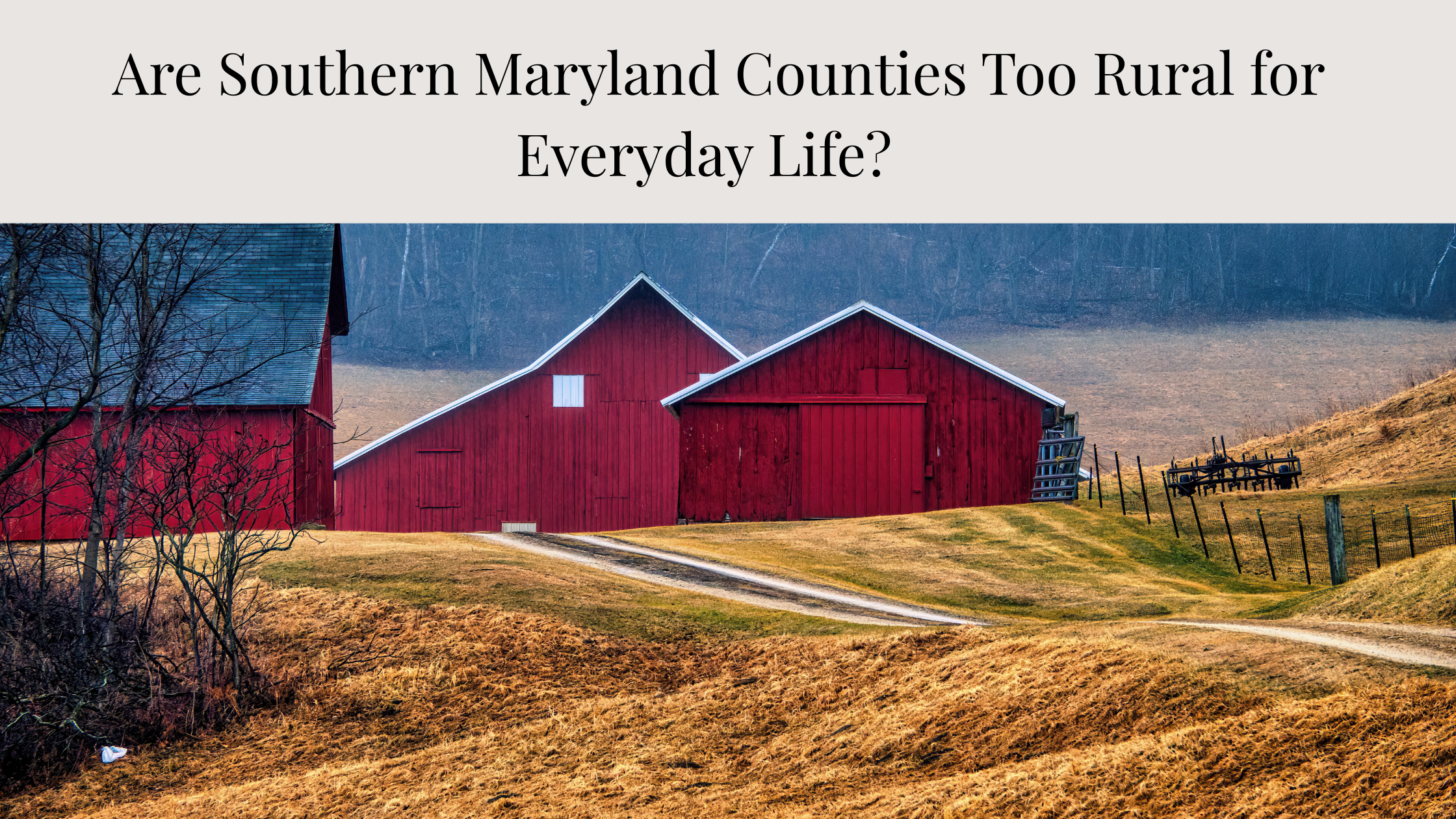
Are Southern Maryland Counties Too Rural for Everyday Life?
Worried St. Mary’s, Calvert, and Charles Counties might be “too rural”? Learn how everyday life, shopping, restaurants, and things to do actually work in Southern Maryland with local agent Amanda Holmes.
If you’ve ever zoomed out on a map of Southern Maryland and thought, “Wait… is it just trees and water down there?”, you’re not alone. A lot of buyers see St. Mary’s, Calvert, and Charles Counties and immediately worry they’re signing up for 45‑minute drives just to grab a coffee or a gallon of milk.
I hear versions of the same question all the time: “Am I going to be bored? Will I still have normal shopping, restaurants, and things to do—or is this basically the middle of nowhere?”
As your local Southern Maryland agent, I can tell you it’s more nuanced than “rural” or “not rural.” You can absolutely find everyday conveniences, chains you recognize, and local spots you’ll get attached to—but you do need to understand how life here is laid out in St. Mary’s, Calvert, and Charles so your expectations match your actual day‑to‑day.
Let’s break down what “normal life” really looks like in each county, and how to decide if the trade‑offs work for you.
How Everyday Life “Clusters” in Southern Maryland
Before we zoom into each county, it helps to understand the overall pattern. In Southern Maryland, most of your daily life tends to revolve around a few main corridors and town centers.
You’ll see:
- Commercial corridors with big‑box stores, grocery chains, fast food, and service businesses.
- Small town centers with restaurants, coffee shops, and local businesses.
- Quieter residential and rural areas a short drive away from those hubs.
So instead of having something on every corner, you usually drive to a cluster, knock out groceries, Target, and dinner in one loop, and then head back to your neighborhood, whether that’s a subdivision, a water‑oriented community, or something more rural.
Everyday Life in St. Mary’s County
Shopping and errands
In St. Mary’s County, a lot of “normal life” revolves around the Route 235 corridor (think big‑box shopping, grocery stores, and services) and town centers like Leonardtown. You’ll find multiple grocery options, national retailers, pharmacies, and everyday services without needing to leave the county.
If you’re used to walking to everything, you’ll feel the difference here—but if you’re already driving for errands, the adjustment is more about learning which part of the county has the things you use most often and how long that loop takes from your house.
Restaurants, coffee, and things to do
You’ll see a mix of national chains and local spots—waterfront restaurants, casual family places, coffee shops, and small‑town squares with events and seasonal activities. There’s a different feel than a dense suburb, but you’re not staring at empty fields every weekend either.
Your social life might shift away from “trying a brand‑new spot every week” and more toward a rotation of favorites plus local events, waterfront time, and day trips up to other parts of Maryland or D.C. when you want a change of pace.
Everyday Life in Charles County
Shopping and services
Charles County leans a little more “suburban corridor” in feel, especially along routes like 301. You’ll see clusters with big‑box stores, grocery chains, restaurants, and plenty of everyday services. If you’re coming from closer‑in suburbs, this may feel more familiar, just with more trees between commercial areas.
Living in or near towns like La Plata or the busier commercial corridors means your weekly errands are straightforward: you’ll still drive, but you’re not crossing three counties to get basic things done.
Dining and activities
Charles offers a mix of chain restaurants, local spots, and community‑based activities. You’ll find parks, trails, local events, and recreational options, plus the ability to head up toward the D.C. metro area for bigger concerts, museums, and nightlife when you want it.
If you choose a more rural pocket of Charles for land or privacy, expect to trade a bit of drive time for that peace and quiet—but your “normal life” errands usually still route through a busy, fully serviced corridor.
Everyday Life in Calvert County
Shopping and daily needs
Calvert County is long and narrow, and that shapes how errands work. You’ll find grocery stores, pharmacies, and everyday services in key towns and along the main north‑south routes, but you’re not going to see big retail every five minutes. The routine often becomes: drive into town, take care of a few things in one trip, and head back to a quieter neighborhood or rural setting.
If you’re comparing Calvert to a dense inner‑ring suburb, it will feel more spread out. If you’re already used to driving for errands, it usually feels like a manageable adjustment rather than a shock.
Restaurants, water access, and recreation
Calvert leans into its Chesapeake Bay and river access. You’ll see waterfront towns, marinas, boardwalks, and local restaurants mixed in with more traditional commercial areas. That might mean your “date night” is a Bay‑view meal or a small downtown instead of a huge lifestyle center—but you’re not short on ways to get outside or find something to do.
It’s less about “endless options on one block” and more about having a handful of solid choices you get to know well, plus the flexibility to drive up toward Annapolis, D.C., or elsewhere when you want more variety.
The Real Trade‑Off: Commute vs. Convenience vs. Space
When we talk about “too rural” in Southern Maryland, what most people are actually wrestling with is a triangle of trade‑offs:
- Commute: How long you’re willing to be in the car to D.C., bases like Pax River, or other job centers.
- Convenience: How close you want to be to grocery stores, shopping, and services.
- Space and setting: How much you care about land, trees, water access, or a quieter feel.
You can absolutely live in St. Mary’s, Calvert, or Charles and still have “normal” shopping, restaurants, and things to do—especially if you’re okay with planning your errands and being in the car a bit more than you might be in a dense suburb.
The key is picking the right part of each county. Town‑adjacent neighborhoods and established corridors will feel more convenient and suburban. More rural pockets will give you land and privacy, but you’ll drive farther for everyday life. Neither option is “wrong”—it’s just about what fits your actual routine.
People also ask
Will I feel isolated living in Southern Maryland?
That depends less on the county name and more on exactly where you choose to live. If you pick a home near established corridors or town centers, you’ll have stores, restaurants, and neighbors close by. If you choose a more rural road for land and privacy, you’ll trade some immediate convenience for space and quiet.
Do I have to drive to D.C. or Annapolis for everything fun?
No. There are plenty of local events, parks, waterfront areas, restaurants, and community activities within St. Mary’s, Calvert, and Charles. That said, you’ll probably still head to D.C., Annapolis, or other larger hubs for bigger concerts, pro sports, or major attractions—and that’s part of the appeal for many people: quieter home base, access to bigger‑city options when you want them.
Is Southern Maryland a good fit if I work from home most days?
For many people who work from home several days a week, Southern Maryland can be a strong fit. You may be more willing to live in a slightly more rural or spacious area if your daily commute is from the kitchen to the office and your “real” drive is only a couple of days a week. The extra space and quieter surroundings can make a big difference in how your home office feels.
Will I miss having everything five minutes away?
If you’re used to dense, walkable suburbs or city living, you’ll notice the change. Here, the mindset shifts from “I’ll just pop out real quick” to “I’ll run a few things in one loop.” Many people adjust by planning errands and leaning into delivery options where available, while enjoying more space, less noise, and access to water or countryside.
How do I pick the right area if I’ve never lived somewhere more rural before?
This is where talking through your actual daily life matters more than looking at a map. We’ll look at your commute, kids’ activities, grocery and shopping habits, hobbies, and weekend routines. Then we can narrow down which parts of St. Mary’s, Calvert, and Charles give you enough convenience without sacrificing the space or setting you’re moving here for.
Ready to figure out if Southern Maryland fits your everyday life?
If you’re scrolling listings and wondering whether St. Mary’s, Calvert, or Charles County will feel “too rural” once the honeymoon phase wears off, you don’t have to guess. I’m Amanda Holmes, your local Southern Maryland agent, and I help buyers sort through these exact questions every day.
Whether you want to be close to shopping and restaurants, tucked away on a quieter road, or somewhere in between, I can help you match specific areas to the lifestyle you actually live—not just the house you’re picturing online. Reach out and we’ll build a plan for your move in Southern Maryland, elsewhere in Maryland, or nearby parts of Virginia.

How to Get More Land in Southern Maryland Without Wrecking Your Commute
Looking for more land in Southern Maryland without wrecking your commute? Explore large‑lot and acreage options in St. Mary’s, Calvert, and Charles Counties with local guidance from Amanda Holmes.
If you’ve ever said, “I want more land, but I cannot add an hour to my commute,” you’re not alone. I hear this all the time from buyers moving within Southern Maryland or relocating in from D.C. and Northern Virginia.
Most people think you have to choose: either stay closer in on a small lot or move way out for acreage and live in your car. In Southern Maryland, it’s not quite that black‑and‑white. There are pockets in St. Mary’s, Calvert, and Charles Counties where you can still get space, trees, or even small farms without completely blowing up your drive time.
As your local Southern Maryland agent, I spend a lot of my days helping people find that middle ground—enough land to breathe, but close enough to main routes, bases, or commuter lots to keep life manageable. Let’s walk through where those options tend to show up and what trade‑offs to expect.
Where to Find Bigger Lots in St. Mary’s County
Leonardtown and the surrounding countryside
When people ask me, “Where can I get a little more elbow room in St. Mary’s without being way out there?”, Leonardtown and its outskirts are usually part of the conversation. Around town, you’ll see a mix of neighborhoods and small subdivisions where lots can range from roughly an acre up into several acres, along with nearby rural roads that offer even larger parcels.
You’ll find everything from wooded lots to small hobby‑farm style properties, and you still have access to Leonardtown’s restaurants, waterfront square, and routes that connect you toward Pax River, California, and up through Charles County. The trade‑off here is that you may be driving a few extra minutes for everyday errands, but you’re not losing your entire evening to the commute.
Rural St. Mary’s: space, trees, and privacy
Outside the main corridors, much of St. Mary’s County still runs on larger parcels, farms, and wooded land. County‑wide, there are plenty of residential land and large‑lot home options, and many of them are multi‑acre tracts rather than tiny infill lots.
If you’re willing to be a bit farther from shopping and closer to country roads, you can often find properties with several acres—sometimes much more—while still staying within driving distance of Pax River, Leonardtown, or commuter routes up toward Waldorf and D.C. The key is matching your tolerance for “country driving” with how often you’re actually commuting.
Charles County: Acreage Options With 301 Access
La Plata and nearby acreage neighborhoods
If you’re commuting toward D.C. or Northern Virginia, La Plata and its surrounding areas are a frequent sweet spot in Charles County conversations. Around town and just outside it, there are multiple neighborhoods and individual properties with 1–5+ acre lots, plus larger acreage options that still connect back to Route 301.
For many buyers, this feels like a good compromise: more yard, sometimes wooded privacy or room for outbuildings, while still being able to use 301, commuter buses, or park‑and‑ride options for the daily drive. You’ll usually trade a “walkable” lifestyle for space, but you’re not miles from basic amenities or stuck on a back road the entire way.
Rural pockets across Charles County
Beyond La Plata, Charles County has significant rural land—farms, fields, and wooded properties. Rural areas here can offer long driveways, open fields, and space for animals or equipment, while still tying back into main commuter routes with some planning.
These areas tend to appeal if you want a more traditional “country” feel while still being able to reach commuter routes like 301 or 210. The trade‑off is usually a longer or more complex drive, so this works best for buyers with flexible schedules or fewer days on the road each week.
Calvert County: Larger Lots With D.C. and Annapolis Access
Northern Calvert: Huntingtown and Owings
If you want acreage but need to stay plugged into commuter routes toward D.C. and Annapolis, parts of northern Calvert—especially around Huntingtown and Owings—often come up in the conversation. You’ll see homes on 1–3+ acre lots, along with properties that stretch into larger multi‑acre parcels.
These communities give you a more rural, wooded feel while still feeding into major routes north. You’re not right next to Metro, but you’re also not hours away; for many buyers who split time between telework and in‑office days, that balance can work really well.
Calvert County land and rural tracts
County‑wide, Calvert still has a lot of land and rural property on the market—everything from 1‑acre homesites to large tracts.
These properties can make sense if you’re looking for space, future building options, or a mix of home plus recreational land. The commute story in Calvert is very corridor‑dependent: some locations plug fairly quickly into routes toward D.C. and Annapolis, while others are better suited to buyers with flexible schedules or fewer days on the road.
Other Southern Maryland Spots Where Land Shows Up
Charlotte Hall and the tri‑county crossroads
Charlotte Hall sits at a kind of crossroads between Charles and St. Mary’s Counties, and it’s an area where I often see buyers hunting for land or larger lots. In and around Charlotte Hall you’ll find multi‑acre parcels, rural homesites, and properties that sit close to the county line.
Because of its location, Charlotte Hall can make sense if you need reasonable access in multiple directions—toward La Plata, Mechanicsville, Leonardtown, or even up toward the D.C. metro area—while still getting more space than many closer‑in suburbs offer. The commute math here is all about which direction you’re actually driving most days.
The broader Southern Maryland “land pattern”
Zooming out, Southern Maryland as a region still has a lot of undeveloped and recreational land—hunting properties, wooded tracts, and rural home sites across St. Mary’s, Calvert, and Charles. Many of these parcels are measured in multiple acres rather than fractions, especially once you step away from town centers and tight waterfront strips.
Those properties can work well if you’re chasing privacy, future building potential, or a mix of primary home plus recreational land. The commute piece becomes very case‑by‑case: some locations plug into main commuter routes fairly quickly, while others really are “weekend places” that don’t make sense for a daily trip to D.C. or the bases.
How to Decide If “More Land” Really Fits Your Life
When I’m sitting down with buyers who want more land in Southern Maryland, we usually walk through a few practical questions before we ever look at a listing:
- How many days a week are you actually commuting—and to where?
- Do you need to be close to Pax River, a specific office, or a particular commuter lot?
- Are you comfortable with country roads in the dark or bad weather?
- How much yard or acreage will you realistically maintain week‑to‑week?
In St. Mary’s, Calvert, and Charles Counties, your best “more land, workable commute” fits are often on the edges: Leonardtown‑area neighborhoods and rural roads, La Plata‑area acreage with 301 access, Charlotte Hall at the crossroads, and northern Calvert pockets like Huntingtown and Owings that still tie into main corridors. The good news is, you don’t have to guess—this is exactly the puzzle I help people solve every day.
People also ask
Is it realistic to get 2–5 acres and still commute to D.C. from Southern Maryland?
In many cases, yes—as long as you’re strategic about location and honest about your commute tolerance. Areas around La Plata, parts of rural Charles County near 301, northern Calvert communities like Huntingtown and Owings, and certain pockets of St. Mary’s and Charlotte Hall can offer multi‑acre lots while still feeding into commuter routes or bus lines.
Which county in Southern Maryland has the most rural land left?
All three—St. Mary’s, Charles, and Calvert—still have significant rural and agricultural land. Charles and St. Mary’s stand out for larger preserved farmland and rural tracts, while Calvert mixes rural areas and land preservation with more compact waterfront and town‑center living.
Are large lots only available way out in the country?
Not necessarily. While the largest parcels tend to be in more rural areas, you can still find 1–5+ acre properties near towns like Leonardtown, La Plata, Charlotte Hall, Huntingtown, and Owings that give you space without putting you hours from work or shopping. The key is working with someone who knows which neighborhoods and roads consistently offer larger lots.
How does buying land in Southern Maryland affect my budget?
Larger lots and acreage often mean a higher total price, and you may also want to budget for things like longer driveways, outbuilding maintenance, or well and septic systems. At the same time, some rural areas can offer more square footage and land for the money compared to closer‑in suburbs, especially if you’re flexible on finishes and updates.
Should I buy land first, then build, or look for an existing home on acreage?
Both paths exist in Southern Maryland right now: you can buy raw land and plan a custom build, or you can focus on resale homes already sitting on multiple acres. Land‑only purchases require more upfront due diligence—perc tests, utility access, and zoning—while existing homes give you a clearer picture of what your daily life and commute will feel like from day one.
Ready to talk through “more land, same commute” for your situation?
If you’re staring at maps of Southern Maryland trying to balance acreage, price, and drive time, you don’t have to figure it out alone. I’m Amanda Holmes, your local Southern Maryland agent, and I help buyers and sellers navigate St. Mary’s, Calvert, and Charles Counties every day.
Whether you’re dreaming about a few quiet acres near Leonardtown, a larger lot with 301 access near La Plata, rural land in Charlotte Hall, or acreage in northern Calvert around Huntingtown or Owings, I can help you sort which areas actually fit your lifestyle, commute, and budget. Reach out to me for a focused, locally grounded game plan—anywhere in Southern Maryland, the rest of Maryland, or nearby parts of Virginia.
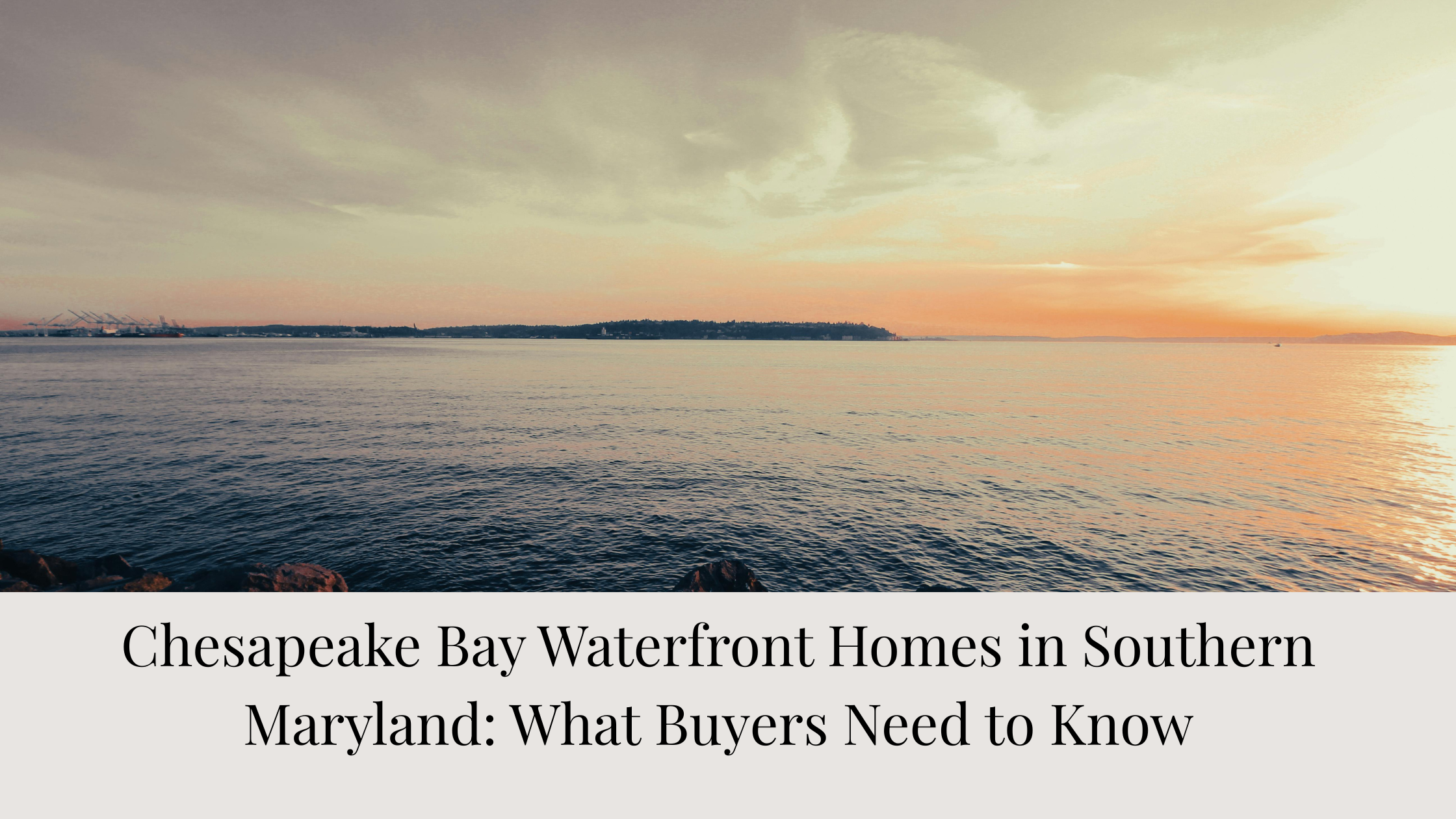
Chesapeake Bay Waterfront Homes in Southern Maryland: What Buyers Need to Know
Thinking about Chesapeake Bay waterfront homes in Southern Maryland? Learn what to know before buying Bayfront or riverfront property in St. Mary’s, Calvert, and Charles Counties with local agent Amanda Holmes.
Chesapeake Bay waterfront homes in Southern Maryland are a dream for a lot of buyers… and a bit of a puzzle once you start digging into flood maps, docks, and price tags. When you’re looking in places like St. Mary’s County, Calvert County, or Charles County, “Bay life” can mean anything from open‑Bay views to quiet creeks off the Patuxent or Potomac.
If you’re scrolling listings for Southern Maryland waterfront homes and wondering what’s real vs. what’s just pretty photos, you’re not alone. I’m Amanda Holmes, your local Southern Maryland real estate agent, and I work with buyers up and down the Chesapeake Bay coastline — from Solomons and Lusby to Leonardtown and La Plata — to help them decide which kind of waterfront lifestyle actually fits their day‑to‑day life.
Why Chesapeake Bay Waterfront in Southern Maryland Is So Unique
When people say “waterfront” in Maryland, they don’t always mean the same thing. In Southern Maryland, a home might sit right on the open Chesapeake Bay in Calvert County, tucked along a St. Mary’s County creek that feeds into the Bay, or on the Potomac River in Charles County that still gives you that “Bay” feel.
Southern Maryland’s Chesapeake Bay and riverfront areas bring a mix of:
- Big‑sky Bay views and open‑water exposure along the Calvert County shoreline
- Quieter creeks and inlets in St. Mary’s County that are great for boating and kayaking
- Potomac River frontage in Charles County that functions a lot like Bay waterfront in daily life
As your local Southern Maryland agent, this is usually the first conversation I have: when you say “waterfront,” do you picture a Chesapeake Bay beach, a sheltered cove near Solomons, or a wide Potomac River view closer to Waldorf and La Plata?
Types of Chesapeake Bay Waterfront Homes in Southern Maryland
Not all Southern Maryland waterfront is created equal, and that matters for both your lifestyle and your budget.
Open‑Bay Waterfront (Calvert County and Beyond)
Think wide Chesapeake Bay views, more wave action, and those postcard‑worthy sunrises or sunsets you see in places like Chesapeake Beach, North Beach, and along parts of Lusby and Solomons. These properties often come with higher price tags and more exposure to wind and weather, but they deliver that classic Bay‑front feel many buyers want in Calvert County.
Creek and Cove Waterfront (St. Mary’s and Calvert)
More sheltered coves and tidal creeks show up all over St. Mary’s County and southern Calvert County. If you’re into boating, paddleboarding, or just not having whitecaps outside your window on a windy day, this type of Chesapeake Bay–connected water access can be ideal. You might trade the huge “open Bay” horizon for calmer water and more usable dock space, especially near areas like Solomons, Ridge, or along Breton Bay and the Patuxent River.
Riverfront and Tidal Tributaries (Charles and St. Mary’s)
Southern Maryland also offers Potomac River frontage in Charles County and Patuxent River frontage in Calvert and St. Mary’s. These are technically riverfront, but in everyday life they feel very “Chesapeake Bay waterfront.” You can boat, fish, and enjoy big water views, sometimes with slightly more approachable prices than prime Bayfront in high‑demand pockets.
When I’m working with buyers, we usually start by deciding which type fits you best: open Chesapeake Bay, quieter coves and creeks, or Potomac/Patuxent riverfront within easy reach of St. Mary’s, Calvert, or Charles County amenities.
What Drives the Price of a Bayfront Home in Southern Maryland
If you’ve ever wondered why two Southern Maryland waterfront homes with similar square footage can have wildly different price tags, here’s what’s going on behind the scenes.
- Water frontage and view
Longer shoreline, wider Chesapeake Bay or river views, and better orientation (sunrise/sunset) all affect value. A narrow, wooded water glimpse in St. Mary’s County prices differently than an open, unobstructed Bay panorama in Calvert County.
- Elevation and shoreline
Higher lots with stable banks and fewer erosion concerns are usually more desirable and may mean fewer long‑term projects. Lower‑lying properties along the Bay or Potomac can be beautiful but may involve more thought around flood risk, insurance, and shoreline protection.
- Dock and boating options
Deep water vs. shallow, fixed vs. floating docks, boat lifts, and how quickly you can get from your pier to open Bay all matter. Even if you don’t own a boat yet, the Southern Maryland market prices as if you might someday, especially near Solomons, North Beach, and other Chesapeake Bay hubs.
- Home style and age
Along the Southern Maryland shoreline, you’ll see everything from older cottages and bungalows to new‑build customs. Many Chesapeake Bay homes have been renovated over time; some have been rebuilt entirely after older homes reached the end of their useful life.
When I sit down with buyers in St. Mary’s, Calvert, or Charles County, we usually decide which two are most important: view, dock/boating, or interior finishes. You can have all three, but your budget will feel it.
Practical Things to Check Before You Fall in Love
Falling in love with the view is easy. The due‑diligence part is less glamorous, but it’s what keeps you from expensive surprises later — especially with waterfront homes in Southern Maryland.
- Flood zones and insurance
Check whether the property sits in a mapped flood zone and what that means for your insurance and lender. Not every Chesapeake Bay or Potomac River home in Southern Maryland is in a high‑risk zone, but you want real numbers, not guesses.
- Shoreline condition and erosion
Look at what’s already in place: riprap, bulkheads, living shorelines, or natural banks. Ask when work was last done and whether permits were required or might be needed in the future for repairs, particularly in areas close to the Bay or wide river stretches.
- Septic, wells, and utilities
Many Chesapeake Bay and riverfront properties in St. Mary’s, Calvert, and Charles Counties run on well and septic. Verify the age and condition, and make sure everything is appropriately sized for the number of bedrooms the house is marketed as having.
- Local regulations and the Chesapeake Bay Critical Area
The Chesapeake Bay Critical Area rules can affect where you can build, expand, add decks, or install additional structures. This is one area where having a Southern Maryland agent who regularly works with waterfront properties is extremely helpful when you’re reading the fine print.
Enjoy the view with your heart, but write the offer with your head — and a good local team.
Lifestyle Questions to Ask Before You Buy in Southern Maryland
Before we even start touring waterfront listings in Southern Maryland, I usually ask buyers a few questions that shape everything:
- Do you want to swim from your property, or is a Chesapeake Bay or river view plus occasional kayaking enough?
- How often do you realistically plan to use a boat, and what size are you picturing for the Patuxent, Potomac, or open Bay?
- Are you okay with guests and family visiting often, because “house on the Bay” tends to attract them in St. Mary’s, Calvert, and Charles Counties.
- How much ongoing maintenance are you comfortable with, both financially and time‑wise, for a waterfront property vs. a water‑view home a street or two back?
Your answers help us decide whether we go after a true “feet‑in‑the‑water” Chesapeake Bayfront home in Calvert, a quieter creek with a great dock in St. Mary’s, or a water‑view property in Charles County that still delivers the feeling without quite as much upkeep.
How a Local Southern Maryland Agent Helps With Chesapeake Bay Purchases
This is where my job as your agent shifts from “unlocking doors” to being a translator between you, the shoreline, and all the paperwork behind it.
As a Southern Maryland real estate agent, I help you:
- Read between the lines of listings to understand what “waterfront” really means in each county
- Ask the right questions about docks, depths, flood zones, and shoreline work along the Chesapeake Bay, Potomac, and Patuxent
- Coordinate inspectors, surveyors, and other pros who understand waterfront nuances in St. Mary’s, Calvert, and Charles Counties
- Balance your wish list with the reality of budget, commute, and long‑term maintenance — whether you’re commuting to D.C., working at Pax River, or planning for retirement
If you’re buying from out of the area, I also act as your eyes on the ground: video walk‑throughs, extra photos of shoreline and access points, and honest feedback about what the day‑to‑day lifestyle will feel like in each part of Southern Maryland.
Considering a Chesapeake Bay Waterfront Home in Southern Maryland?
If you’re serious about Chesapeake Bay waterfront homes for sale in Southern Maryland — whether it’s a full‑time residence, a weekend retreat, or a long‑term retirement plan — you don’t have to figure it out alone.
I’m Amanda Holmes, your local Southern Maryland real estate agent, and I help buyers and sellers navigate waterfront and water‑adjacent properties throughout St. Mary’s, Calvert, and Charles Counties. When you’re ready, reach out and we can talk through your wish list, your budget, and which part of the Chesapeake Bay coastline in Maryland actually fits the way you want to live.

Which Southern Maryland Neighborhoods Are Closest to Beaches, Parks, or Waterfront?
Wondering which Southern Maryland neighborhoods are closest to beaches, parks, and waterfront access? Explore St. Mary’s, Calvert, and Charles County options with local real estate expert Amanda Holmes.
“Okay, but where do I live if I actually want to use the water — not just drive past it?”
If you’ve asked yourself that while scrolling listings in St. Mary’s, Calvert, or Charles County, you’re in exactly the right place. Southern Maryland has more beaches, boat ramps, and waterfront parks than most people realize — the trick is matching your lifestyle (and budget) to the right area, not just chasing a pretty water view.
I’m Amanda Holmes, your local Southern Maryland agent, and I spend a good chunk of my life driving between showings and waterfront parks from North Beach down to Ridge. You might be looking for easy beach days, kayak access after work, or just a pretty place to walk the dog by the water — so let’s walk through where that actually lines up with real neighborhoods and commutes in St. Mary’s, Calvert, and Charles Counties
Calvert County: Classic Bay Beaches and Boardwalk Life
Calvert County is where a lot of people picture “Southern Maryland beach life” — think Bayfront, boardwalks, and those famous Calvert Cliffs in the background.
North Beach and Chesapeake Beach
If you want to be near a beach and have a reasonable commute toward D.C., Chesapeake Beach and North Beach are usually at the top of the list.
- North Beach has a public beach, fishing pier, and a walkable boardwalk with shops and restaurants, plus nearby neighborhoods that keep you a short drive or walk from the water.
- Chesapeake Beach offers marinas, fishing charters, and waterfront condos and townhomes along the Bay, which can work well if you want lower maintenance living close to the water.
From here, many commuters head up Route 4 or Route 260 toward the D.C. metro area, so it’s a popular choice if you want that “water + work” balance.
Lusby, Solomons, and Southern Calvert
As you head south in Calvert County, the feel shifts from boardwalk to coves, creeks, and nature parks.
- Lusby gives you access to Flag Ponds Nature Park and Calvert Cliffs State Park, both with beaches on the Chesapeake Bay, trails, and fossil‑hunting opportunities.
- Solomons Island is a classic waterfront town with marinas, restaurants, and scenic river and Bay views, and nearby neighborhoods often have convenient access to the water by boat or short drives to parks.
If you’re working at or near Pax River, Solomons and southern Calvert can be a nice middle ground between base access and a coastal lifestyle.
St. Mary’s County: Rivers, Bayfront Parks, and Hidden Sand
St. Mary’s County doesn’t always scream “beach town,” but it’s full of parks, landings, and waterfront access points along the Patuxent River, Potomac River, and Chesapeake Bay.
Lexington Park, California, and Pax River Area
If you’re connected to NAS Pax River or nearby employers, you’ll likely be looking in or around Lexington Park and California.
- Elms Beach Waterfront Park in Lexington Park gives you Chesapeake Bay access, with a sandy beach area and water views, and it’s within a reasonable drive of many neighborhoods that serve Pax River.
- Neighborhoods around California and Great Mills often put you a short drive from both riverfront landings and Bayfront parks, which is helpful if you like to launch a kayak or paddleboard before or after work.
This area tends to be a blend of convenience (shopping, major roads) and a “drive a few extra minutes and you’re at the water” lifestyle.
Leonardtown and Northern St. Mary’s
Leonardtown is one of those “best of both worlds” options — you’re not sitting directly on a beach, but you’re nicely positioned between parks, water trails, and landings.
- Nearby parks and landings along Breton Bay, the Potomac River, and local creeks offer scenic water access for boating, fishing, and paddling.
- Leonardtown’s town center, events, and shops give you a sense of community that pairs well with day trips to beaches and waterfront parks around the county.
If you want a more “small‑town” feel with water nearby, not necessarily out your back door, this is often where I start looking with clients.
Charles County: Riverfront Parks, Landings, and a Bit More Driving
Charles County doesn’t have the same number of Chesapeake Bay beaches, but it offers riverfront access along the Potomac and plenty of green space.
La Plata, Waldorf, and Commuter‑Friendly Spots
If your life is split between D.C. commuting and wanting some nature on the weekend, Charles County can make sense.
- From communities around La Plata and Waldorf, you’ll be driving to parks and landings along the Potomac River, but that trade‑off often comes with more suburban amenities and a more direct commute toward D.C. via Routes 301 and 5.
- Various county parks and water access points give you opportunities for boating, fishing, and waterfront trails, even if you’re not in a traditional “beach town.”
I usually tell clients here to think of the water as a short trip, not necessarily their immediate backyard, and focus on how that fits around their work schedule.
Types of Waterfront Access: What You’re Really Choosing
One of the biggest things I walk buyers through is that “waterfront” can mean very different things in Southern Maryland.
- Public beaches and parks: Places like North Beach, Flag Ponds Nature Park, Calvert Cliffs State Park, Breezy Point Beach, and Elms Beach offer sand, swimming, and day‑use style access.
- Neighborhood water access: Some communities offer private or community piers, boat ramps, or small beaches for residents, which can be ideal if you want to launch a boat or kayak without crowds.
- True waterfront property: Homes directly on the Bay, rivers, or creeks tend to come with higher price points and sometimes specific maintenance considerations related to shoreline and elevation.
As your local Southern Maryland agent, I help you line up your wish list with what’s realistic in your budget: sometimes that’s a home with private water access, and sometimes it’s a neighborhood five to ten minutes from your favorite beach or park.
Trade‑Offs: Commute, Budget, and Lifestyle
You’ll feel the trade‑offs pretty quickly when you start comparing listings across St. Mary’s, Calvert, and Charles Counties.
- The closer you are to popular beaches, marinas, and boardwalks (think North Beach, Chesapeake Beach, Solomons), the more you may see higher prices per square foot or HOA communities designed around those amenities.
- Areas with easier D.C. commutes often sit slightly back from the water, with river and Bay access a short drive away rather than right outside the door.
- Some truly quiet, rural, or heavily wooded areas offer beautiful water views or access points but require more planning for shopping, commuting, and services.
My job is to help you decide which mix makes sense for you right now — not just what looks pretty on Instagram.
People Also Ask
What’s the best area in Southern Maryland if I want to be close to an actual beach?
Calvert County usually wins for classic beach access, with public beaches and boardwalks in North Beach, Chesapeake Beach, Flag Ponds Nature Park, Calvert Cliffs State Park, and Breezy Point Beach. You’ll find a mix of year‑round homes, vacation‑style properties, and neighborhoods within a short drive of the sand.
If I work at Pax River, where should I live for easy water access?
Many people working at NAS Pax River look in Lexington Park, California, and nearby St. Mary’s communities so they’re close to the base and Bayfront parks like Elms Beach Waterfront Park. This setup lets you keep commute times manageable while still being within a short drive of multiple landings and waterfront parks.
Are there neighborhoods in Southern Maryland with community piers or private water access?
Yes, several Southern Maryland communities include shared piers, boat ramps, or small waterfront areas reserved for residents, especially around the Bay and larger creeks. These can be a good fit if you care more about launching a boat or kayak than sitting on a large public beach.
How does living near the water affect my budget?
Homes with direct waterfront, water views, or close proximity to popular beaches and marinas typically come with higher prices and sometimes extra considerations like flood insurance or shoreline maintenance. A little farther inland, you may find more square footage for the price while still being within a quick drive to parks and landings.
Can I still have a reasonable D.C. commute and access to water on weekends?
Yes, especially if you look in parts of Charles County and northern Calvert County, where commuters use Routes 4, 5, and 301 to reach the D.C. metro area. In those areas you’ll often drive to beaches and parks, but you can still plan regular Bay or river days without turning it into a full‑blown road trip.
Ready to Find Your Southern Maryland Spot by the Water?
If you’re trying to balance beach days, waterfront access, and real‑world things like commute and budget, you don’t have to figure it out alone. I’m Amanda Holmes — your local Southern Maryland real estate agent — and I help buyers and sellers across St. Mary’s, Calvert, and Charles Counties sort through those trade‑offs every day.
Whether you’re dreaming of a Chesapeake Bay view, a neighborhood with a community pier, or just a home that’s a quick drive to your favorite park, reach out and we’ll map out your options in Southern Maryland, the rest of Maryland, and Virginia together.

Are There Walkable Areas in Southern Maryland, or Is Everything Spread Out?
Wondering if Southern Maryland has walkable neighborhoods or town‑center communities? Explore local insights from Amanda Holmes, your Southern Maryland real estate expert, on walkable spots in St. Mary’s, Calvert, and Charles Counties.
If you’ve ever driven through Route 235 or up Route 4 and thought, “Is there anywhere in Southern Maryland where I can actually walk to dinner or grab a coffee?” — you’re not alone. I hear this question all the time from new buyers and lifelong locals alike. After all, Southern Maryland is known for its quiet back roads, waterfront hideaways, and tree‑lined neighborhoods — but that doesn’t mean every lifestyle here requires a car at all times.
So let’s unpack it: Are there truly walkable, town‑center‑style communities in Southern Maryland, or is everything just spread out? As someone who’s shown homes from Leonardtown to La Plata (and plenty in between), here’s what I’ve learned — and what you’ll want to know before you start house hunting.
What “Walkable” Really Means Here
Now, let’s manage expectations — Southern Maryland isn’t downtown Annapolis or Old Town Alexandria. You won’t find dense city blocks or rail stops. But you will find thoughtfully planned communities and historic small towns where you can stroll to a local shop, a café, or the farmer’s market.
Walkable spots here tend to revolve around either:
- A revitalized historic downtown, like Leonardtown in St. Mary’s County or La Plata’s main area in Charles County.
- A planned mixed‑use community, where developers intentionally designed shops, dining, and homes around a walkable hub — like Solomon’s Island or Wildewood.
St. Mary’s County: Leonardtown Leads the Way
If you’re dreaming of sipping coffee on a square and walking to dinner after a waterfront concert, Leonardtown fits that scene nicely. The town center has become a model for revitalization — with locally owned shops, restaurants, art galleries, and a walkable square. Events like First Fridays bring the whole community out, and it’s one of the few places in Southern Maryland where pedestrian activity feels lively year‑round.
Outside town, neighborhoods like Wildewood and certain areas near California, MD, blend convenience with newer housing. You’ll still drive most places, but you can bike or walk to community pools, schools, and restaurants within the development.
Calvert County: Waterfront Vibes with Pockets of Convenience
Calvert County’s charm comes from its winding roads and Chesapeake Bay views, which means most areas lean residential rather than walkable. However, Solomon’s Island is a standout — compact, scenic, and perfect for a waterfront stroll between museums, restaurants, and the marina. Prince Frederick, the county’s hub, is shaping into more of a town‑center model, with shopping and dining growth near Route 4 that’s steadily becoming more accessible by foot or bike for nearby neighborhoods.
Charles County: Emerging Town Centers and Suburban Convenience
Charles County has seen more recent development geared toward mixed‑use living. Waldorf’s St. Charles communities include parks, trails, and retail access built into the design — convenient for residents who want more amenities close by. Downtown La Plata also offers a small but charming walkable core, with restaurants and local businesses framing the courthouse green.
For homebuyers commuting to D.C. or Northern Virginia, these areas strike a middle ground between suburban comfort and small‑town walkability.
Real Talk: The Trade‑Offs
Buying in a walkable area of Southern Maryland typically means:
- Slightly higher prices per square foot, since demand for convenience is strong.
- More defined HOA structures, especially in planned communities.
- Less seclusion, which can be a plus or minus depending on your lifestyle.
If privacy, acreage, or direct water access top your wish list, you’ll likely trade some walkability for space. Many of my clients pair that choice with smart commuting habits or creating community connections through local events and clubs rather than walkable proximity.
People Also Ask
Are there any truly walkable downtowns in Southern Maryland?
Yes — Leonardtown, La Plata, Solomon’s Island, and parts of Prince Frederick are the main spots where you can live near shops and dining. They’re smaller in scale than urban areas but offer genuine community centers.
Which neighborhoods near Pax River are most convenient for daily errands?
The Wildewood and California, MD areas are popular because they offer nearby grocery stores, restaurants, and parks with manageable traffic. You’ll still need your car, but most essentials are just a few minutes away.
Is Southern Maryland commuter‑friendly if I work in D.C.?
Parts of Charles County (especially Waldorf and La Plata) are commuter‑friendly thanks to direct access to Routes 301 and 5. Calvert and St. Mary’s are commutable too, though you’ll need to plan around longer drive times.
Do any new developments include walkable designs?
Yes, several planned communities — like St. Charles in Waldorf and upcoming mixed‑use projects in Prince Frederick — integrate trails and retail within residential layouts, offering more options each year.
How do I choose between walkability and privacy in Southern Maryland?
It comes down to lifestyle. If you want to stroll to dinner, focus on town‑center or HOA‑based communities. If you crave space, waterfront access, or peace and quiet, lean toward outlying rural areas — and balance it with smart planning for errands and social life.
Thinking About Your Next Move?
If you’re navigating Southern Maryland’s mix of walkable pockets and wide‑open spaces, I’m happy to help you find the right fit. I’m Amanda Holmes — your local Southern Maryland real estate agent — working with buyers and sellers throughout St. Mary’s, Calvert, and Charles Counties (and licensed in Virginia too). Let’s talk about what kind of community actually fits your life, not just your commute.

Is It a Buyer’s or Seller’s Market in Southern Maryland in 2026?
Wondering if it’s a buyer’s or seller’s market in Southern Maryland right now? Here’s a clear 2026 breakdown for Charles, St. Mary’s, and Calvert Counties—and what it means for your next move.
If you’ve been thinking about buying or selling and quietly Googling, “Is it a buyer’s market or seller’s market in Southern Maryland?” you’re not alone.
People ask me this constantly in Charles, St. Mary’s, and Calvert Counties—usually right after they’ve seen one article saying “market slowing” and another saying “prices rising.” So which is it? Are buyers winning, or do sellers still have the upper hand?
I’m Amanda Holmes, a full‑time Southern Maryland Realtor, and I live in the middle of this question every day. Let’s break down what’s actually happening in our local market in 2026—and, more importantly, what it means for you.
First things first: what do “buyer’s market” and “seller’s market” even mean?
Very quickly, without turning this into a textbook:
- It’s generally a seller’s market when there’s low inventory (few homes for sale), strong demand, and homes sell quickly, often with multiple offers.
- It’s generally a buyer’s market when there’s plenty of inventory, homes sit longer, and buyers have more room to negotiate on price and terms.
- A balanced market sits somewhere in between—neither side has a huge advantage, and success depends more on pricing, condition, and strategy than pure market pressure.
Right now, Southern Maryland—Charles, St. Mary’s, and Calvert—is living in that in‑between world: tilting toward buyers compared to a few years ago, but still not a full “buyer’s market.”
Charles County: leaning toward buyers, but not a free‑for‑all
In 2026, Charles County is the closest of the three to feeling like a buyer‑leaning market. Prices have softened slightly compared to the peak, and homes are taking longer to sell. That extra time on market gives buyers more space to breathe and negotiate, especially in commuter‑oriented areas like Waldorf, St. Charles, and White Plains.
As a seller in Charles County, you can still do very well—but you can’t assume you can price at the very top and skip repairs. You’ll want a realistic pricing strategy, strong presentation, and an agent who’s honest about what buyers are actually doing right now.
As a buyer, this is where you may find more room to ask for closing help, inspection credits, or more favorable terms—especially on homes that have been sitting a bit longer. You still need to be prepared and pre‑approved, but you don’t have to write offers from a place of panic.
St. Mary’s County: still seller‑leaning, but calmer
St. Mary’s County still leans more toward sellers, but in a much calmer way than the frenzy days. Prices have been trending up, and good homes—especially those near Pax River, California, and Leonardtown—continue to see solid demand. However, buyers are more careful now, and homes aren’t flying off the shelf in a weekend by default.
If you’re selling in St. Mary’s, you still have an advantage if your home is well‑priced and well‑presented. Military and contractor demand helps keep things moving, but overpricing or skipping basic prep will absolutely show up in your days on market.
If you’re buying, expect competition on the best listings, but with more time to think and more opportunity to keep reasonable contingencies. It’s not “name your price, seller,” but it’s also not “buyers rule everything.”
Calvert County: balanced with a lifestyle twist
Calvert County feels the most “balanced” of the three—neither strongly buyer’s nor strongly seller’s, but very sensitive to the specific property. Homes with the right mix of price, condition, and location (especially near Route 4 or with appealing outdoor space) still perform well, while others may sit and give buyers more leverage.
For sellers, that means you can’t rely on lifestyle appeal alone. Waterfront, larger lots, and wooded settings help, but buyers still expect realistic pricing and reasonable condition.
For buyers, Calvert can be a great space to play the long game: you may not get a steal on the most in‑demand homes, but you can often take a thoughtful approach, do your inspections, and negotiate where the property and days on market allow.
So…what kind of market is Southern Maryland in 2026?
If we zoom out across Charles, St. Mary’s, and Calvert Counties, here’s the honest summary:
- Compared to a few years ago, the market has shifted toward buyers—more inventory, longer days on market, and more room to negotiate in many situations.
- It is not a full, classic “buyer’s market” where sellers are routinely slashing prices just to get offers.
- It’s best described as a more balanced market, with local pockets that lean buyer or seller depending on county, neighborhood, and price point.
That’s why my answer to “Is it a buyer’s or seller’s market?” is almost always, “It depends which county, which neighborhood, and which price range we’re talking about”—and then we pull the data for your situation.
People also ask
1. Is 2026 a better year for buyers or sellers in Southern Maryland?
For pure leverage, buyers have a better shot now than during the extreme seller’s markets of the past few years. For sellers, 2026 can still be excellent if you price correctly and present your home well. It’s less about “who wins” and more about how smartly you play your side.
2. Are there still multiple offers in Charles, St. Mary’s, and Calvert Counties?
Yes, but mostly on homes that are priced right, look great, and sit in especially desirable locations or price ranges. Many other homes are seeing just one solid offer after a reasonable amount of time, which is much healthier and less stressful for everyone.
3. How do I know if my price range is more buyer‑friendly or seller‑friendly?
We look at your specific slice of the market: list‑to‑sale price ratios, days on market, and how many similar homes are for sale versus how many are going under contract. Sometimes entry‑level homes are hotter while higher price points are slower—or vice versa. It’s very rarely one‑size‑fits‑all.
4. Should I wait for a “better” market before I buy or sell?
“Better” depends on your goals. If you’re buying and plan to stay 5–7 years or more, a steady, slightly more balanced market like 2026 can be a good time to move without feeling rushed. If you’re selling and you’ve built solid equity, you can still do very well now instead of trying to time some hypothetical perfect peak.
5. How often does the Southern Maryland market really change?
More often than the headlines suggest. Interest rates, inventory, job changes, and even seasonality (hello, winter slowdowns and spring rushes) all influence whether buyers or sellers have the edge. That’s why I always recommend looking at current, local data—not last year’s memories.
Want to know what the market looks like for you?
If you’re thinking about buying or selling in Southern Maryland—whether in St. Mary’s, Calvert, or Charles County—or anywhere else in Maryland or Virginia, I’d be happy to walk through what today’s market actually means for your specific plans.
I’m Amanda Holmes, your local Southern Maryland agent, and my job is to turn “Is it a buyer’s or seller’s market?” into a much more helpful question: “What’s the smartest move for me right now?” When you’re ready, reach out and we’ll dig into your numbers, your timeline, and your county—so your next step is based on real data, not guesswork.

“Best Real Estate Agent” in Southern Maryland? Let’s Be Honest About What That Really Means
Searching for the best real estate agent in Charles, St. Mary’s, or Calvert County, MD? Learn what actually matters, how to spot a great Southern Maryland agent, and why fit beats flashy claims.
If you’ve ever typed “best real estate agent in Charles County MD” into Google at midnight, you’re not alone.
You might have also tried “best real estate agent in St. Mary’s County MD” or “top Realtor in Calvert County” and then been buried in star ratings, ads, and smiling headshots that all say the exact same thing. At some point, the real question becomes: “Okay, but who is actually right for me?”
I’m Amanda Holmes, a full‑time Realtor working across Southern Maryland—St. Mary’s, Calvert, and Charles Counties—and yes, I know how awkward it sounds to write a blog that even hints at “I’m one of the best” without sounding braggy. So instead of doing that, I’m going to show you how I think you should judge any agent (including me), and what really matters when you’re buying or selling here.
“Best” in Southern Maryland depends on what you need
There isn’t one single “best” real estate agent for everyone in Southern Maryland—and anyone who says otherwise is probably selling more ego than expertise. What you actually want is the best agent for your specific situation, in your specific part of Charles, St. Mary’s, or Calvert County.
- If you’re commuting to D.C. from Charles County, you need someone who understands traffic patterns, HOA communities, and realistic price points in places like Waldorf and St. Charles.
- If you’re near Pax River in St. Mary’s County, you want an agent who understands military timelines, relocation stress, and how that affects negotiations.
- If you’re in Calvert County, you may care more about wells, septics, waterfront nuances, and that “I want some space but still need to get up Route 4” balance.
The “best” agent for you is the one who understands those trade‑offs and can talk through them without needing to Google your town first.
What to look for in a Charles County real estate agent
When people reach out to me in Charles County—Waldorf, La Plata, Bryans Road, St. Charles—their questions usually revolve around commute, neighborhood feel, and monthly payment. Here’s what I’d look for if I were in your shoes:
- Local transaction experience
Ask how many deals they’ve done recently in Charles County, not just in Maryland in general. Experience in local HOAs, townhome communities, and commuter‑heavy neighborhoods matters.
- Comfort with negotiation in a shifting market
Charles County has seen moments where buyers and sellers both have to be flexible. You want an agent who can explain when you can push for closing help, repairs, or price adjustments—and when that might backfire.
- Clear, proactive communication
With appraisals, inspections, and lender timelines, deals here can move quickly and then slow down without warning. You need someone who doesn’t disappear between “under contract” and “clear to close.”
Do I work a lot in Charles County? Yes. Do I call myself “the best” there? No. I’d rather let my responsiveness, negotiation style, and repeat clients make that argument for me while you decide if the fit feels right.
What to look for in a St. Mary’s County real estate agent
St. Mary’s County has its own personality—Pax River, base contractors, rural properties, and growing areas like California and Leonardtown. Picking the right agent here is less about fancy marketing and more about real local fluency.
You’ll want someone who:
- Understands military and relocation timelines
Orders change, dates move, and sometimes you’re buying or selling from out of state. Your agent needs to be steady, flexible, and comfortable coordinating everything remotely when needed.
- Knows how rural and suburban properties differ
You might see well and septic systems, acreage, and older homes that need careful inspection. An agent who regularly works in St. Mary’s will help you see the difference between “quirky but manageable” and “this will be a money pit.”
- Can keep things calm when stress peaks
St. Mary’s often involves tight timelines, appraisals, and sometimes multiple offers on well‑priced homes. A good agent here keeps you grounded, not panicked, and explains each step before you’re in it.
I work with a lot of St. Mary’s buyers and sellers, and my goal is always the same: keep you informed, keep you calm, and keep your deal moving.
What to look for in a Calvert County real estate agent
Calvert County buyers and sellers tend to be focused on lifestyle: more space, water access, trees, and still a realistic Route 4 commute. That comes with its own set of questions and risks. A strong Calvert County agent should:
- Be comfortable with wells, septics, and rural inspections
You need someone who doesn’t blink when you say, “We’re on a well and septic,” and knows which inspections and contingencies are non‑negotiable.
- Understand waterfront and near‑water nuances
Things like flood zones, erosion, and insurance costs can matter a lot. Your agent should at least know the right questions to ask and where to send you for deeper answers.
- Know which areas fit which buyers
Whether you’re okay with a longer commute for more land, or you want a closer‑in neighborhood with an HOA, your agent should help you compare real‑world trade‑offs—not just show you random listings.
Yes, I help clients in Calvert who want that “exhale when you get home” feeling. And my approach is simple: honest expectations, clear pros and cons, and no sugar‑coating.
How I work with buyers and sellers in Southern Maryland (without calling myself “the best”)
I’m not going to tell you I’m “the best real estate agent in Charles County MD” or “1 in St. Mary’s County.” Titles like that are usually marketing, not a guarantee of a good fit. Here’s what I will say about how I work:
- I’m full‑time and deeply focused on Southern Maryland—St. Mary’s, Calvert, and Charles Counties, plus the rest of Maryland and Virginia.
- I’m a clear communicator who will tell you what you need to hear, not just what sounds nice on a postcard.
- I’m patient and detail‑oriented, which clients appreciate when inspection reports, appraisals, or lender issues pop up.
- I care about long‑term relationships, not one‑off closings. I want you to feel comfortable texting me months later with questions.
If that sounds like the kind of agent you want by your side, then I might be the “best” agent for you—and that’s really the only version of “best” that matters.
People also ask
1. How do I actually find the best real estate agent in Southern Maryland?
Start with three checks: local experience in your county, clear communication style, and client reviews that sound like real people, not generic buzzwords. Then talk to the agent—if you don’t feel comfortable asking “dumb” questions, they’re probably not your person.
2. Should I pick the agent with the most signs or the most social media followers?
Not automatically. High visibility can mean they’re active, but it doesn’t guarantee they’ll have time for you or communicate the way you need. Look at how they explain things, how they handle questions, and whether they seem genuinely focused on your goals.
3. Is it okay to interview more than one agent in Charles, St. Mary’s, or Calvert County?
Absolutely. You’re hiring someone to guide you through one of the biggest financial decisions you’ll make. Talking with two or three agents is normal, and a confident professional won’t be offended—they’ll respect that you’re being thoughtful.
4. What questions should I ask an agent before hiring them?
Ask about their recent experience in your specific county and price range, how they handle communication (calls, text, email), what their strategy looks like in today’s market, and how they help clients when things go sideways—because at some point, something always does.
5. How do I know if an agent is really listening to me?
You’ll feel it. They’ll ask follow‑up questions, remember your priorities, and tailor their advice to your situation instead of giving canned answers. If every suggestion ignores your budget, commute, or comfort level, that’s a red flag.
Ready to see if we’re a good fit?
If you’re buying or selling in Southern Maryland—whether in St. Mary’s, Calvert, or Charles County—or anywhere else in Maryland or Virginia, I’d be happy to be one of the agents you interview. I’m Amanda Holmes, your local Southern Maryland agent, and my goal is simple: listen closely, communicate clearly, and guide you through the process with as little stress as possible.
If you’d like to see what it’s like to work together, reach out and we’ll talk through your plans, your timeline, and what you need from your “best” agent—so you can decide if that might be me.
Typical Closing Costs for Buyers in Southern Maryland (And How to Keep Them Manageable)
Wondering how much you’ll pay in closing costs as a homebuyer in Southern Maryland? Learn what’s typical in St. Mary’s, Calvert, and Charles Counties, what’s included, and how a skilled agent can help negotiate seller help.
If you’re thinking about buying a home in Southern Maryland, you’ve probably asked the classic late‑night question: “Okay, I know about the down payment… but what are closing costs, and how much are they going to hurt?”
I hear this all the time from buyers in St. Mary’s, Calvert, and Charles Counties. You’re prepared for the down payment, but the idea of extra thousands due at closing feels like a mystery fee pile no one explained in school.
I’m Amanda Holmes, your local Southern Maryland agent, and I walk buyers through these numbers every day. Let’s break down what typical closing costs look like here, what’s included, and how we can often negotiate to have the seller help you cover them.
How much are closing costs in Southern Maryland?
In Southern Maryland, buyers’ closing costs are typically around 4%–5% of the purchase price—and that’s in addition to your down payment.
So if you’re buying a 400,000 home in St. Mary’s, Calvert, or Charles County, it’s very normal to see closing costs in the 16,000–20,000 range. That number can feel big, but when you understand what’s inside it (and how we can reduce your out‑of‑pocket), it gets much less intimidating.
I always tell my buyers: don’t wait until you’re under contract to think about this. If we plan for closing costs from the beginning, your pre‑approval, search, and negotiation strategy all line up much more comfortably.
What’s actually included in buyer closing costs?
Closing costs in Southern Maryland are not one random fee. They’re a bundle of loan‑related costs, property‑related costs, and state/local charges that show up on your closing disclosure. Common items include:
- Lender fees
Loan origination, underwriting, credit report, and sometimes discount points if you choose to buy down your rate.
- Title and settlement charges
Title search, title insurance, settlement/attorney fee, and related administrative charges. These are handled by the title company or attorney who closes your purchase.
- Prepaid taxes and insurance
Portions of property taxes, homeowners insurance, and sometimes mortgage insurance that are collected upfront to set up your escrow account.
- Government recording and transfer fees
Charges to record your deed and mortgage, plus state/county taxes associated with the transfer. These vary by county and are slightly different in St. Mary’s, Calvert, and Charles.
- Inspections and other buyer costs
Home inspection, termite inspection, well/septic inspection where applicable, and sometimes HOA or condo move‑in fees.
When we work together, I like to rough in these costs early based on your price range, loan type, and county so you’re not surprised when you see the full estimate.
Southern Maryland nuances: St. Mary’s, Calvert, and Charles Counties
Closing costs are influenced by where in Southern Maryland you’re buying and how you’re financing.
- St. Mary’s County
Common for military and contractor buyers around Pax River. You’ll often see VA loans here, which may allow for no down payment but still include closing costs. We’ll look carefully at local taxes, HOA/condo fees (if any), and whether we can structure an offer with seller help without scaring off the seller.
- Charles County
Popular with D.C. and Northern Virginia commuters—especially in places like Waldorf, White Plains, and St. Charles. In some price ranges and market conditions, there’s a bit more room to negotiate for seller concessions, especially if homes are sitting longer. That can help soften your cash‑to‑close even when prices feel high.
- Calvert County
Appeals to buyers who want more space, water access, or a less “busy” feel while still commuting up Route 4. Closing costs can be influenced by well/septic inspections, potential HOA communities, and insurance costs depending on location and property type.
The short version: the 4%–5% guideline is a good starting point, but the exact number depends on your price point, loan type, and the specific property.
Closing costs vs. down payment: they’re not the same
One of the biggest surprises for first‑time buyers is that closing costs are completely separate from your down payment.
For example:
- You might put 3%–5% down with a conventional loan, or even 0% down with some VA or USDA loans.
- But you still need to plan for 4%–5% in closing costs, even if your down payment is low.
- Minimum down payment for an FHA loan ican be as low as 3.5%.
This is why some buyers feel “stuck”—they’re approved for the monthly payment, but the upfront cash feels heavy. The good news? That’s where negotiation and strategy come into play.
How a skilled agent can help you get closing costs covered
Here’s the part no one tells you clearly: in Southern Maryland, it’s very common for buyers to ask the seller to contribute toward closing costs—if the market and property support it.
A skilled local agent can help you:
- Structure an offer that includes seller help with closing costs while still being attractive overall.
- Adjust price and concessions so you’re not just asking for money without context (for example, offering a slightly higher price with seller help built in, when appropriate).
- Read the market in that specific neighborhood—what worked in Waldorf might not work in Leonardtown or Prince Frederick.
I’ve helped plenty of buyers in St. Mary’s, Calvert, and Charles Counties get part—or sometimes all—of their closing costs covered by the seller. It’s not magic; it’s timing, strategy, and understanding what sellers in that micro‑market are likely to accept.
People also ask
1. How much should I budget for closing costs as a buyer in Southern Maryland?
A safe rule of thumb is 4%–5% of the purchase price, separate from your down payment. If you’re looking at a 400,000 home, plan for 16,000–20,000 in closing costs before any seller help. Once we know your loan type and target areas, we can refine that estimate.
2. Can I roll my closing costs into my mortgage?
Usually, buyers don’t literally “roll” closing costs into the loan by default, but you can often structure the deal so that the seller helps cover some or all of them in exchange for a slightly higher purchase price or a stronger overall offer. Your lender can also show you options like paying a higher rate in exchange for lower upfront costs in some cases.
3. Do I still have closing costs if I use a VA or USDA loan with 0% down?
Yes. A 0% down loan only eliminates the down payment—it does not remove closing costs. You’ll still see lender fees, title work, prepaid taxes and insurance, and other charges. The difference is that we’ll usually push a bit harder for seller help or builder incentives to reduce your upfront cash.
4. Are closing costs higher in one Southern Maryland county than another?
Some pieces are similar across St. Mary’s, Calvert, and Charles (like lender and title fees), but county transfer and recording charges can differ slightly. Insurance, taxes, and HOA/condo fees can also vary by property type and location. That’s why your estimate may shift a bit as you zero in on a specific house.
5. When do I find out my exact closing costs?
You’ll get an initial estimate from your lender early on (your loan estimate), then a much more precise number a few days before settlement on your closing disclosure. I like to run rough figures with buyers even before we start touring, then tighten them up once you’re under contract so there are no last‑minute surprises.
Ready to run your numbers for Southern Maryland?
If you’re thinking about buying in St. Mary’s, Calvert, or Charles County—or anywhere else in Maryland or Virginia—I’d be happy to walk through your closing cost numbers with you before you’re locked into anything. I’m Amanda Holmes, your local Southern Maryland agent, and my goal is to make sure you understand exactly what it will take to get the keys, not just what your monthly payment will be.
When you’re ready, reach out and we’ll map out your price range, estimated closing costs, and a strategy to negotiate seller help where it makes sense—so you can move from “Is this even possible?” to a clear, realistic plan.

Is It a Good Time to Buy a House in Southern Maryland in 2026?
Wondering if 2026 is a good time to buy a home in Southern Maryland? Get a clear, local breakdown of market conditions in St. Mary’s, Calvert, and Charles Counties so you can decide with confidence.
If you’ve been scrolling listings at 11 p.m. thinking, “Should I just buy a house in Southern Maryland this year or wait?”, you’re not alone.
I hear this from buyers in St. Mary’s, Calvert, and Charles Counties constantly: prices feel high, rates feel unpredictable, and every headline seems to say something different. You don’t want noise—you want a clear, local answer that fits your real life, not just national averages.
I’m Amanda Holmes, a full‑time Southern Maryland Realtor, and I spend most days helping buyers sort through this exact question. Let’s walk through what 2026 actually looks like for buyers here—and when it might make sense for you to move forward or keep planning.
The 2026 big picture: calmer, more balanced than the frenzy years
Overall, 2026 feels less like the wild multiple‑offer rush of a few years ago and more like a cautious, steady market. Homes in Southern Maryland are still worth more than they were several years back, but the “every weekend is a bidding war” era has cooled.
What that means for you:
- You’re less likely to compete with ten offers on day one.
- You’re more likely to have time for inspections, questions, and actual thought.
- Prices are still elevated compared to pre‑2020, but they’re not racing upward as fast as they were.
In other words, it’s more of a “grown‑up” market now: slower, more negotiable in some areas, but still driven by real demand.
St. Mary’s County: steady demand, thoughtful buyers
St. Mary’s County still has strong underlying demand, especially around Pax River, California, and Leonardtown. Homes here tend to hold interest because of the mix of base jobs, local employers, and a range of property types—from townhomes to rural homes on land.
If you’re buying in St. Mary’s in 2026, expect:
- Well‑priced, clean homes to move steadily, not instantly.
- A bit more breathing room to schedule showings and inspections.
- Competition to show up most clearly on homes that are updated and well‑located for commuting or base access.
This is a good fit if you want options across price points and don’t mind a mix of suburban and rural feel.
Charles County: a bit more room to negotiate
Charles County has started to feel more buyer‑friendly than it did at the peak. In areas like Waldorf, White Plains, and St. Charles, there’s often more inventory to choose from, especially in townhome and planned‑community segments.
Here’s what I see with buyers in Charles County right now:
- You can sometimes negotiate on price, closing help, or repairs—especially if a home has been sitting a few weeks.
- Commute‑oriented neighborhoods still attract D.C. and Northern Virginia buyers, but those buyers are more cautious and less likely to waive every contingency.
- If you’re flexible on exact neighborhood and can live with a slightly longer commute, you may find more options within a given budget.
If you want close access to major commuter routes and more “suburban” living, Charles County can make a lot of sense in 2026.
Calvert County: lifestyle‑driven, long‑term play
Calvert County tends to attract buyers who want space, water access, or a more laid‑back lifestyle without completely giving up a reasonable commute. Think larger lots, mature trees, and communities along Route 4.
In 2026, buyers in Calvert are often:
- Looking for a “this is my long‑term spot” home, not a quick flip.
- Willing to pay for updated, well‑located homes, especially near the Bay or main commuter corridors.
- Taking a bit more time to compare options, but still moving on homes that check the big boxes: location, condition, and price.
If your priorities are lifestyle, outdoor space, or water proximity, buying in Calvert this year can be a smart long‑term decision.
So…is it a good time to buy in Southern Maryland in 2026?
The honest answer: 2026 can be a good time to buy in Southern Maryland if your personal situation lines up with the market realities.
Buying this year tends to make sense when:
- You plan to stay put at least 5–7 years, so you’re not relying on short‑term price jumps.
- Your monthly payment at today’s rates fits comfortably into your budget (not just what a lender approves).
- You’re tired of rent increases, base housing changes, or feeling like you’re stuck waiting for the “perfect” market.
- You find a home in St. Mary’s, Calvert, or Charles that genuinely fits how you live and where you work.
It might be better to wait and prep when:
- Your job, location, or family situation is likely to change in the next year or two.
- You’d have to completely drain your savings just to get into a home.
- You’re hoping to buy now and resell quickly for a big profit—the market has shifted from “rocket ship” to “steady climb.”
My role isn’t to push you into buying; it’s to help you see those trade‑offs clearly so your decision feels calm and intentional.
People also ask
1. Are home prices going to drop in Southern Maryland in 2026?
Most indicators point to slower, more moderate price changes rather than a major drop. Think “leveling out” or gentle adjustment, not a crash. The bigger question for you is whether the current prices and payments work for your budget and long‑term plans.
2. Are there still multiple‑offer situations in St. Mary’s, Calvert, and Charles Counties?
Yes—but not on every listing. Multiple offers tend to appear on homes that are move‑in ready, priced correctly, and in especially convenient or popular locations. Plenty of homes, though, are seeing one solid offer after some time on the market, which gives you more space to think and negotiate.
3. Should I wait for interest rates to drop before buying?
Waiting might bring lower rates, but it can also bring higher prices or more competition. Some buyers choose to buy now with a payment they’re comfortable with and plan to refinance later. Others use this year to strengthen savings, pay down debt, and be in a stronger position when they do buy. The “right” choice depends on your comfort level and timeline.
4. Is Southern Maryland a good place to buy if I work in D.C. or at Pax River?
For many buyers, yes. Charles County often works well for D.C. and Northern Virginia commuters, while St. Mary’s is popular for Pax River and nearby employers, and Calvert can offer a balance of space and commute via Route 4. The best county for you depends on how much driving you’re willing to do, your budget, and the kind of home you want.
5. How do I know if I’m personally ready to buy in 2026?
Look at three things: your job stability, your savings and monthly budget, and what you want your life to look like for the next several years. If those pieces line up—and a home in Southern Maryland fits that picture—then 2026 can absolutely be your year. If they don’t, there’s nothing wrong with using this year to get ready instead of forcing it.
Want to talk through your 2026 game plan?
If you’re thinking about buying in Southern Maryland—whether in St. Mary’s, Calvert, or Charles County—or anywhere else in Maryland or Virginia, I’d be happy to walk through your options with you. I’m Amanda Holmes, your local Southern Maryland agent, and my goal is to make this decision feel clear and manageable, not overwhelming.
When you’re ready, we can look at your budget, your timeline, and what’s actually on the market in the areas you’re considering—so you can decide whether 2026 is your year to buy, or your year to get perfectly set up for the next one.

Southern Maryland Home Values in 2026: What Are Homes Really Worth?
Wondering what your Southern Maryland home is worth in 2026? Get a clear breakdown of Calvert County median home values, St. Mary’s County median home prices, and what today’s market means for you.
If you’ve opened your latest assessment or peeked at a home‑value website lately, you’ve probably wondered: “Okay, but what is my Southern Maryland home actually worth in 2026?”
I hear it all the time: “Are prices still going up?”, “What’s the median home value in Calvert County now?”, “What are homes really selling for in St. Mary’s?” You don’t need hype; you need numbers that help you make decisions about moving, refinancing, or staying put.
I’m Amanda Holmes, a full‑time Realtor working across St. Mary’s, Calvert, and Charles Counties, and I spend most days turning market stats into real‑life strategy. Let’s walk through where home values are sitting in 2026—and what that actually means for you.
Southern Maryland home values: the 2026 big picture
In 2026, Southern Maryland home values are still up compared to the last few years, but the pace is calmer. We’ve moved from “every week feels like a jump” to a slower, more sustainable rise.
For most homeowners in St. Mary’s and Calvert Counties, that means two things:
- Your property is likely worth more than it was a few years ago.
- The dramatic bidding wars have cooled, so the market feels more normal—even if prices are higher than you remember.
My job is to take county‑level trends and zoom them in around your home, your neighborhood, and your plans.
Calvert County home values in 2026
Let’s start with Calvert County. Recent sales point to a median home value in the mid‑400s, with many typical single‑family homes closing somewhere around the 460,000 range. It’s not a giant leap from last year, but it is a clear, steady climb.
On the assessment side, Calvert’s recent reassessment cycle showed noticeable increases in residential property values. That’s the county’s way of saying, “We see your home as more valuable than it used to be,” even if the growth is now more measured than it was at the peak.
If you’re in areas like Prince Frederick, Lusby, Dunkirk, or along the Bay, buyers are still paying for things like lot size, water access, and a workable Route 4 commute. In real conversations, what I see is this: updated homes in practical price ranges move well; homes that are priced like it’s still peak frenzy tend to sit until they get in line with current reality.
St. Mary’s County median home price in 2026
St. Mary’s County has been on a stronger upward path. The median home price is sitting in the low‑to‑mid‑400s, with many “typical” homes landing around 440,000. That’s solid growth over the past year, and it shows up clearly in what buyers are willing to pay near Pax River, California, Leonardtown, and the surrounding communities.
Recent reassessments also reflect a noticeable jump in residential values here, which lines up with what I see in the MLS: homes that were firmly in the 300s not long ago are now comfortably trading in the 400s, especially if they’re reasonably updated and in locations that work well for commuting or base access.
If you own in St. Mary’s, there’s a good chance you have more equity than you think—especially if you bought before the big post‑2020 run‑up.
What these 2026 values actually mean for you
A few practical takeaways if you own (or want to own) in Southern Maryland:
- You’ve likely built real equity.
If you’ve owned your home for several years in Calvert or St. Mary’s, the combination of rising median prices and higher assessments probably means your equity position has improved—often more than people realize.
- Your tax assessment is a clue, not gospel.
Assessments are based on grouped data and lagging information. They can be high, low, or surprisingly close, but they’re not tailored to your upgrades, condition, or exact micro‑location. I use them as a reference point, then refine with actual recent sales.
- Condition and location still decide your “real” number.
Two homes can have similar assessed values and very different market results. An updated house near key commuter routes or Pax River can attract a different price than a similar‑sized home that needs work or is farther out. That’s where a walkthrough and a custom market analysis matter more than any online estimate.
When we sit down, we’re not just saying “the median is X.” We’re asking: “Given this house, in this spot, in this market—what are buyers likely to do right now?”
People also ask
1. Why did my 2026 property assessment in Southern Maryland go up so much?
Because recent years have brought strong price growth across Calvert, St. Mary’s, and the rest of Southern Maryland, the state and counties are updating values to catch up with actual sales. It usually means you’ve gained equity, but it can also mean higher property taxes. If your new number feels out of line with what homes like yours are actually selling for, that’s a good time to compare it with recent local sales.
2. Are home prices in Calvert County still going up in 2026?
Yes—but more slowly. Calvert’s median home value has nudged upward into the mid‑400s, with growth that looks more like a steady incline than a spike. Buyers are watching their budgets more carefully, but they’re still paying for homes that are well‑maintained, well‑priced, and in locations that make daily life and commuting work.
3. What is a “good” price for a typical home in St. Mary’s County right now?
“Good” depends on the house, but for many average single‑family homes, we’re talking about prices in the low‑to‑mid‑400s, with a lot of activity around that 440,000 mark. The real question is how your specific home compares to recent sales in terms of size, condition, and location. That’s why I always walk through the property and pull a focused set of comps rather than relying on one general number.
4. Do higher 2026 values mean it’s a good time to sell in Southern Maryland?
Higher values and steady demand often mean it’s worth at least exploring your options—especially if you’ve outgrown your current home, want to downsize, or are relocating. Whether it’s the right time depends on your interest rate, budget for your next home, and timeline. I like to start with a “no‑pressure net sheet” so you can see what you’d realistically walk away with.
5. How do I find out what my home is worth—not just the county median?
The best approach is a combination of data and eyeballs: we look at recent sales of similar homes in your immediate area, walk your property to account for updates and condition, and factor in current buyer behavior in your part of Southern Maryland. That gives you a realistic price range and a clear sense of what it would take to sell—not just a generic estimate.
Ready to talk about your Southern Maryland home value?
If you’re in St. Mary’s, Calvert, or Charles County—or anywhere else in Maryland or Virginia—and you’re curious what your home might sell for in 2026, I’d be happy to walk through it with you. I’m Amanda Holmes, your local Southern Maryland agent, and my goal is to turn “What’s my home worth?” into a clear, calm plan instead of a guessing game.
When you’re ready, we can look at your specific property, your neighborhood, and your timeline, and build a strategy that fits your real life—not just the headlines.

Southern Maryland Housing Market Trends 2026: St. Mary’s, Charles & Calvert Counties
Curious where the Southern Maryland housing market is heading in 2026? Explore up‑to‑date trends for St. Mary’s, Charles, and Calvert Counties—prices, days on market, and what it all means if you’re buying or selling.
If you’ve been doom‑scrolling listings and headlines lately, you might be wondering: “What is actually going on with the housing market in Southern Maryland right now?” Are prices still climbing? Are homes sitting longer? Is it finally a “good time” to buy or sell in St. Mary’s, Charles, or Calvert County?
You’re not alone. I hear this from buyers, sellers, and “I’m just looking” folks every week—often in the same day. You don’t need more noise; you need a clear, local snapshot of what’s happening right here, not just what’s happening nationwide.
I’m Amanda Holmes, a full‑time Southern Maryland Realtor, and I spend my days (and plenty of evenings) watching how the numbers on paper actually play out in real offers and real negotiations. Let’s break down what’s happening in St. Mary’s County, Charles County, and Calvert County as we head into 2026—and what it means for you.
St. Mary’s County, MD: steady, data‑driven market
In St. Mary’s County, the story right now is steady demand with buyers who are more thoughtful than frantic. Prices have generally trended upward over the last few years, but at a slower, more sustainable pace than the frenzy days.
On the ground, that means well‑priced homes in areas like California, Leonardtown, and near Pax River still get good activity, especially if they show well and are move‑in ready. You’re less likely to see 10 offers in a weekend, but you can absolutely still see strong interest if you price with the current market—not last year’s.
If you’re buying, you’ll usually have more time to think and do due diligence without feeling like you have to write an offer in the driveway. If you’re selling, your edge comes from smart pricing, solid presentation, and understanding how military and commuter buyers are shopping.
Charles County, MD: more room to negotiate
Charles County feels a bit more balanced—and in some segments, even slightly buyer‑leaning. Think Waldorf, La Plata, White Plains, and Bryans Road: areas that attract a lot of D.C. and Northern Virginia commuters who are recalculating what their payment and drive time should look like.
Homes are generally taking longer to sell than they did at peak, and list‑to‑sale prices have tightened. That shows up as more negotiation on price, closing help, and repairs. As a seller, you can’t just assume you’ll get top‑of‑the‑range numbers without backing it up with condition and strategy.
For buyers, Charles County can offer a bit more leverage, especially if you’re flexible on exact location and timing. I’m seeing more room for inspection credits, seller help, and thoughtful offers that don’t have to waive everything but still win.
Calvert County, MD: lifestyle‑driven demand
Calvert County tends to move to the rhythm of lifestyle: water access, lot size, and that “I still have a commute, but I can exhale when I get home” feeling. Prices have generally shown modest growth, with some pockets feeling tighter because inventory is limited and buyers are willing to wait for the right home.
Water‑oriented and larger‑lot properties often hold interest even when rates are higher, as long as they’re priced in line with recent sales. Homes that are significantly dated or priced above the market tend to linger, while clean, updated homes near main commuter routes (like up Route 4) still draw steady showings.
If you’re buying in Calvert, you’re often balancing commute time, budget, and how “rural” you actually want your day‑to‑day life to feel. As your local Southern Maryland agent, I spend a lot of time helping clients compare what their money gets them in Calvert vs. Charles vs. St. Mary’s in very real terms: square footage, taxes, and driving time.
How these Southern Maryland trends actually affect you
Across St. Mary’s, Charles, and Calvert Counties, a few themes keep repeating:
- Prices are not in free‑fall, but the breakneck appreciation has cooled.
- Days on market are longer than the peak frenzy years, which shifts the tone of negotiations.
- Inventory is still not “abundant,” so the best‑prepared listings continue to stand out.
For you, that means this:
- As a seller, you win by being realistic and strategic, not overly optimistic. Price off actual recent comps, prep your home well, and use a marketing plan that speaks to likely buyers (think commuters, military, and move‑up local buyers).
- As a buyer, you often have a bit more breathing room, but truly well‑priced homes can still move quickly. Being pre‑approved and clear on your priorities lets you act confidently without feeling rushed.
When we sit down together, I like to translate the stats into “what does this mean for your house or your search,” not just “here’s a chart.”
People also ask
1. Is it a good time to sell a house in Southern Maryland in 2026?
It can be, especially if you have solid equity and a clear plan for your next move. You’re not in the ultra‑aggressive multiple‑offer world of a few years ago, but you’re also not in a deep discount environment. The homes that win are the ones that are priced correctly for today’s buyers and presented well.
2. Are home prices dropping in Charles County, MD?
In many areas, prices have softened slightly or flattened rather than dramatically dropped. Think gentle adjustment, not collapse. Buyers have more room to negotiate, and sellers need to lean on accurate comps and a realistic strategy instead of testing the top of the market.
3. Is St. Mary’s County still competitive for buyers?
Yes, but it’s a more controlled competitive environment. Homes near bases, major employers, and key commuter routes can still see strong interest, especially if they’re updated and priced well. You often have time to do inspections and write thoughtful offers, but you still need to be ready when the right home hits.
4. How does Calvert County compare to the rest of Southern Maryland?
Calvert tends to be more lifestyle‑driven: people are choosing it for space, water, and a certain pace of life. That can keep demand steady in certain price points even when rates are higher. Compared to Charles and St. Mary’s, it often feels a little more “niche” and location‑sensitive—exact area and commute routes matter a lot.
5. I’m not sure whether to buy in St. Mary’s, Charles, or Calvert—where should I start?
Start with your non‑negotiables: commute, budget, type of home, and how much land you really want to maintain. From there, we can look at how each county lines up with those priorities and what your money gets you in each one. I walk clients through side‑by‑side comparisons all the time so the decision feels grounded, not random.
Ready to talk about your next move?
If you’re thinking about buying or selling in Southern Maryland—whether in St. Mary’s, Calvert, or Charles County—or elsewhere in Maryland or Virginia, I’d be happy to walk through what the current market means for you. I’m Amanda Holmes, and my job is to turn the noise into a clear plan: pricing, timing, and strategy tailored to your situation.
When you’re ready, reach out and we’ll dig into your numbers, your timeline, and your options—so your move feels informed and intentional, not like a guess based on headlines.

What Do I Need to Know About Taxes When Selling My Home in Southern Maryland?
If you’re thinking about selling your home in Southern Maryland, there’s a good chance you’ve asked yourself some version of this: “Okay, but what happens with taxes when I sell? Am I going to get hit with a huge bill?”
If you’re thinking about selling your home in Southern Maryland, there’s a good chance you’ve asked yourself some version of this: “Okay, but what happens with taxes when I sell? Am I going to get hit with a huge bill?”
I hear this all the time from sellers in St. Mary’s, Calvert, and Charles Counties—right after we talk pricing and net proceeds. You want to know what you actually walk away with, not just the pretty number on the offer.
I’m Amanda Holmes, your local Southern Maryland agent, and I spend a lot of time helping sellers understand how taxes fit into the bigger picture of their sale. I’m not a CPA, but I can walk you through the key things you should be aware of so you’re not surprised at the closing table—or next April.
1. Capital gains tax: will you owe it?
When you sell your Southern Maryland home for more than you paid (plus improvements and certain selling costs), that profit is called a capital gain.
At the federal level, many homeowners can exclude a significant amount of gain if the home was their primary residence for at least two of the last five years. The exact numbers and rules can change, so this is where I always suggest a quick check‑in with a tax professional.
Maryland generally treats capital gains as regular income, which means your gain (after any exclusions) gets added to your taxable income and is subject to Maryland state and local income tax. County rates vary, so a seller in Charles County may pay a slightly different combined rate than a seller in St. Mary’s or Calvert.
Where I come in as your Southern Maryland agent is helping you estimate your potential gain—what you paid, what you’ve put into the home, and what your likely sales price could be—so you can bring those numbers to your tax pro for a clear picture.
2. Maryland transfer and recordation taxes: who usually pays?
In Maryland, most home sales involve transfer tax and recordation tax when the deed (and mortgage, if applicable) is recorded. There’s a state transfer tax, a county transfer tax, and a recordation tax that also varies by county.
Typically, the standard Maryland contract has the seller paying the state transfer tax and often sharing or paying part of the county transfer/recordation costs, but this is negotiable and can vary by local custom. In Southern Maryland, it’s common to see these costs split between buyer and seller or structured differently depending on price point, type of financing, and how competitive the market is in places like Waldorf, California, or Prince Frederick.
When I walk you through your estimated net sheet, I’ll include these line items so you can see how transfer and recordation taxes impact what you actually net at closing—not just the contract price.
3. Property taxes at closing: prorations and what you still owe
Property taxes don’t just disappear when you list your home. At closing, taxes are prorated between you and the buyer based on the closing date. That means you’re responsible for your share of the year up to settlement, and the buyer takes over from there.
Because tax rates vary slightly between St. Mary’s, Calvert, and Charles Counties, your exact numbers will depend on where your home is and your current assessed value. If your taxes are paid through an escrow account with your mortgage, your lender will typically refund any remaining escrow balance to you after payoff—something I flag for sellers who are trying to estimate their cash in hand.
This is one of those areas where having a local agent and a solid title company makes things feel much less mysterious; we’re used to explaining those proration lines that make eyes glaze over on settlement statements.
4. Out‑of‑state sellers and Maryland withholding
If you’re selling a Southern Maryland property but you’re no longer a Maryland resident—for example, maybe you were stationed at Pax River and then moved out of state—Maryland often requires tax withholding at closing on the sale of real property.
This withholding is essentially a prepayment toward any Maryland income tax you may owe on the gain from the sale. The rate and exact calculation depend on whether the seller is an individual or an entity, and there are exemptions and forms that can reduce or eliminate withholding in some situations.
I always urge out‑of‑state sellers in St. Mary’s, Calvert, and Charles Counties to coordinate early with both a title company and a tax professional so we can get the correct forms in place well before closing.
5. Improvements, selling costs, and reducing your taxable gain
One of the most common questions I get is: “Can I write off all this money I put into the house?” The answer is: sometimes, and not everything.
Generally, capital improvements that add value or extend the life of the property—like a new roof, finished basement, major kitchen remodel, or adding a deck—can increase your cost basis and reduce your taxable gain. Routine repairs and maintenance (like lawn care or basic touch‑up painting) usually don’t.
Selling costs such as real estate commissions, certain closing costs, and some staging or marketing expenses can also reduce your gain for tax purposes. When we prep your Southern Maryland home for the market, I encourage you to keep records of major improvements and your closing statement so your tax professional can accurately calculate your gain.
6. Local nuance: Southern Maryland specifics that actually matter
Taxes are numbers on paper, but the details of your situation in Southern Maryland make those numbers play out differently. For example:
- A long‑time owner in a highly appreciated area of Charles County who commuted to D.C. may be closer to bumping into federal exclusion limits than a more recent buyer in a rural part of St. Mary’s.
- Waterfront homes in Calvert County may have seen different appreciation patterns than some inland communities, which changes potential capital gains exposure.
- Military and government employees near bases like Pax River or commuting to D.C. often have unique timing considerations, relocation packages, or multi‑state tax questions that affect when it makes sense to sell.
My job as your local Southern Maryland agent is to help you see how these tax pieces connect to your pricing strategy, timing, and net proceeds—so you’re not just selling your house, you’re planning your next step with eyes wide open.
People also ask
1. Do I always have to pay capital gains tax when I sell my house in Maryland?
Not always. Many homeowners qualify for a federal home sale exclusion if the property was their primary residence for at least two of the last five years, which can shelter a large portion of their gain. Maryland then treats any remaining gain as ordinary income. The actual tax due depends on your total income, how long you’ve owned the home, and your cost basis, so it’s smart to run numbers with a tax professional.
2. Who pays transfer and recordation taxes when selling a house in Southern Maryland?
In many Maryland transactions, the seller pays the state transfer tax and some or all of the county transfer/recordation taxes, but this is negotiable and can differ by custom in each county. Sometimes buyer and seller split these costs to make a deal work, especially in specific price ranges in St. Mary’s, Calvert, and Charles Counties. Your contract will spell out exactly who pays what, and I make sure you see those numbers up front before you accept an offer.
3. How do property taxes work at closing when I sell my home?
At closing, property taxes are prorated between you and the buyer based on the settlement date. If you’ve already paid taxes beyond the closing date, you may be credited back; if you’re behind, an amount is usually collected from your proceeds. If your mortgage includes an escrow account, your lender typically refunds any remaining escrow balance after the loan is paid off.
4. I moved out of Maryland—will the state withhold taxes when I sell my old home?
If you’re a nonresident selling Maryland property, the state often requires withholding a percentage of the sale proceeds at closing as a prepayment of potential Maryland income tax. There are exemptions and reduced‑withholding options if you qualify, but you’ll need to complete the proper forms and sometimes get approval before settlement. This is definitely an area where coordinating early with a tax advisor and your title company pays off.
5. Should I talk to a tax professional before I list my Southern Maryland home?
Yes. As your agent, I can help you estimate net proceeds, explain local customs for taxes and fees, and connect the dots between your goals and the market in St. Mary’s, Calvert, and Charles Counties. A tax professional can then take those numbers and apply federal and Maryland rules to give you clear, personalized advice. The combination of both usually leads to better decisions about timing, pricing, and what you do with your equity next.
Ready to talk through your numbers?
If you’re thinking about selling in Southern Maryland—whether you’re in St. Mary’s, Calvert, or Charles County—or anywhere else in Maryland or Virginia, I’d be happy to walk you through what your sale could look like. I’m Amanda Holmes, and my goal is to help you understand not just what your home can sell for, but what you can actually walk away with after taxes and closing costs.
When you’re ready, reach out and we’ll go over your situation, your property, and your next steps—so your move feels planned, not stressful.

How to Prepare Your Southern Maryland Home for a Winter Snowstorm
Get your Southern Maryland home ready before the next winter snowstorm hits. Learn practical tips for homeowners in St. Mary’s, Calvert, and Charles Counties—from protecting pipes to preparing for power outages.
If you’ve ever lived through a Southern Maryland snowstorm, you know it’s not all cozy fireplace scenes and sledding hills. One minute you’re admiring a gentle flurry over the Patuxent River, and the next you’re checking whether your generator still works.
Homeowners across St. Mary’s, Calvert, and Charles Counties ask me this same question every winter: “Amanda, what should I do to get my home ready for a snowstorm around here?”
As someone who’s spent many long weekends juggling showings, salt bags, and power outages all in the same day, I’ve learned a thing or two about keeping homes (and sanity) intact during Maryland’s unpredictable winters. Whether you live near Pax River Naval Air Station, along the waterfront in Solomons, or out in rural Hughesville, here’s how to make sure your home is winter-storm ready.
1. Start with the outside: secure and inspect
Snowstorms in Southern Maryland can bring heavy, wet snow and strong coastal winds. Before the forecast turns white, take a walk around your property:
- Trim branches hanging near your roof, power lines, or driveway. The weight of snow can easily bring them down.
- Inspect gutters and downspouts to make sure they’re clear—ice dams form quickly here when daytime melting refreezes overnight.
- Bring in or tie down patio furniture, grills, and trash bins—especially if you’re in the open areas of Calvert or along the Bay, where gusts can get intense.
If you’re in an HOA neighborhood (common in Charles County communities), check whether they’re responsible for plowing private streets or if you need to handle your section.
2. Protect plumbing and pipes
Here in Southern Maryland, we get just enough deep freezes to cause plumbing headaches, but not often enough that everyone remembers to prepare for them. Focus on:
- Insulating exposed pipes, especially in garages and crawl spaces (common in older Mechanicsville or Prince Frederick homes).
- Letting faucets drip slightly overnight if temps drop below 25°F—especially on exterior walls.
- Shutting off outdoor spigots and draining hoses to avoid split pipes come spring.
If your home is vacant or on the market, I always advise clients to keep minimal heat running to prevent frozen lines.
3. Power up for potential outages
It’s not unusual for parts of St. Mary’s and Calvert Counties to experience short power interruptions during snow events. You don’t need an industrial setup—but a little preparation goes a long way:
- Keep flashlights and spare batteries accessible.
- Charge devices and backup batteries ahead of time.
- Have a small supply kit: bottled water, snacks, extra blankets, and any medications.
- Consider a generator if you live in more rural areas or near the coastline where restoration can take a bit longer.
I’ve seen buyers walk into showings after storms and appreciate homes with built-in generator hookups—it’s a subtle but valuable selling point for winter-readiness.
4. Think driveway and accessibility
If your commute takes you toward D.C. or the bases after a storm, you know how quickly Southern Maryland’s backroads can get tricky.
- Stock de-icing salt or sand early—local stores tend to sell out fast after the first forecast.
- Have snow shovels ready before you need them (bonus points if they’re ergonomic).
- Clear driveways and walkways quickly to prevent refreezing and slipping hazards.
If you live on waterfront or steep-sloped property, address runoff and drainage before winter; melting snow can worsen erosion or basement leaks later.
5. Indoor comfort and home value
Beyond safety, winter prep also protects your home’s market appeal. Buyers touring homes in colder months notice warmth, efficiency, and upkeep.
- Check your furnace filter and schedule a quick HVAC tune-up—energy efficiency matters in winter listings.
- Inspect door sweeps and window seals for drafts.
- Set thermostats a few degrees warmer when showings are scheduled; it makes your home feel more inviting.
Even small steps like these can make your home stand out in the Southern Maryland market when competition thins during winter.
People also ask
1. How often do major snowstorms hit Southern Maryland?
Significant snow events typically happen a few times per winter, though totals vary by county. Calvert and Charles often see slightly higher accumulations than coastal St. Mary’s due to differing elevations and proximity to the Bay.
2. Should I winterize a vacation or rental home in St. Mary’s County?
Yes, especially if it’s vacant. Shut off the main water, drain lines, and keep minimal heat or a smart thermostat active. I’ve helped several out-of-town homeowners set these systems seasonally to avoid damage before listing or renting.
3. What’s the best way to find storm updates for Southern Maryland?
Check local emergency management pages for St. Mary’s, Calvert, and Charles Counties. I also recommend following Southern Maryland Electric Cooperative (SMECO) for outage updates and local weather alerts.
4. Does winter weather affect home sales here?
Not as much as you might think. While traffic to open houses may dip during snow weekends, serious buyers stay active. In fact, well‑prepared homes often stand out more during quieter winter months.
5. Should waterfront homeowners prepare differently?
Yes—check bulkheads, docks, and sump pumps before a storm, as coastal flooding or ice buildup can affect waterfront structures. I’ve seen minor pre‑storm maintenance save major repair costs come spring.
Ready to weather whatever winter brings?
If you need help preparing or positioning your home to sell, I’m here to help. I’m Amanda Holmes—your Southern Maryland real estate resource for St. Mary’s, Calvert, and Charles Counties (and licensed in Virginia, too). Whether you’re maintaining your property, buying, or selling this season, let’s make sure your home stands strong—and market‑ready—all winter long.

Should You Sell Your House As‑Is in Southern Maryland?
If you’ve looked around your house and thought, “There is no way I’m fixing all of this before I sell,” you are not alone. Maybe you’re dealing with time, money, energy—or all three—being in short supply.
As a Southern Maryland agent who works every day in St. Mary’s, Calvert, and Charles Counties, I can tell you there is no one‑size‑fits‑all answer. Sometimes selling as‑is makes perfect sense; other times, a few smart updates can put a lot more money in your pocket. The key is knowing which camp you fall into.
If you’ve looked around your house and thought, “There is no way I’m fixing all of this before I sell,” you are not alone. Maybe you’re dealing with time, money, energy—or all three—being in short supply.
As a Southern Maryland agent who works every day in St. Mary’s, Calvert, and Charles Counties, I can tell you there is no one‑size‑fits‑all answer. Sometimes selling as‑is makes perfect sense; other times, a few smart updates can put a lot more money in your pocket. The key is knowing which camp you fall into.
What “As‑Is” Really Means in Southern Maryland
First, a quick reality check:
Selling “as‑is” in Southern Maryland usually means:
- You’re telling buyers upfront you don’t plan to make repairs.
- Buyers still have the right to inspect and can still walk away if they’re not comfortable.
- Lenders still have standards, especially for safety and major condition issues.
So as‑is is less “no rules” and more “no promises.” You’re setting expectations that you won’t be fixing every little item—but the home still needs to be able to appraise and meet basic loan requirements if the buyer has financing.
When Selling As‑Is Might Make Sense
In St. Mary’s, Calvert, and Charles Counties, selling a home as‑is can make sense if:
- You need to sell quickly due to a move, financial stress, or life change.
- The home needs significant work you don’t have the funds or bandwidth to tackle.
- You’re okay trading some potential top‑dollar price for less hassle and a shorter timeline.
If you’re in a tough spot and just need to get to the closing table, an as‑is strategy can be the right move—as long as we’re realistic about pricing and likely buyers (for example, more investors or buyers comfortable with projects).
When It’s Better to Fix and Polish First
On the other hand, there are plenty of situations in Southern Maryland where doing some work up front will dramatically improve both your price and your buyer pool. That’s especially true in:
- Popular commuter areas in Charles County (like Waldorf and La Plata)
- Well‑located neighborhoods in St. Mary’s and Calvert where move‑in‑ready homes are in demand
- Properties that only need cosmetic updates, not major structural fixes
If your home is basically solid but just dated or tired, making it as “move‑in ready” as possible can attract more buyers, stronger offers, and better terms. In those cases, selling purely as‑is might cost you more than it saves.
How I Can Help You Decide (and Pay for) Updates
This decision does not have to be made alone at your kitchen table. When I walk a property with a seller in Southern Maryland, we usually talk through three tracks:
1. True as‑is:
Minimal prep, focus on safety/cleanout only, priced accordingly.
2. Light refresh:
Cleaning, decluttering, paint, small repairs, maybe a few key updates (fixtures, hardware, curb appeal).
3. Strategic upgrade:
A bit more work—often kitchen/bath touch‑ups, flooring, or larger projects when the return is clearly there.
Here’s where my local network comes in: I work with multiple contractors who can walk the property with us, give realistic estimates, and help prioritize what’s actually worth doing. In some cases, those contractors are willing to be paid out of your closing proceeds instead of upfront, which can be a lifesaver if cash is tight but improvements will clearly boost your bottom line.
What About Staging if I Don’t Have a Big Budget?
Good news: staging doesn’t have to mean a five‑figure bill. I offer:
- A detailed staging walkthrough to help you use what you already own as effectively as possible.
- Access to staging furniture and decor I’ve invested in for my sellers, which I can bring into key rooms when hiring a full stager isn’t in the budget.
In Southern Maryland’s online‑first market, a few well‑staged spaces—living room, kitchen, primary bedroom—can make your photos stand out and help buyers see your home as move‑in ready, even if you haven’t renovated every inch.
People Also Ask
“Will I get less money if I sell my house as‑is in Southern Maryland?”
Usually, yes—but how much less depends on your home’s condition, location, and price point. Sometimes the discount is small compared to the time and stress you save; other times, a few targeted repairs could add far more to your net than they cost to complete. That’s why we’ll run both scenarios before you decide.
“Can I still sell as‑is if my home needs a lot of work?”
You can, but the buyer pool may shift more toward investors or buyers with renovation experience, especially if there are big issues like roof, HVAC, foundation, or major water damage. We’ll also need to think about whether most buyers will be using a loan that has condition requirements.
“What if I want to fix things but don’t have the money upfront?”
This is where my contractor network can really help. In some cases, contractors are open to being paid at closing from your proceeds. We can also prioritize a short list of repairs and cosmetic updates that deliver the biggest impact for the lowest cost.
“Is it okay to list as‑is but still be open to small repairs?”
Yes. You can absolutely list the home as‑is to set expectations, then decide on a case‑by‑case basis if you’re willing to address certain items or offer credits. The key is having a strategy before showings start so you’re not making scattered decisions under pressure.
If you’re staring at your to‑do list wondering, “Should I just sell this house as‑is and be done with it?”, let’s talk through the numbers and the options. Reach out to me, Amanda Holmes—your local Southern Maryland agent in St. Mary’s, Calvert, and Charles Counties, as well as the rest of Maryland and Virginia—and I’ll walk your property with you, outline both paths (as‑is vs. updated), and help you choose the one that makes the most sense for your timeline, budget, and sanity.

How to Sell Your House Fast in Southern Maryland
If you’re lying awake at night thinking, “I just need this house SOLD—fast,” you’re not alone. Whether you’re relocating, upsizing, downsizing, or just done with maintaining a place that no longer fits, you probably want a clear plan, not vague advice.
I’m Amanda Holmes, your local Southern Maryland real estate agent based in St. Mary’s, Calvert, and Charles Counties, and a big part of my job is helping sellers move quickly without leaving money on the table. Let’s talk about what actually works when you want speed and strong offers in Southern Maryland.
If you’re lying awake at night thinking, “I just need this house SOLD—fast,” you’re not alone. Whether you’re relocating, upsizing, downsizing, or just done with maintaining a place that no longer fits, you probably want a clear plan, not vague advice.
I’m Amanda Holmes, your local Southern Maryland real estate agent based in St. Mary’s, Calvert, and Charles Counties, and a big part of my job is helping sellers move quickly without leaving money on the table. Let’s talk about what actually works when you want speed and strong offers in Southern Maryland.
Step 1: Price for the market you’re in, not the one in your head
The fastest way to stall a sale is to price emotionally instead of strategically. In Southern Maryland, buyers are looking closely at:
- Recent comparable sales in your specific neighborhood or subdivision
- Competition in your price band in St. Mary’s, Calvert, or Charles County
- How your home stacks up in photos against similarly priced listings
When I meet with you, we look at hyper‑local data—by neighborhood, not just by county—and build a pricing strategy that says, “We’re serious and competitive,” not “We’re testing the waters.” Sometimes that means listing slightly under where you might land to generate strong early interest and multiple offers, rather than chasing the market with price drops.
Step 2: Make your home “scroll‑stopping” from day one
Fast sales in Southern Maryland usually start online. Buyers are previewing homes from their couch, comparing listings in Waldorf and La Plata to Leonardtown, Prince Frederick, and Lusby before they ever schedule a showing.
To sell quickly, you want:
- Clean, decluttered rooms that photograph well
- Simple, neutral touch‑ups (paint, light fixtures, hardware) that give a fresh feel
- Clear, bright listing photos that show flow, not just random corners
I offer a detailed staging walk‑through and, depending on the property, I can even provide staging furniture and decor for key spaces to save you money on full staging. For larger or higher‑end homes, we’ll decide together if bringing in a dedicated stager makes sense to maximize impact in those first crucial days on the market.
Step 3: Make showings easy (even if it’s a little inconvenient)
If your goal is to sell your house fast in Southern Maryland, access matters. The more hoops buyers have to jump through to see your home, the fewer serious offers you’ll get early.
We’ll talk about:
- Setting showing windows that work for your life but still give buyers flexibility
- Temporary adjustments (like weekend time blocks or a short getaway during the first listing weekend)
- How to handle pets, work‑from‑home schedules, and kids’ routines without losing momentum
Think of the first 7–10 days as your “launch window.” My job is to help you make the most of that window so you’re fielding strong offers instead of wondering where everyone is.
Step 4: Use smart marketing targeted to Southern Maryland buyers
A fast sale isn’t just about sticking a sign in the yard. In St. Mary’s, Calvert, and Charles Counties, buyers come from a mix of local moves, D.C./Northern Virginia commuters, and military or government transfers.
To move quickly, we’ll:
- Highlight what your area does best (commute options, access to bases like Pax River or Joint Base Andrews, waterfront or rural feel, nearby shopping, or schools and amenities buyers can research).
- Position your home clearly in online descriptions—number of minutes to major routes, what type of lifestyle it fits, and where it shines compared to other Southern Maryland homes in your price range.
- Make sure your listing is pushed where Southern Maryland buyers are actually looking, not just quietly sitting in the MLS.
You don’t have to micromanage this; I’ll walk you through the plan and keep you updated on traction.
Step 5: Negotiate for speed and security
Sometimes the fastest offer isn’t the safest one. When you’re selling a home in Southern Maryland, you want the right combination of:
- Strong price
- Clean contingencies (financing, inspections, home sale, etc.)
- Reasonable timelines that match your move‑out needs
I’ll help you compare offers based not just on the number at the bottom, but on how likely each buyer is to get to the closing table on time. Reviews often mention that I’m “two steps ahead” and “great at reducing stress”—this is where that really matters. We’ll talk through the trade‑offs so you can choose speed without inviting unnecessary risk.
Step 6: Plan your next move before you hit “active”
If you’re selling fast, you also need a plan for where you’re going. In Southern Maryland, that might mean:
- Coordinating a buy and sell in the same area
- Selling here and buying elsewhere in Maryland or Virginia
- Temporary rental or staying with family between closings
We’ll map out your timeline, talk through options like rent‑backs or flexible closing dates, and build your listing strategy around your actual life, not a generic template. My goal is for you to feel like someone is steering the ship while you handle your day‑to‑day.
People also ask
“How quickly can I realistically sell my house in Southern Maryland?”
It depends on your price point, condition, and location, but a well‑priced, well‑presented home in St. Mary’s, Calvert, or Charles County can often get strong interest within the first week on the market. The key is nailing price, prep, and access right out of the gate.
“Do I have to do a full renovation to sell fast?”
Usually, no. In many cases, strategic cleaning, decluttering, minor repairs, and a few cosmetic updates (like paint and lighting) go much further than big renovations. We’ll focus on the high‑impact areas buyers care about most and skip the projects that won’t pay you back.
“Should I accept the first offer I get?”
Not automatically. Sometimes the first offer is the best one; sometimes it’s the opening act. I’ll help you evaluate early offers against the current Southern Maryland market, your timing, and the level of interest we’re seeing so you’re deciding based on data—not pressure.
“Can I sell quickly if I still live in the home?”
Yes. Most of my Southern Maryland sellers are living in their homes while we list. With a good prep plan, showing schedule, and clear expectations, you can absolutely balance normal life with a fast, successful sale.
If you’re thinking, “I need to sell my house fast in Southern Maryland, but I don’t want to feel rushed or taken advantage of,” that’s exactly where I come in. Reach out to me, Amanda Holmes—your local Southern Maryland agent serving St. Mary’s, Calvert, and Charles Counties, the rest of Maryland, and Virginia—and we’ll build a clear, realistic plan to get your home sold quickly and confidently.

What Questions Should You Ask About Southern Maryland Historic Homes?
Historic and older homes have a charm you just do not get in newer builds—the woodwork, the character, the sense that the house has a story. But you might also be asking, “Okay, what should I actually ask before I buy a historic home in Southern Maryland so I don’t end up in over my head?”
Falling in love with the charm is easy. Asking the right questions is how you protect yourself
Historic and older homes have a charm you just do not get in newer builds—the woodwork, the character, the sense that the house has a story. But you might also be asking, “Okay, what should I actually ask before I buy a historic home in Southern Maryland so I don’t end up in over my head?”
Falling in love with the charm is easy. Asking the right questions is how you protect yourself.
Ask about the age of the home and major systems
Start with:
- “How old is the home?”
- “When were the roof, electrical, plumbing, and HVAC last updated?”
Original floors are lovely. Original electrical? Less so. You want to know how much has already been modernized and what might still need attention.
Ask about prior inspections, reports, and repairs
You should ask whether there have been:
- Structural inspections
- Termite or pest treatments
- Foundation or moisture repairs
A home that has been thoughtfully maintained is very different from one that has just “made it this far.”
Ask about restrictions or historic guidelines
If the home is in a historic district or has any sort of designation, ask:
- “Are there rules about exterior changes, additions, or materials?”
You want to know whether things like replacing windows, changing siding, or adding a deck require special approvals.
Ask about ongoing maintenance and realistic costs
Older homes often need different upkeep. Ask:
- “What kind of maintenance does a home like this typically need?”
- “What should I budget for in the next few years?”
This helps you decide if the romance of a historic home lines up with your time, skills, and budget.
People also ask
“Are historic homes always money pits?”
Not always. Many have been updated and maintained very well. The key is good inspections and honest conversations before you commit.
“Do I need a special inspector for historic homes?”
It is often a good idea to work with inspectors familiar with older properties—they know where to look and what is normal versus concerning.
If you are drawn to homes with character and want guidance separating “beautifully old” from “expensively old,” Amanda Holmes can help you navigate historic properties in Southern Maryland.

What Questions Should You Ask About Southern Maryland Real Estate Market Forecast Reports?
Market forecasts can feel like weather reports: lots of charts, a few dramatic headlines, and you still walk away thinking, “So…what does this actually mean for me?”
When you see a Southern Maryland real estate forecast, the better question to ask is, “What should I be looking for in this report so I can make smarter decisions about buying or selling?”
Market forecasts can feel like weather reports: lots of charts, a few dramatic headlines, and you still walk away thinking, “So…what does this actually mean for me?”
When you see a Southern Maryland real estate forecast, the better question to ask is, “What should I be looking for in this report so I can make smarter decisions about buying or selling?”
Ask what area and price ranges the forecast is really talking about
Start with:
- “Does this data focus on my county and my price range, or is it broader?”
A forecast for the entire region may not reflect what is happening in your specific pocket of Charles, Calvert, or St. Mary’s—or in your price bracket. You want information that actually matches where you are.
Ask how inventory and demand are expected to move
Look for or ask about:
- “Are they expecting more homes to come on the market or fewer?”
- “Is buyer demand predicted to increase, decrease, or stay steady?”
Inventory and demand together tell you a lot about how competitive things may feel if you step in as a buyer or seller.
Ask how interest rates factor into the forecast
You can also ask:
- “What assumptions are they making about interest rates?”
Forecasts often bake in rate expectations. If those assumptions change, the forecast can shift too. You do not need exact predictions—you just need to know what the report is assuming.
Ask what this means for your timing
Finally, ask:
- “Based on this, what are the pros and cons of me moving in the next 6–12 months?”
That is where a good local agent connects the dots between the report and your life—your budget, your timeline, and your long‑term plans.
People also ask
“Should I delay buying or selling until the forecast is ‘better’?”
It depends on your situation. Sometimes waiting helps; sometimes it means missing opportunities. Your personal timing matters as much as market timing.
“How often should I look at market forecasts?”
If you are 6–12 months away from a move, checking in periodically with a local agent keeps you grounded in what is actually happening—not just headlines.
If you want someone to translate market forecasts into real‑world advice for your specific move, you can reach out to Amanda Holmes to walk through it together.

How Much Does It Cost to Sell a House in Southern Maryland?
If you’re thinking about selling a home in Southern Maryland, you’ve probably wondered, “What is this actually going to cost me at the closing table?” Not just “What can I sell for?” but “How much do I actually walk away with after everything comes out?”
As your local Southern Maryland agent, I walk sellers in St. Mary’s, Calvert, and Charles Counties through this math all the time. You don’t need to memorize every fee, but you do want a clear picture of the major costs so you’re not getting a surprise bill on settlement day.
If you’re thinking about selling a home in Southern Maryland, you’ve probably wondered, “What is this actually going to cost me at the closing table?” Not just “What can I sell for?” but “How much do I actually walk away with after everything comes out?”
As your local Southern Maryland agent, I walk sellers in St. Mary’s, Calvert, and Charles Counties through this math all the time. You don’t need to memorize every fee, but you do want a clear picture of the major costs so you’re not getting a surprise bill on settlement day.
Big Picture: Typical Seller Costs in Southern Maryland
In 2025, total real estate closing costs in Southern Maryland commonly land in the 3%–5% range of the sale price, depending on your county, your contract, and the services you choose. That’s on top of any payoff for your current mortgage.
For example, if you sell a home for \$450,000 in Charles County, your combined closing costs (commissions + taxes + fees) might reasonably fall somewhere in the \$13,500–\$22,500 range—before we subtract your remaining loan balance. When I sit down with you, we run a custom net sheet rather than guessing, but this range gives you a starting frame.
The Main Seller Costs in Southern Maryland
1. Agent Commissions
For most sellers, the largest line item is real estate commission.
- The total commission is usually a percentage of the final sale price.
- It’s typically shared between the listing brokerage and the buyer’s brokerage.
- The exact structure is negotiable and will be spelled out in your listing agreement.
When we talk, I’ll show you what you’re getting for that fee—pricing strategy, staging advice, marketing, negotiation, and contract management—so you can see it as an investment in your final net, not just a line item.
2. Transfer Taxes and Government Fees
Maryland has state and county transfer and recordation taxes that apply when property changes hands. In Southern Maryland, the general pattern is:
- The total tax bill is based on the sale price.
- In many transactions, these costs are split between buyer and seller, but they can be negotiated in your contract.
- Exact amounts vary by county (St. Mary’s, Calvert, and Charles each have their own rate structure).
When we list your home, I’ll plug your estimated transfer and recording costs into a seller net sheet so you can see how they affect your bottom line in your specific county.
3. Title and Settlement-Related Fees
Even as a seller, you may see some title or settlement charges, depending on local custom and your contract. These can include:
- Document preparation fees
- Your share of any title‑related charges the contract assigns to the seller
- Miscellaneous settlement/title company processing fees
In Southern Maryland, the title company or settlement attorney will spell these out in your draft settlement statement. My job is to catch anything that doesn’t look right and get you answers well before closing day.
4. HOA or Condo Association Charges
If your property is in an HOA or condo association, you can expect:
- A resale package or disclosure packet fee
- An account status or payoff letter fee
- Sometimes small administrative fees charged by the management company
These amounts vary widely between associations in St. Mary’s, Calvert, and Charles Counties. We’ll pull this information early so you’re not blindsided when the title company requests it.
5. Repairs, Credits, and Concessions
Your negotiated repairs or credits can be a quiet but significant closing cost. Common examples:
- A seller credit toward buyer closing costs
- Agreed repairs after home inspection
- Concessions for items found during appraisal or final walkthrough
These aren’t “automatic,” but they’re common enough that I always recommend building a little buffer into your expectations. Part of my job is negotiating these items so you’re not giving away more than you need to just to get to the finish line.
How Costs Can Differ by County
The basic categories of closing costs are similar across St. Mary’s, Calvert, and Charles Counties, but there are subtle differences in:
- How transfer and recordation taxes are typically split
- Which side customarily pays certain title fees
- Whether specific inspections or certifications are common in that area
- Local add‑on fees (for example, some jurisdictions or HOAs have unique requirements)
Because I work across all three counties, I’ll tell you what’s normal where your property is and where you have room to negotiate.
Why Understanding Seller Costs Matters
Knowing your closing costs up front helps you:
- Set a realistic list price and net goal
- Decide whether to accept, counter, or walk away from certain offers
- Plan your move‑out timing and next purchase without guessing what you’ll walk away with
- Avoid last‑minute stress when you see the final numbers on your settlement sheet
When I meet with sellers, I almost always prepare a draft net sheet at our first appointment, then update it once we’re under contract so you always know where things stand.
People Also Ask
“What’s the biggest cost when selling a home in Southern Maryland?”
For most sellers, the largest single cost is the total real estate commission, followed by state and county transfer and recordation taxes. After that, your remaining costs are typically smaller line items like title‑related fees, HOA or condo charges, and any negotiated repairs or credits.
“Do sellers pay all the closing costs in Southern Maryland?”
No. Both buyers and sellers have closing costs, and some fees can be split or negotiated. As a seller, you’ll usually see commissions, your share of transfer/recordation taxes, HOA/condo fees if applicable, and any credits or repairs you agree to during negotiations.
“Can I roll my closing costs into the sale price?”
You can’t literally “add” costs to the bottom line, but pricing strategy can absolutely account for what you need to net. When we talk about list price, we’ll also talk about your payoff, estimated closing costs, and what you’d like to walk away with so we’re aiming at a realistic target.
“How early should I ask for a seller net sheet?”
Right away. You don’t need to wait until you’re under contract. I can prepare an estimate before we list, then refine it when offers come in and again before closing so you always understand your numbers.
“Are closing costs different if I’m selling a rental or second home?”
Many of the fees are the same, but your tax situation and timing strategy might be different, especially if you’re dealing with capital gains, 1031 exchanges, or vacancy periods. That’s where we coordinate with your tax pro while I handle the pricing, marketing, and negotiations on the real estate side.
If you’re thinking about selling a home in Southern Maryland and you’d like to know what you’d actually walk away with in St. Mary’s, Calvert, or Charles County, I’d be happy to run the numbers with you. Reach out to me, Amanda Holmes, your local Southern Maryland agent for Maryland and Virginia, and we’ll put together a clear, custom estimate so you can plan your next move with confidence—not guesswork.