

Waterfront Living in Southern Maryland: A Full Guide
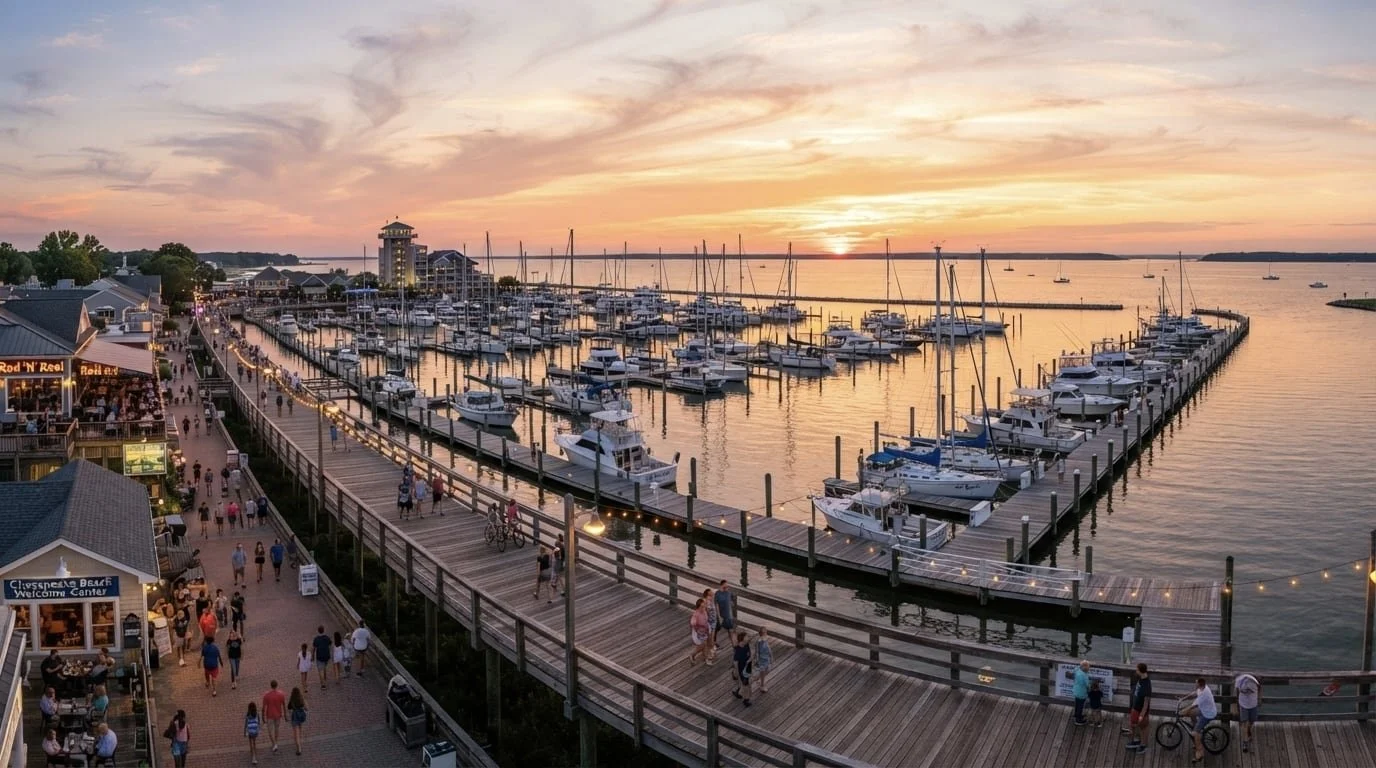
I want to live near the water in Southern Maryland — but where? And what is it actually like, day to day, in each of these places?
That's one of the most common conversations I have with buyers, and it's a harder question than it looks. "Near the water" can mean a bayfront cottage with open Chesapeake exposure, a quiet cove you can paddle a kayak into, or a neighborhood with a shared community pier three streets back from your front door. Each is a different lifestyle, a different price point, and a different set of things to check before you sign a contract.
Heading into 2026, buyers have more room to be deliberate than they did a few years ago. Inventory has loosened compared to 2021–2023, so there's less pressure to rush a waterfront decision. That said, waterfront premiums have generally held even as the broader market has balanced out — good water access doesn't go on sale just because the market softens. I'm also seeing more remote workers and out-of-area buyers actively shopping this segment, since location relative to an office matters less than it used to. Homes priced honestly for their water type and condition are still moving. Overpriced ones tend to sit.
The Short Answer: Where Can You Live Near the Water in Southern Maryland?
Southern Maryland offers a wide range of waterfront and water-access communities across three counties, and they are not interchangeable. Calvert County has the most recognized bayfront towns — Chesapeake Beach, North Beach, and Solomons — and carries the region's highest waterfront premiums. St. Mary's County has the most total waterfront mileage, spread across the Patuxent River, the Potomac River, and countless tidal creeks, meaning more variety and value per dollar, at the cost of a more rural, spread-out feel. Charles County has only limited water access, concentrated mainly around Bryans Road on the Potomac, and functions primarily as a D.C. commuter county rather than a water lifestyle destination. The right answer depends on how you weigh water type, commute, and lifestyle against each other.
If shared piers, ramps, and HOA access fit your budget better than direct frontage, compare Popular Water-Oriented Communities in St. Mary's, Calvert, and Charles Counties.
What Kind of Water Are You Actually Buying?
Not all "waterfront" is the same product, and the differences drive your insurance bill, maintenance load, and boating capability.
Chesapeake Bay frontage is the most premium — open, dramatic, and demanding, with erosion pressure and flood zone designation nearly a given. Patuxent River frontage, in Calvert and St. Mary's, is calmer while still deep enough for real boating. Potomac River properties, in southern St. Mary's and around Bryans Road, are large and tidal but less developed. Tidal creeks and coves are the most common access type — calmer, better for kayaks and small boats, more affordable. In Calvert County especially, community piers and boat ramps offer an affordable path to Bay lifestyle without a private lot, though HOA rules govern use.
For the Bayfront-specific version of this decision, see Chesapeake Bay Waterfront Homes in Southern Maryland: What Buyers Need to Know.
I'm Amanda Holmes, a Realtor with eXp Realty serving St. Mary's, Calvert, and Charles Counties, and much of my waterfront work is helping buyers match water type to how they actually want to live, not just the prettiest listing photo. Keeping a boat at a dock calls for very different needs than a porch, a view, and low-maintenance creek access.
What Every Waterfront Buyer Needs to Know Before They Fall for a Dock
A great dock photo can make a buyer skip past details that matter more. Before you get attached, work through these.
Flood Zone and Insurance
FEMA flood zone designation — AE or VE are common examples of high-risk zones — determines insurance costs and whether coverage is mandatory for financed purchases. Verify this early, not at closing.
Maryland's Critical Area
Maryland regulates all land within 1,000 feet of tidal water under the Critical Area law, limiting clearing, impervious surface, and structure placement — including on private residential property.
Riparian Rights and Dock Permitting
Owning tidal waterfront allows you to apply for a dock or pier permit through the state and county — an application process with requirements, not an automatic guarantee. Read more on what to know before buying a waterfront home in Southern Maryland.
Septic, Well, and Erosion
Most waterfront properties run on private septic and well systems, so include both in your inspection. Erosion matters for Bay- and river-facing lots; shoreline options — rip-rap, bulkhead, living shoreline — vary in cost and permitting complexity.
Community Character: What Life Actually Looks Like
Chesapeake Beach and North Beach
These twin bayfront towns at Calvert County's northern tip offer the closest true waterfront to D.C. and Baltimore. Chesapeake Beach is a working, year-round town with an active marina, boardwalk, fishing pier, and waterfront dining — not a seasonal resort. North Beach next door is smaller and more intimate, with a bayside boardwalk and an arts-and-boutique feel. Community pier neighborhoods offer Bay lifestyle below full bayfront pricing. Read more about Chesapeake Beach and North Beach.
Solomons
Where the Patuxent River meets the Chesapeake Bay at Calvert's southern tip, Solomons is the region's most distinctive waterfront setting — a working maritime village surrounded by water on three sides, with deep-water marinas, charter fishing, crabbing, the Calvert Marine Museum, and a boardwalk of restaurants and galleries. It's a lifestyle destination for boaters, retirees, and second-home buyers, not a commuter community. See buying waterfront property in Southern Maryland for more.
Leonardtown and Breton Bay
St. Mary's historic county seat combines a small-town square with water access nearby — Leonardtown Wharf on Breton Bay is a favorite spot for kayaking and boat launches, with surrounding waterfront along Breton Bay and the St. Mary's River.
Piney Point and Tall Timbers
Along the Potomac corridor in southern St. Mary's County, these communities carry a quiet, remote character built around fishing, boating, and crabbing, anchored by the historic Piney Point Lighthouse — lifestyle and second-home territory more than a commuter option.
Commute Reality: Water Lifestyle vs. Drive Time
Chesapeake Beach and North Beach offer the best commute of any true bayfront community for D.C. or Baltimore workers. Huntingtown and Dunkirk, just inland, trade waterfront for a shorter commute and Bay proximity without the premium. Solomons is a lifestyle destination — the drive to D.C. or Baltimore is substantial. St. Mary's waterfront areas like Piney Point, Hollywood, and Ridge suit NAS Patuxent River professionals and remote workers, but expect a long drive north. Bryans Road, on the D.C. side of the region, offers a more accessible commute with real Potomac access, though fewer nearby amenities. See the Southern Maryland commute guide for a full breakdown.
How Waterfront Living Differs Across Southern Maryland's Three Counties
Calvert County
Calvert's peninsula geography puts Chesapeake Beach and North Beach at the northern anchor and Solomons at the southern anchor, with tidal creek and community pier neighborhoods in between. It carries the region's highest waterfront premiums, but community access brings the Bay lifestyle within reach of more buyers. More detail here: living in Calvert County.
St. Mary's County
St. Mary's has the most waterfront mileage in the region, spread across the Patuxent, the Potomac, and tidal creeks rather than concentrated in one or two towns — more diversity in water type and generally more value per dollar, with the tradeoff of a more rural, remote feel. NAS Patuxent River anchors much of the demand. See living in St. Mary's County for more.
Charles County
Charles County's waterfront is limited to the Potomac River along its western edge, with Bryans Road the primary community offering direct river access — a more budget-accessible way to get Potomac frontage, though amenities are limited compared to Calvert or St. Mary's. Charles County's real strength is the D.C. commuter market, not a water lifestyle identity.
Common Misconceptions About Waterfront Living in Southern Maryland
"Waterfront always comes with a dock." Bordering the water doesn't automatically mean a dock is included or usable — condition and permits need their own verification.
"Flood insurance won't apply to me." If you're financing in a high-risk flood zone, flood insurance is generally mandatory, and cost varies enough that it belongs in your budget planning from the start.
"Community water access is the same as owning waterfront." It's a valid, often more affordable option, but it usually comes with HOA rules, size limits, and sometimes seasonal restrictions that private waterfront doesn't have.
"A water view is basically waterfront." A water-view home typically carries no riparian rights, no flood zone exposure, and none of the maintenance demands of true waterfront, and is priced differently as a result. Both are valid choices; they're just not the same product.
"Critical Area regulations only matter for commercial property." Maryland's Critical Area law applies to all land within 1,000 feet of tidal water, private residential property included, restricting clearing, impervious surface, and construction near the shoreline.
Frequently Asked Questions
Where are the best waterfront communities in Southern Maryland?
It depends on priorities. Chesapeake Beach and North Beach offer commute-friendly bayfront living, Solomons offers the most distinctive maritime village setting, and St. Mary's County offers the widest range of waterfront options along the Patuxent, the Potomac, and tidal creeks.
What is it like to live in Solomons, Maryland?
Solomons is a working maritime village at Calvert County's southern tip, surrounded by water on three sides, built around boating, fishing, and crabbing, with a boardwalk, marinas, and the Calvert Marine Museum. It's a lifestyle and retirement destination rather than a commuter town.
Is Chesapeake Beach, MD a good place to live?
Chesapeake Beach is a year-round, working bayfront town with a marina, boardwalk, fishing pier, and waterfront dining, offering the best commute of any true bayfront community toward D.C. and Baltimore. Fit depends on your priorities around commute and community feel.
What does "water access" mean in Southern Maryland real estate?
"Water access" refers to a property near tidal water without private waterfront ownership — often through a community pier or boat ramp — as opposed to a private lot with direct frontage.
Do I need flood insurance for a waterfront home in Southern Maryland?
If the property sits in a high-risk FEMA flood zone and you're financing, flood insurance is typically required by the lender. Verify flood zone designation before finalizing a contract.
What is the Critical Area in Maryland real estate?
The Critical Area is a Maryland regulatory zone covering all land within 1,000 feet of tidal water. It restricts clearing, impervious surface, and new structures near the shoreline, and applies to private residential property.
Thinking About Waterfront or Water-Access Living in Southern Maryland?
Choosing where to live near the water isn't just about the view — it's about matching water type, commute, budget, and lifestyle to how you actually want to spend your time. Whether you're drawn to the bayfront energy of Chesapeake Beach, the maritime pace of Solomons, or a quieter creek in St. Mary's County, I can help you weigh the tradeoffs across St. Mary's, Calvert, and Charles Counties. I'm licensed across Maryland, D.C., and Virginia, which makes the process easier for relocating and military families too. Reach out to start the conversation.
Amanda Holmes | Realtor, eXp Realty | Southern Maryland Real Estate