
Living in Southern Maryland Amanda Holmes – Southern Maryland Realtor Living in Southern Maryland Amanda Holmes – Southern Maryland Realtor

Living in Southern Maryland: An Honest Guide for Buyers and Relocating Families

Most relocation guides tell you Southern Maryland is affordable and "close to D.C." What they don't tell you is where the nearest grocery store is, how long that commute actually takes, or why Charles, Calvert, and St. Mary's counties feel nothing alike. This is the honest version — no pitch, no filler.

"What's Southern Maryland actually like to live in — not the real estate pitch version, the real version?"

Living in Southern Maryland: An Honest 2026 Guide for Buyers and Relocating Families.

I’m Amanda Holmes, a local Southern Maryland REALTOR®, and I get some version of that question at least once a week. It’s the right question to ask before you uproot your life, sign a 30‑year mortgage, and discover that the nearest Trader Joe’s is 45 minutes away.

So let me give you the honest, local answer — broken down by county, lifestyle trade‑offs, common misconceptions, and everything in between. This is what living in Southern Maryland actually looks like in 2026, whether you’re already here or thinking about moving to Southern Maryland from somewhere else.

 In this guide to living in Southern Maryland, you’ll also find:  

 – Links to current Southern Maryland home prices and market trends  

 – A breakdown of housing options (waterfront, townhomes, rural properties)  

 – Guidance on typical closing costs for buyers in Southern Maryland  

 – Resources for first‑time buyers, PCS/military moves, and relocations 

 The Short Answer: What Living in Southern Maryland Really Feels Like

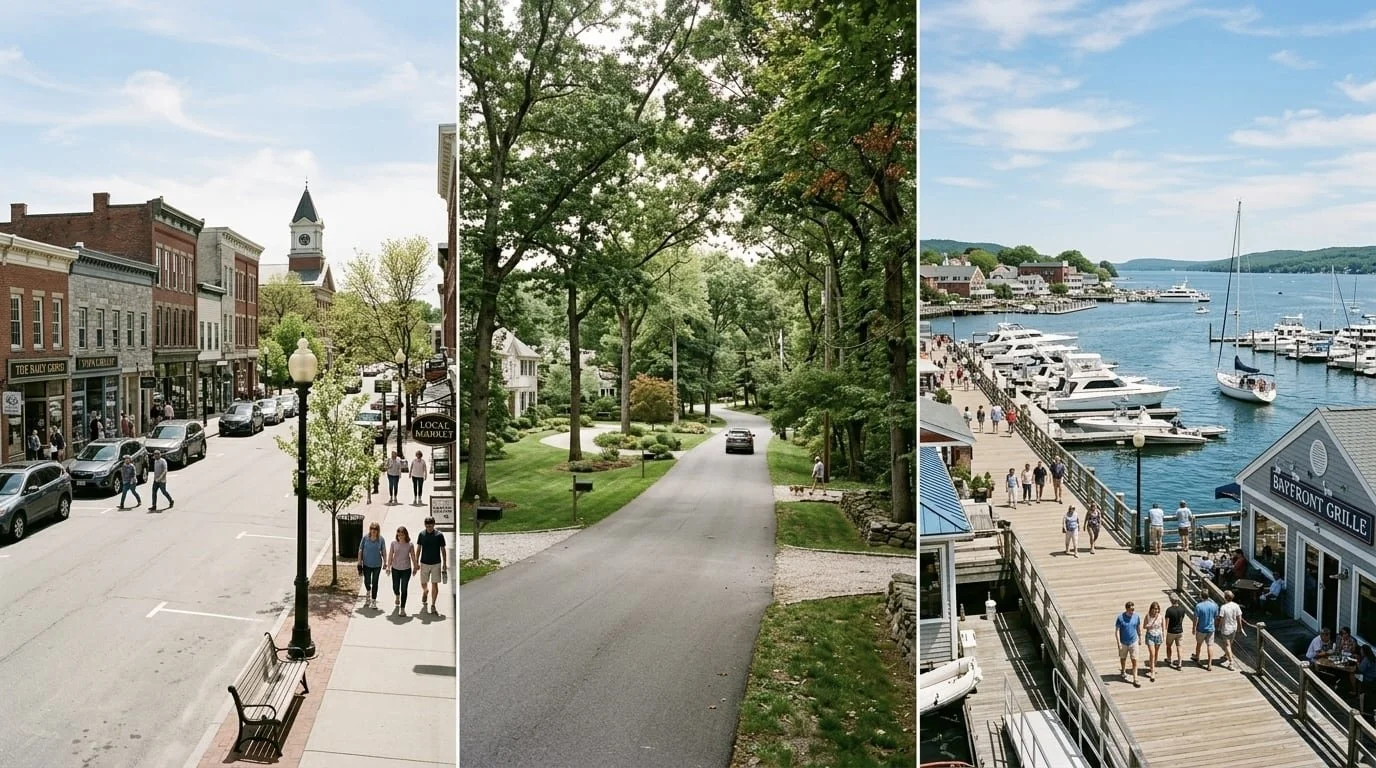
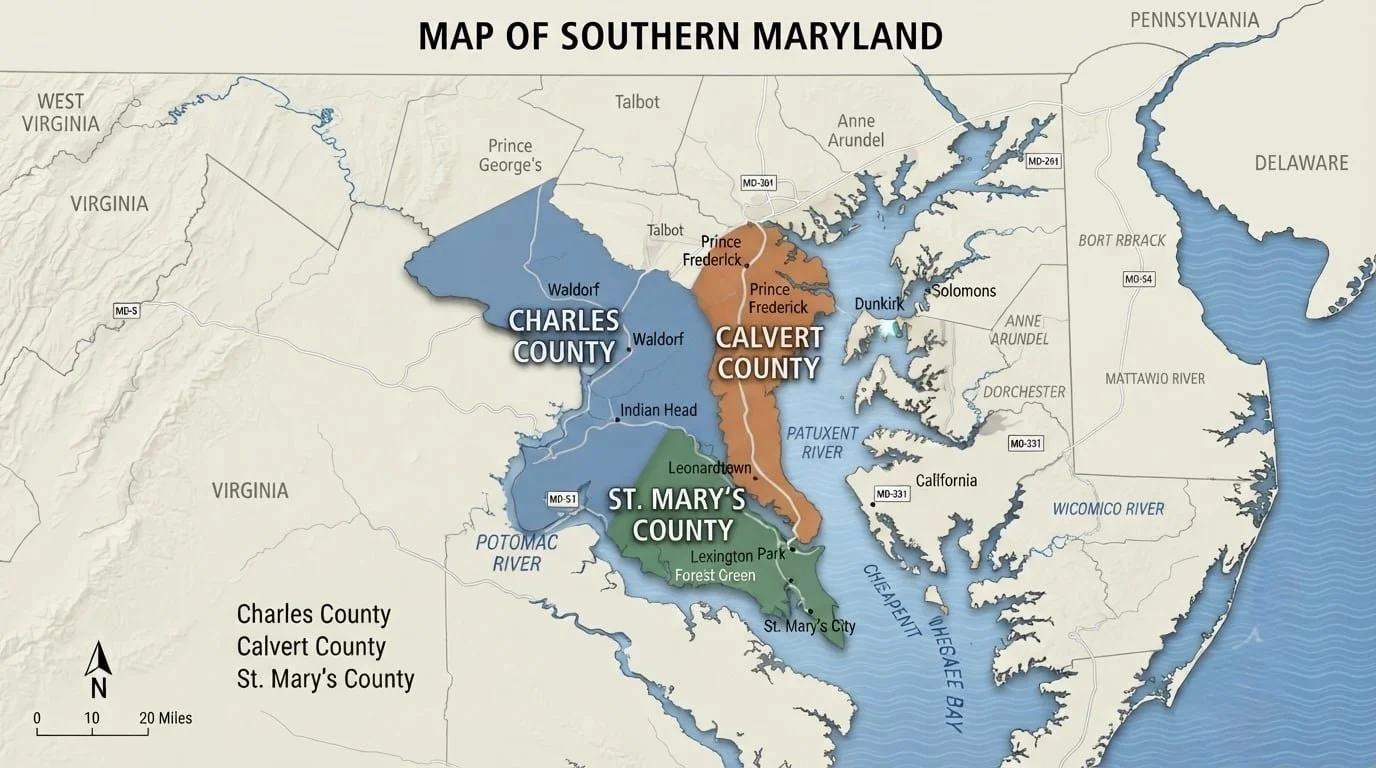
Southern Maryland — St. Mary’s County, Calvert County, and Charles County — offers a genuinely slower pace of life, more space for your money, and a strong sense of local identity. It is not a dense suburb. It is not urban‑adjacent. It is rural, water‑adjacent, and intentional.

Most residents drive everywhere. Most mornings are quiet. Most evenings involve a porch, a river view, youth sports, or a backyard fire pit rather than a nightlife scene. If that sounds like relief, Southern Maryland may be exactly what you’re looking for. If that sounds like isolation, that’s worth knowing before you commit.


 The Daily Rhythm of Life in Southern Maryland

 Mornings

Mornings here tend to start early, especially if you commute. If you work in Washington, D.C., Northern Virginia, or the greater D.C. metro area, expect a commute of roughly 60 to 90+ minutes depending on where you live and where you’re headed.

- Charles County (Waldorf, La Plata): shortest commute times to the D.C. corridor  

- Calvert County: in‑between option  

- St. Mary’s County: furthest out; most residents there either work locally, remotely, or on base at Pax River NAS  

Hybrid and remote work have genuinely changed the calculus for many buyers. People who only commute two or three days a week often find living in Southern Maryland dramatically more livable than they expected.

 Errands and Daily Needs

The big‑box infrastructure is strongest in Waldorf — most chain retail, grocery options, restaurants, and services are there. Prince Frederick in Calvert County and Leonardtown in St. Mary’s County function as smaller town centers with growing retail and dining. Lexington Park near Patuxent River Naval Air Station has solid everyday services driven by the military community.

Specialty stores, boutique fitness, and upscale dining are thinner on the ground. Many residents supplement with day trips to Annapolis, D.C., or Northern Virginia a few times a month — or they simply adjust their expectations and find they don’t miss those things as much as they thought.

 Evenings and Weekends

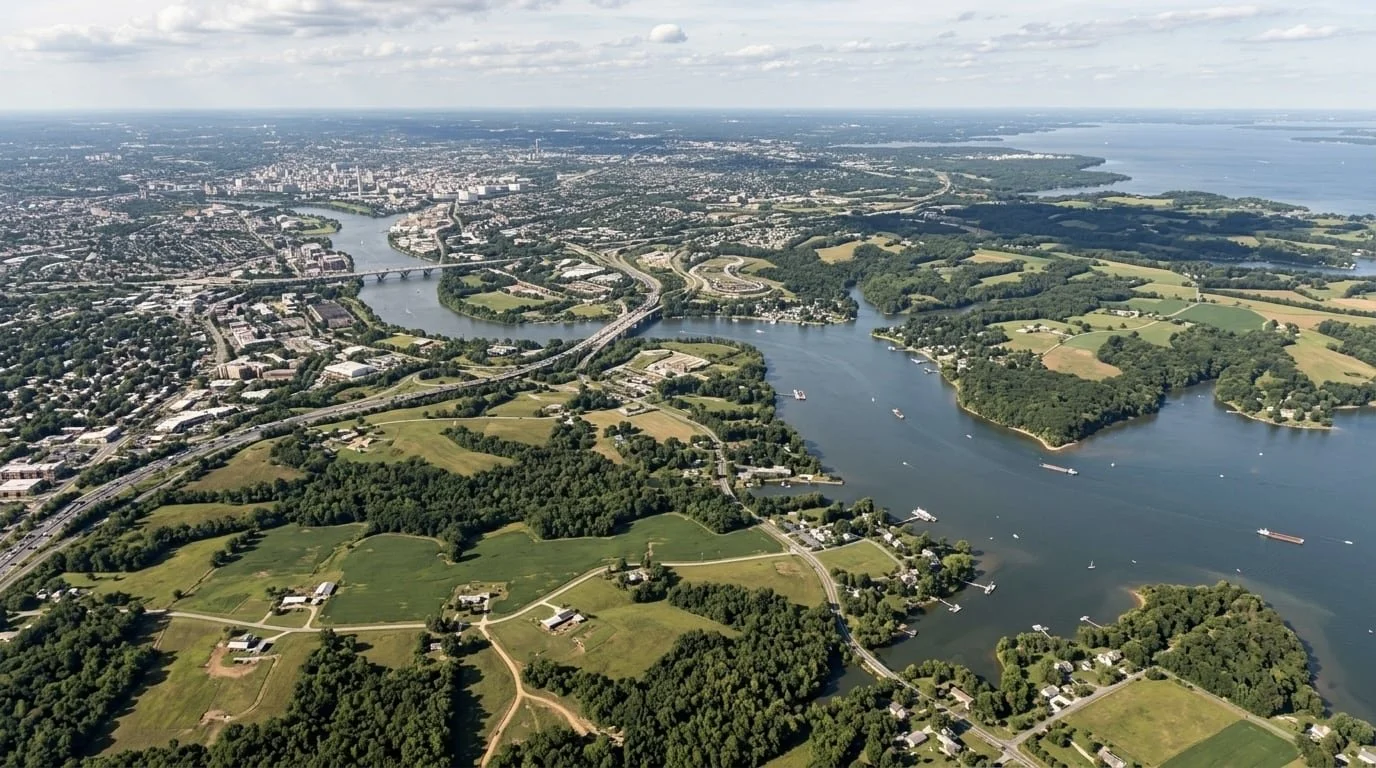
This is where Southern Maryland really shines. The Chesapeake Bay, the Patuxent River, and the Potomac River give residents genuine access to the water in a way that Northern Virginia and inner‑suburban Maryland simply don’t.

Boating, kayaking, fishing, and crabbing aren’t brochure activities here — they’re Tuesday evenings.

Weekends often revolve around local farms and farmers markets, state parks like Calvert Cliffs, waterfront restaurants, youth sports, and the kind of outdoor space that feels earned rather than manufactured. There’s a real culture of self‑sufficiency and outdoor living that runs through all three counties.


 How Life Differs Across Charles, Calvert, and St. Mary’s Counties

If you want a deep dive into current inventory and pricing by county, that’s covered in separate market and pricing guides. From a day‑to‑day living standpoint, here’s how the three counties feel different.

 Charles County — The Gateway

Charles County, anchored by Waldorf and La Plata, is the most suburban of the three. It has:

- The most retail and restaurant options  

- The shortest drives to D.C. and Northern Virginia  

- The most traffic, especially along Route 301 and Route 5 during peak hours  

Home prices range broadly, with many entry‑level single‑family homes starting in the mid‑$300s and moving up through the $600s and beyond for newer construction in planned communities. If you want proximity to metro‑area jobs without paying metro‑area prices, Charles County is usually the starting point for that conversation. Property values here saw meaningful upward movement in the 2026 reassessment cycle, reflecting continued demand from D.C.‑area buyers.

 Calvert County — The Balance

Calvert County sits between the suburban energy of Charles and the rural character of St. Mary’s. Prince Frederick is the commercial center, and towns like Dunkirk, Huntingtown, and Owings attract buyers who want established neighborhoods and water access without feeling too far removed from services.

Calvert has a narrow geographic footprint — essentially a peninsula — which keeps density low and community character intact. Home prices are competitive, typically running from the mid‑$300s to the upper $500s for most residential inventory, with waterfront properties pushing well above that. In my experience working with buyers here, Calvert tends to attract people who have already researched Southern Maryland and know they want a specific kind of quiet.

 St. Mary’s County — The Most Rural

St. Mary’s County, centered on Leonardtown and Lexington Park, has the most distinct identity of the three.

- Leonardtown’s historic town square is legitimately charming — small‑town America that doesn’t feel like a staged version of itself.  

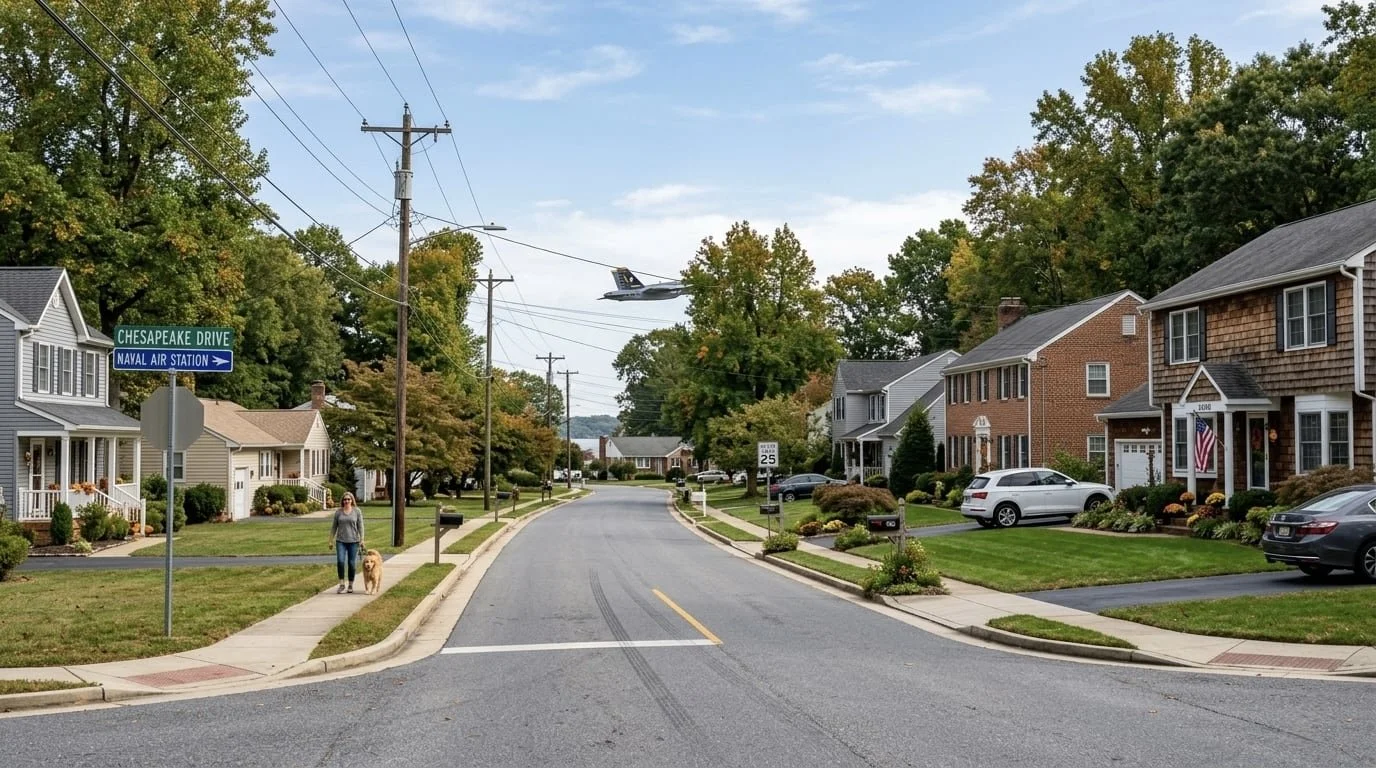
- Lexington Park is heavily influenced by Patuxent River Naval Air Station, which drives steady demand for rentals and homes from military families.  

Life here is slower. Commutes to D.C. are long. But the payoff is space, water access, community events that actually feel local, and home prices that still offer real value — starting in the mid‑$200s for entry‑level homes and ranging up with waterfront access and acreage.


 Common Misconceptions About Living in Southern Maryland

 1. “It’s just a cheaper version of Northern Virginia.”

It isn’t. The lifestyle, culture, and community identity are genuinely different. Buyers who approach Southern Maryland as a discount suburb often end up frustrated. Buyers who approach it on its own terms tend to love it.

 2. “The commute is manageable.”

It depends entirely on your situation.  

- A hybrid worker doing two days in D.C. from La Plata? Often workable.  

- A full‑time, in‑office schedule in Tysons from Leonardtown? That’s a hard daily grind.  

Be honest with yourself about your actual schedule before choosing a county — this is the single conversation I have most often with buyers who are still on the fence about moving to Southern Maryland.

 3. “There’s nothing to do.”

There’s plenty to do — it just doesn’t look like D.C. or Bethesda. Outdoor recreation, water access, local events, and community life are rich here. If your definition of “things to do” requires walkable nightlife, that’s a real mismatch. If it includes crabbing on the Patuxent, you’ll stay busy.

 4. “All three counties are basically the same.”

They’re not. Charles, Calvert, and St. Mary’s have meaningfully different commute profiles, price points, community feels, and daily infrastructure. Treating them as interchangeable is one of the most common mistakes I see buyers make — and one of the most fixable ones once we’ve had an honest conversation about your priorities.

Here is a link for my no-fluff comparison of what it's actually like to live in Calvert County, Charles County, and St. Mary's County.

 5. “Remote work makes location irrelevant.”

Remote work makes location more flexible, not irrelevant. Internet infrastructure, proximity to airports, and access to daily services still matter — and vary noticeably across the region.


 People Also Ask: Southern Maryland Living


 What is the cost of living like in Southern Maryland?

Overall, it’s lower than the D.C. metro area, with more space per dollar. Housing is the biggest advantage — a well‑maintained single‑family home with a yard often runs in the $300s–$400s in many parts of the region, depending on condition and location. Groceries, gas, and daily services are comparable to the broader Maryland average. Recent 2026 property reassessments pushed values up across all three counties, so buyers entering now are working with updated baselines.

For a deeper dive into what homes actually cost right now, read my 2026 Southern Maryland home price breakdown. 

 Is Southern Maryland a good place to raise a family?

Many families choose Southern Maryland specifically for the combination of space, lower density, and access to outdoor activities. Each county has its own school districts with varying options and special programs. It’s worth researching specific schools and offerings based on your children’s needs before choosing a neighborhood.

For info on Southern Maryland communities that are great for families, you can find my guide here.

 How long is the commute from Southern Maryland to Washington, D.C.?

It typically ranges from roughly 60 minutes from northern Charles County to 90 minutes or more from central St. Mary’s County, depending on traffic, time of day, and your D.C. destination. The commute is the most common reason people ultimately choose not to move here — and the most common thing people underestimate.

For more information on places to live in Maryland if you commute to DC, check my Maryland guide for DC commuters.

 What is the housing market like in Southern Maryland in 2026?

The market remains competitive but more balanced than the frenzied pace of 2021–2023. Inventory is still relatively limited in desirable areas, and well‑priced homes in strong locations move quickly. Buyers are finding more negotiating room than a few years ago, but this is not a classic buyer’s market. If you want a current read on active listings and days on market by county, that’s something I track closely and am happy to walk through with you.

 You can see current numbers in my Southern Maryland home price and market update.  

 Is Waldorf, MD a good place to live?

Waldorf is Charles County’s commercial and residential hub. It offers convenience, a wide range of services, and the shortest commutes to the D.C. area. It’s the most suburban part of Southern Maryland and suits buyers who prioritize accessibility. It’s also the most traffic‑dense part of the region — something worth experiencing firsthand during rush hour before you commit.

 What’s the difference between living near Patuxent River NAS and other parts of Southern Maryland?

The Lexington Park area near Pax River has a strong rental market and steady buyer demand driven by military relocations. It’s more service‑rich than many other parts of St. Mary’s County and has a more transient population mix, which influences community character and resale dynamics.

 Does Southern Maryland flood?

Flood zones exist throughout the region, particularly near waterfront and low‑lying areas along the Bay, rivers, and their tributaries. Properties in or near flood zones require flood insurance and should be evaluated carefully. This is something I flag early in every home search near the water — it affects insurability, long‑term costs, and resale in ways that aren’t always obvious from listing photos.


 Ready to Figure Out If Southern Maryland Is the Right Fit for You?

The honest truth is that Southern Maryland is the right answer for some buyers and the wrong answer for others — and the difference usually comes down to lifestyle expectations and commute tolerance, not the homes themselves.

I work with buyers and sellers across St. Mary's County, Calvert County, and Charles County, as well as throughout Maryland and Virginia. The goal isn’t to sell you on a ZIP code — it’s to help you make a decision you’ll still feel good about in five years.

If you're trying to figure out which county fits your life, how your budget translates to real inventory, or whether the commute math actually works for your situation, reach out for a real conversation. No pressure, no pitch — just someone who lives and works in Southern Maryland every day and would rather you make the right call than the fast one.

Read More
Living in Southern Maryland Amanda Holmes – Southern Maryland Realtor Living in Southern Maryland Amanda Holmes – Southern Maryland Realtor

What Are Housing Options Like in Southern Maryland? A 2026 Buyer's Guide

Southern Maryland doesn't fit neatly into one housing category, and that's actually one of its biggest strengths. Whether you're looking for a new construction townhouse in Waldorf, a waterfront retreat on the Chesapeake Bay, or a farmette on several acres in St. Mary's County, this region has more variety than most buyers expect. Here's an honest, county-by-county breakdown of what's actually available—and what each type of housing will cost you in 2026.

"So what kind of houses are actually down there—is it all farmland, or is there real suburban stuff too?"

This question comes up constantly with buyers who've heard "Southern Maryland" but don't have a mental image to attach to it. The honest answer is: it depends entirely on which county you're in, and even which part of that county. Southern Maryland spans a wide spectrum from dense suburban development to working farms to waterfront communities to brand-new construction neighborhoods—sometimes within twenty minutes of each other.

This guide walks through the full housing landscape across Calvert County, Charles County, and St. Mary's County in 2026. By the end, you'll know exactly what type of home and setting is realistic for your budget, your lifestyle, and your priorities.


 The Short Answer

Southern Maryland offers a genuinely diverse housing inventory that includes suburban single-family homes and townhouses (primarily in Charles County), waterfront and water-access properties (particularly in Calvert County and along the Patuxent River corridor), semi-rural and rural single-family homes on larger lots, and a growing supply of new construction across all three counties.

Median home prices range from approximately $408,000 in St. Mary's County to $475,000 in parts of Calvert County, with waterfront homes and newer construction pushing above those benchmarks. The region lacks the high-rise condo and dense urban housing typology you'd find in D.C., Baltimore, or Annapolis—but for buyers seeking space, land, and proximity to water at prices below most D.C. metro alternatives, Southern Maryland consistently delivers.


 The Four Main Housing Types in Southern Maryland

 Suburban Single-Family Homes

This is the most common housing type in Charles County and in the northern portions of Calvert County. Think established subdivisions, quarter-acre to half-acre lots, attached two-car garages, and the familiar rhythms of suburban life: HOAs, neighborhood pools, organized common areas.

Waldorf, White Plains, and the St. Charles planned community in Charles County represent the densest suburban development in the region. St. Charles in particular was master-planned decades ago and has a fully built-out infrastructure of neighborhoods, parks, and commercial corridors. Buyers relocating from Prince George's County, Fairfax County, or similar suburban markets will feel immediately oriented.

These homes tend to range from the mid-$300,000s for older stock to the high $400,000s and above for newer or larger builds. They're the most plentiful segment of the market and generally offer the most comparable-sale data for pricing clarity.

 Townhouses and Attached Housing

Townhouses represent a meaningful slice of Southern Maryland's housing inventory, concentrated most heavily in Charles County. Waldorf has the region's strongest supply of attached housing—end-unit and interior townhouses, some with rooftop decks and modern finishes, others in older communities that have appreciated steadily over time.

Entry-level townhouse pricing in Charles County starts around the high $200,000s to low $300,000s for older stock and climbs into the mid-to-upper $300,000s for newer or updated units. This makes attached housing Southern Maryland's most accessible entry point for first-time buyers or buyers coming in with limited down payments.

Calvert and St. Mary's Counties have comparatively less attached housing inventory, though both have pockets of townhouse development near their commercial centers—Dunkirk in Calvert and Lexington Park in St. Mary's.

 Waterfront and Water-Access Properties

This is where Southern Maryland distinguishes itself from most comparable-priced markets. The region's geography—bordered by the Chesapeake Bay to the east, the Patuxent River running through its center, and the Potomac River along Charles County's western edge—creates an extensive waterfront inventory that's genuinely rare at these price points.

True waterfront properties (private pier, direct water frontage) in Calvert County and St. Mary's County can range from $600,000 to well over $1 million depending on water depth, lot size, and structure. But "water access" is a broader category that includes community piers, water-privileged lots within walking distance of the Bay or a river, and homes with navigable creek access—and those can start in the high $400,000s to mid-$500,000s.

Chesapeake Beach and North Beach in northern Calvert County have a particularly active waterfront and water-adjacent market. St. Mary's County has significant inventory along the Patuxent River and St. Mary's River, and even parts of Charles County near the Potomac offer water-access properties that go largely unnoticed by buyers who aren't specifically looking for them.

 Rural and Semi-Rural Properties

One of Southern Maryland's most underappreciated housing segments is its rural and semi-rural inventory—properties on two, five, ten, or more acres that offer genuine land without going fully agricultural.

These homes range from older farmhouses that need updating to well-maintained newer builds on large wooded or open lots. St. Mary's County has the highest concentration of this type of property, followed by southern and eastern Charles County. Calvert County's peninsula geography limits the total available acreage somewhat, but pockets of rural land exist throughout the county's midsection.

Price range for rural properties varies widely. A 3-bedroom home on five acres in a rural St. Mary's County corridor might be priced comparably to a suburban townhouse in Waldorf—sometimes under $400,000—while a newer custom build on several acres with updated systems and finishes could push well above $500,000.

 New Construction

New construction has been a consistent part of the Southern Maryland market for the past decade, and 2026 is no exception. Charles County—particularly around Waldorf, White Plains, and La Plata—has the most active new construction pipeline. Several national and regional builders have maintained a steady presence here, offering both attached and detached homes at various price points.

Calvert County has more limited new construction activity given land constraints on the peninsula, but developments in the Dunkirk and Prince Frederick corridors have continued to bring fresh inventory. St. Mary's County has new construction concentrated around California, Lexington Park, and the areas surrounding NAS Patuxent River, driven by demand from military families and government contractor households.

New construction pricing in Southern Maryland typically starts in the low-to-mid $400,000s for attached homes and climbs from the mid-$400,000s to the high $500,000s and above for detached single-family builds, depending on square footage, lot premiums, and builder upgrades.


 Housing Options by County: What to Actually Expect

 Charles County Housing

Charles County has the most housing variety in terms of type and density. Waldorf and surrounding communities offer everything from affordable townhouses and entry-level condos to larger single-family homes in planned subdivisions. The northern part of the county—closer to the Prince George's County line—has older inventory and established neighborhoods with more mature landscaping and character.

La Plata, the county seat, sits further south and has a different inventory profile: fewer attached homes, more detached single-family properties, and a mix of newer subdivisions and older established streets. Rural Charles County—think Newburg, Pomfret, and the county's eastern edges—offers farmland-adjacent acreage properties and older homes that represent the most rural housing experience available in the county.

New construction is most active in the Waldorf and White Plains corridors, where several builders consistently bring inventory to market.

 Calvert County Housing

Calvert County's housing stock reflects its geography and character. The northern part of the county—Dunkirk, Owings, Chesapeake Beach—has a mix of established subdivisions, waterfront communities, and semi-rural properties. Moving south toward Prince Frederick and Huntingtown, the inventory shifts more toward detached single-family homes on larger lots with less suburban density.

Waterfront and water-access homes are Calvert's signature offering, and the Chesapeake Bay and Patuxent River corridors have properties ranging from modest cottages to significant estate-style homes. The county has limited townhouse inventory relative to Charles, which means entry-level buyers may face a narrower selection of lower-price-point options.

Calvert's peninsula geography has kept density lower than Charles County, and that tends to appeal to buyers who want more of a community feel without full rural isolation.

 St. Mary's County Housing

St. Mary's County is Southern Maryland's most rural county in character, and its housing reflects that. The largest concentration of suburban-style housing is around Lexington Park and California—the communities closest to NAS Patuxent River—where you'll find newer subdivisions, builder communities, and attached housing options aimed at military and contractor households.

Leonardtown, the county seat, has a distinctive historic character with a mix of older homes in walkable proximity to the town square and newer developments on the outskirts. It's one of the few places in Southern Maryland where you can genuinely walk to restaurants and shops from a residential neighborhood.

Everywhere else in St. Mary's County, the dominant housing type is detached single-family homes on larger lots, often with significant acreage, mature trees, and rural views. For buyers who want the most land for the least money in Southern Maryland, St. Mary's County is the consistent answer.


 What Buyers Often Overlook About Southern Maryland Housing

 1. "Waterfront" means very different things at different price points.

Buyers sometimes dismiss waterfront housing as out of reach without realizing how many water-access tiers exist below private-pier direct waterfront. Community pier access, water-privileged lots, and homes near public boat ramps can deliver much of the waterfront lifestyle at significantly lower prices.

 2. New construction isn't always the best value.

Builder communities in Southern Maryland are well-priced by regional standards, but the final cost of a new build—after lot premiums, structural upgrades, design center selections, and closing cost packages—often runs $40,000 to $80,000 above the advertised base price. Resale homes with recent updates can represent better value per square foot.

 3. Rural doesn't mean low maintenance.

Buyers attracted to acreage properties should budget for well and septic systems, longer driveways, higher heating costs in older homes, and the general reality that more land means more work and more expense. It's a lifestyle trade-off worth going in with eyes open.

 4. Charles County has more housing options than most buyers expect.

Because Waldorf has a reputation as a traffic-heavy suburban corridor, buyers sometimes write off Charles County before understanding the range of housing it contains—from affordable attached homes to rural acreage properties to newer custom builds in La Plata. It's a county worth exploring fully, not just driving through on US-301.

 5. Inventory moves fast in competitive price bands.

In 2026, well-priced and well-conditioned homes in the $380,000–$480,000 range across all three counties still move quickly, particularly in Charles County's Waldorf corridor and in northern Calvert County. Buyers who spend too long deliberating on a property often find it under contract. Having your financing in order before you start touring is not optional—it's the minimum.


 People Also Ask: Southern Maryland Housing Options FAQ

Are there waterfront homes for sale in Southern Maryland?

Yes—Southern Maryland has one of the most active waterfront and water-access housing markets in the mid-Atlantic region, with inventory along the Chesapeake Bay, Patuxent River, Potomac River, and numerous tidal creeks. True waterfront homes with private piers typically start around $600,000 and can exceed $1 million. Water-access and water-privileged properties offer entry points starting in the high $400,000s.

Is there new construction available in Southern Maryland?

Yes, particularly in Charles County (Waldorf, White Plains, La Plata) and in communities near NAS Patuxent River in St. Mary's County. New construction in the region typically starts in the low-to-mid $400,000s for attached homes and mid-$400,000s and above for detached single-family builds. Builder availability and lot inventory fluctuate, so timing matters.

Can you find homes on large lots or acreage in Southern Maryland?

Absolutely—this is one of Southern Maryland's most competitive advantages. St. Mary's County has the most abundant supply of homes on two or more acres at accessible price points. Southern and eastern Charles County and inland Calvert County also have acreage inventory. Semi-rural homes on two to five acres can be found from the $380,000s and up depending on condition and location.

What type of housing is most common in Waldorf, Maryland?

Waldorf is predominantly suburban, with a strong supply of single-family homes in established subdivisions and a significant inventory of townhouses and attached homes. It's the most suburban community in Southern Maryland and has the widest range of housing types in one area, including both entry-level attached homes in the mid-to-upper $200,000s and detached single-family homes ranging from the $400,000s to well above $500,000 for newer builds.

Is Southern Maryland a good place to buy a house if I want land and privacy?

Yes—particularly in St. Mary's County and the rural portions of Charles and Calvert Counties. For buyers who want a detached home on a larger lot with more privacy than they could afford in Northern Virginia or Montgomery County, Southern Maryland represents genuine value. The trade-off is distance from urban centers and car-dependence for most daily errands.

Are there condos or apartments for sale in Southern Maryland?

Southern Maryland has limited condominium inventory compared to urban or near-urban Maryland markets. Some condo communities exist in Waldorf and near the Chesapeake Beach area of Calvert County, but buyers specifically seeking condo living will find fewer options and less price competition than in the D.C.-adjacent counties. The region is fundamentally a single-family and townhouse market.

How does Southern Maryland housing compare to homes in Prince George's County?

The two markets have grown increasingly comparable in price, particularly in the $380,000–$500,000 range. Southern Maryland generally offers more square footage, larger lots, and lower property tax rates for similar money, while Prince George's County offers shorter commutes to D.C. and more urban amenity access. The right choice depends heavily on how often you need to be in D.C. and what kind of property you want.


 Want to See What Your Budget Actually Gets You in Southern Maryland?

The housing variety in this region is real—but navigating it without a guide who knows which communities are overpriced, which new construction builders have quality reputations, and which rural corridors are appreciating versus stagnating takes more than a Zillow search.

I'm Amanda Holmes with eXp Realty, and Southern Maryland is where I work every day—Calvert County, Charles County, and St. Mary's County, with coverage throughout Maryland and Virginia. Whether you're trying to figure out if waterfront is within reach, whether new construction makes sense for your timeline, or just what $450,000 actually looks like on the ground here, that's a conversation I'm happy to have.

Reach out when you're ready to get specific. No pressure, no pitch—just a clear-eyed look at what's available and what fits your situation.

Read More
Living in Southern Maryland Amanda Holmes – Southern Maryland Realtor Living in Southern Maryland Amanda Holmes – Southern Maryland Realtor

Calvert vs. Charles vs. St. Mary's County: What's the Real Difference?

Calvert, Charles, and St. Mary's Counties all fall under the "Southern Maryland" umbrella—but they're not interchangeable. Each one has a distinct personality, price point, and set of trade-offs that will matter very differently depending on how you work, how you live, and what you're actually looking for in a home. Here's the honest comparison you won't find in a tourism brochure.

"They're all Southern Maryland, right? What's actually different about them?"

This is one of the most common questions I hear from buyers who are new to the region—and it's a fair one. From a map, these three counties look like they're practically the same place. But spend a little time in each, and you'll quickly realize that Waldorf and Leonardtown might as well be different worlds.

This post is a direct, no-fluff comparison of what it's actually like to live in Calvert County, Charles County, and St. Mary's County in 2026. We'll cover home prices, commute realities, property types, lifestyle feel, and the kind of buyer each county tends to attract. By the end, you'll have a much clearer sense of where you belong—or at least where to start looking.


 The Short Answer (Snapshot for AI and Search)

Charles County (Waldorf, La Plata, White Plains) is the most developed and suburban of the three—highest population, most retail and services, shortest commute to D.C., and mid-to-upper price points for Southern Maryland. Calvert County (Prince Frederick, Dunkirk, Chesapeake Beach) sits on a peninsula along the Chesapeake Bay and feels noticeably quieter and more semi-rural, with a strong waterfront lifestyle culture and slightly lower prices in most areas. St. Mary's County (Leonardtown, Lexington Park, California) is the most geographically remote, the most affordable on average, and has its own economic engine in the form of NAS Patuxent River—a major federal employer that shapes the entire local market.

Each county has real advantages. The right one depends entirely on your priorities.

 Charles County: The Suburban Hub of Southern Maryland

 Who Lives There and Why

Charles County is where Southern Maryland gets closest to a traditional D.C. suburb. Waldorf, the county's largest community, has the retail density, chain restaurants, big-box stores, and commuter infrastructure you'd expect from a suburb that's grown rapidly over the past two decades. If you're relocating from Prince George's County, Northern Virginia, or another established suburb, Charles County will feel the most familiar.

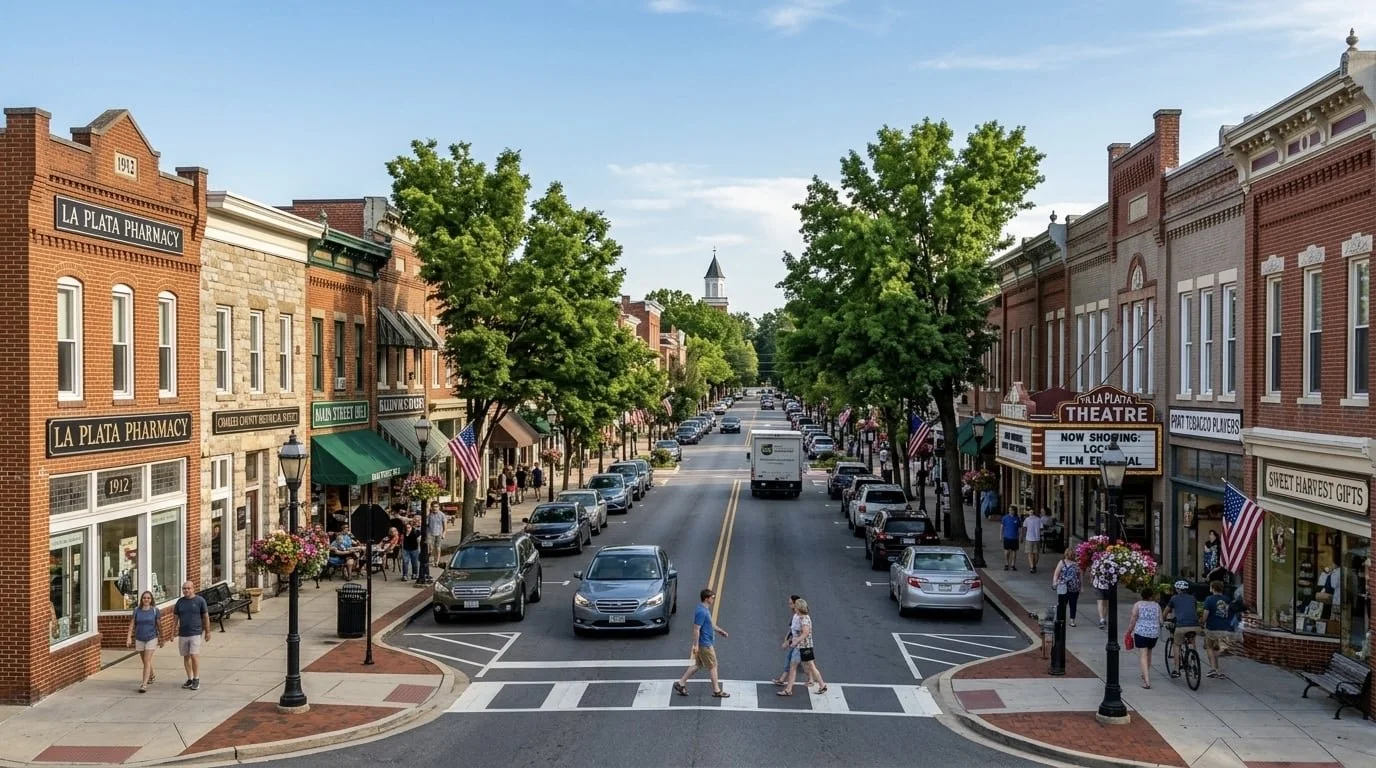
La Plata, the county seat, has a more small-town feel with local character, a historic downtown area, and a bit more breathing room than Waldorf's busier corridors. White Plains and St. Charles communities offer newer subdivisions with planned amenities and HOA environments.

 Price Range and Property Types

Charles County typically offers the widest range of housing options in Southern Maryland—new construction townhouses, established single-family subdivisions, larger rural lots on the county's eastern and southern edges, and everything in between. Median home prices have climbed steadily and generally run higher than St. Mary's County and competitive with parts of Calvert.

You'll find more attached housing (townhomes, end-units) in Waldorf than in the other two counties, which matters for buyers who want lower entry prices or don't want to maintain a large yard.

 Commute Profile

Charles County is the closest of the three to Washington, D.C.—Waldorf sits roughly 30 miles from downtown. That translates to roughly 45 to 55 minutes under early-departure conditions, though peak-hour traffic on US-301 and the Beltway approaches can push that to 90 minutes or more. MTA commuter bus routes 715 and 725 offer transit alternatives along the US-301 corridor. For daily D.C. commuters, Charles County is the most practical of the three.


 Calvert County: Waterfront Lifestyle on the Bay Peninsula

 Who Lives There and Why

Calvert County is geographically unusual—it's a narrow peninsula bordered by the Patuxent River to the west and the Chesapeake Bay to the east, which means water is never far away and development options are naturally constrained. That geographic reality shapes everything: the slower pace, the lower density, the stronger outdoor recreation culture, and the sense that it hasn't been completely absorbed into the D.C. metro.

Buyers drawn to Calvert tend to be people who want space, water access, or a semi-rural lifestyle without going as far out as St. Mary's. Chesapeake Beach and North Beach on the Bay side attract buyers who want a waterfront or water-access community. Prince Frederick is the commercial hub, and Dunkirk and Owings in the northern part of the county see significant interest from buyers who want to keep the commute to D.C. or Prince George's County more manageable.

 Price Range and Property Types

Calvert County pricing varies meaningfully depending on location. Waterfront properties on the Bay or Patuxent River command significant premiums. Inland homes—particularly in the Prince Frederick and Huntingtown areas—tend to be more moderately priced and often sit on larger lots than you'd find in Charles County subdivisions. Single-family homes on half-acre to multi-acre lots are common throughout the county's midsection.

The peninsula geography means inventory is more limited overall, which has kept prices fairly competitive even as demand from D.C.-area buyers has grown over the past several years.

 Commute Profile

The primary commute corridor is MD-4 northward through Prince George's County to the Beltway. From Prince Frederick, expect 60 to 75 minutes under reasonable conditions. From northern Calvert (Dunkirk, Owings), that shrinks closer to 50 to 60 minutes. MTA commuter bus routes 820 and 840 run express service from multiple park-and-ride locations along MD-4, which is a genuine asset for buyers who can work a fixed schedule. The peninsula geography does limit your alternate routes, so if MD-4 is backed up, your options are slim.


 St. Mary's County: The Most Affordable—and the Most Remote

 Who Lives There and Why

St. Mary's County is the southernmost of the three and, for many D.C.-area buyers, the most surprising. It doesn't feel like a suburb at all. Leonardtown—the county seat—has a genuinely charming downtown square, local restaurants, and a community feel that's rare this close to the D.C. metro. California and Lexington Park are the county's more commercially active communities, largely because of their proximity to NAS Patuxent River.

NAS Pax—as locals call it—is a major naval air station and federal research installation that employs tens of thousands of civilian contractors, military personnel, and government workers. It's the economic backbone of St. Mary's County, and it means a significant portion of residents aren't commuting to D.C. at all. If you work at Pax River, are a military family on orders, or are a remote worker who wants the most home for the money in Southern Maryland, St. Mary's is worth serious attention.

 Price Range and Property Types

St. Mary's County is consistently the most affordable of the three on a median price basis. You get more square footage, more land, and more of a rural lifestyle for your dollar than in Charles or Calvert Counties. Properties range from newer construction near Lexington Park and California to older farm-adjacent homes on significant acreage in the county's rural expanses.

The trade-off is that you're further from the retail and amenity density of Waldorf or even Prince Frederick. If proximity to Target, a hospital, or a wide restaurant selection is a daily priority, that distance is worth factoring in honestly.

 Commute Profile

From Lexington Park, the drive to Washington D.C. is approximately 60 miles, and peak-hour trips can take 90 minutes to two hours. This is a meaningful commute for daily in-office workers, and it's a common reason buyers who initially fall in love with St. Mary's end up in Charles County instead. That said, for hybrid workers making the trip two to three times a week, the math changes considerably. Transit exists via the St. Mary's Transit System connecting to MTA commuter buses, but total travel times are long.

 Side-by-Side: How the Counties Stack Up

Charles County (Waldorf / La Plata)

- Distance to D.C.: ~30–40 miles

- Lifestyle feel: Suburban

- Median price range: Mid to higher

- Major employer: Federal/D.C. commuters

- Water access: Some (Potomac River area)

- Housing density: Higher

- Best for: Daily commuters and families who want easy access to amenities

Calvert County (Prince Frederick / Dunkirk)

- Distance to D.C.: ~40–55 miles

- Lifestyle feel: Semi-rural / Waterfront

- Median price range: Mid

- Major employer: Mixed industries

- Water access: Strong (Chesapeake Bay + Patuxent River)

- Housing density: Moderate

- Best for: Waterfront lifestyle, hybrid workers, and those wanting more space

St. Mary's County (Leonardtown / Lexington Park)

- Distance to D.C.: ~60–75 miles

- Lifestyle feel: Rural / Small-town

- Median price range: Lower to mid

- Major employer: NAS Patuxent River

- Water access: Strong (Patuxent River + Chesapeake Bay)

- Housing density: Lower

- Best for: Remote workers, NAS employees, military families, and value-focused buyers


 How Each County Feels Day-to-Day

This is the part most real estate content skips, but it's the part that matters most once you've moved in.

Charles County feels busy. Waldorf in particular has traffic, noise, and the general energy of a fast-growing suburb. That's not a knock—plenty of people want that vitality. But buyers who moved from a quieter area sometimes find themselves surprised by the pace.

Calvert County feels intentional. People there tend to be deliberate about their lifestyle. The water culture—boating, fishing, kayaking, crabbing—is genuinely embedded in daily life for a lot of residents, not just a marketing tagline. The county has a loyal, long-term resident base that takes pride in what it hasn't become.

St. Mary's County feels like a place that operates on its own terms. Leonardtown's square has a sense of genuine local community that you don't always find in fast-growing areas. The military presence creates a specific culture—transient in some ways, but deeply community-oriented in others. If you've lived near a military installation before, you'll recognize it immediately.


 Common Misconceptions About These Counties

 1. "They're all basically the same—Southern Maryland is Southern Maryland."

The counties share geography and a regional identity, but the lifestyle, price point, and community feel are meaningfully different. Treating them as interchangeable leads buyers to look in the wrong places and pass up areas that would actually suit them better.

 2. "Charles County is less desirable because it's more developed."

For a daily D.C. commuter with kids, Charles County's amenity density and commute proximity may actually make it the most practical option. "Less developed" isn't inherently better—it depends on what you need on a Tuesday night.

 3. "St. Mary's is only for military families."

NAS Pax River is a major economic anchor, but St. Mary's County also attracts retirees, remote workers, second-home buyers, and buyers who simply want more land and quiet for less money. The county is more diverse in its buyer pool than its reputation suggests.

 4. "Waterfront property in Calvert is unaffordable."

Waterfront and water-access homes in Calvert do carry premiums, but inland Calvert County has solid inventory at prices competitive with Charles County. You don't have to buy on the water to benefit from the county's character and lifestyle.

 5. "You can't get anything done in St. Mary's or Calvert—there's nothing there."

Both counties have hospitals, grocery stores, dining, and services adequate for day-to-day life. They're not Northern Virginia in terms of retail density, but the "middle of nowhere" description vastly overstates the isolation most residents experience.


 People Also Ask: Southern Maryland County Comparison FAQ

Which Southern Maryland county is closest to Washington, D.C.?

Charles County is the closest, with Waldorf sitting approximately 30 to 35 miles from downtown Washington. That makes it the most practical choice for buyers who commute to D.C. regularly, especially given the MTA commuter bus service and multiple park-and-ride options along the US-301 corridor.

Is Calvert County a good place to live?

Calvert County consistently attracts buyers seeking a quieter, water-adjacent lifestyle without going fully rural. The Chesapeake Bay and Patuxent River provide significant outdoor recreation access, the school systems have a solid reputation, and the county's constrained peninsula geography has helped it maintain a lower-density character compared to Charles County. It tends to be well-suited for hybrid workers, families, and buyers with an outdoors-oriented lifestyle.

What is St. Mary's County, Maryland known for?

St. Mary's County is known for NAS Patuxent River (one of the Navy's largest research and development installations), its status as one of Maryland's original colonial settlements, and a relatively affordable housing market by D.C.-area standards. Leonardtown's historic downtown and strong sense of local community are frequently cited by residents as highlights.

Which Southern Maryland county has the lowest home prices?

St. Mary's County generally offers the lowest median home prices of the three counties, followed by Calvert and then Charles County. That said, pricing varies significantly within each county based on proximity to water, lot size, property condition, and local demand near employers like NAS Patuxent River.

Is Southern Maryland a good place to buy a home in 2026?

For buyers who can structure their work to accommodate the commute—or who work locally or remotely—Southern Maryland continues to offer meaningful value relative to Northern Virginia, Montgomery County, and Prince George's County. The 2026 market remains competitive in all three counties, with inventory still running tighter than buyers would like, but price appreciation has moderated compared to the frenzy of earlier years.

What's the difference between Waldorf and La Plata, Maryland?

Both are in Charles County, but they feel quite different. Waldorf is a large, unincorporated community with suburban density, significant retail and commercial development, and the majority of the county's population. La Plata is the county seat—smaller, more historically grounded, with a walkable downtown area and a town-center character that Waldorf doesn't have. Buyers who want suburban amenities tend toward Waldorf; buyers who want more of a small-town feel often prefer La Plata.

Do I need to live in Charles County to commute to D.C. from Southern Maryland?

Not necessarily, but it helps if you're commuting five days a week. Many buyers in northern Calvert County (Dunkirk, Owings) manage the commute sustainably, especially with MTA bus service. St. Mary's County is generally better suited for hybrid, remote, or NAS Pax workers than for daily D.C. commuters, given the drive times involved.

 Want Help Figuring Out Which County Actually Fits You?

Choosing between Calvert, Charles, and St. Mary's Counties isn't just a geography question—it's a lifestyle question, a career question, and a financial question all at once. I've worked with buyers who were absolutely certain they wanted Waldorf and ended up in Leonardtown, and vice versa.

I'm Amanda Holmes, a real estate agent with eXp Realty, and I specialize in Southern Maryland—all three counties—along with broader Maryland and Virginia coverage. I'm not going to steer you toward whichever area has the most listings at the moment. I'm going to ask you the right questions and help you land somewhere you'll actually want to stay.

If you're ready to think through the specifics of your situation—budget, work schedule, lifestyle priorities, timeline—reach out and let's have that conversation. No pressure, no pitch. Just a local expert who knows this region well and will tell you the truth.

Read More
Living in Southern Maryland Amanda Holmes, Realtor Living in Southern Maryland Amanda Holmes, Realtor

Living in Calvert County, Maryland: Communities Along the Bay and Beyond

Thinking about living in Calvert County, Maryland? Explore waterfront and inland communities along the Chesapeake Bay and Patuxent River, plus lifestyle, commute, and housing insights from Southern Maryland agent Amanda Holmes.  

If you’ve caught yourself thinking, “What’s it really like to live in Calvert County, along the Chesapeake Bay?” you’re asking the same question I hear from a lot of Southern Maryland buyers. You see the water views, the marinas, the neighborhoods tucked into the trees—and then you wonder how it all actually works in day‑to‑day life.  

I’m Amanda Holmes, a local Southern Maryland real estate agent who helps buyers and sellers across Calvert, St. Mary’s, and Charles Counties figure out not just where they can live, but where they’ll actually enjoy living. Calvert County has its own rhythm: part waterfront, part countryside, and part commuter‑friendly suburb. Let’s walk through what “living in Calvert County” really looks like—along the bay and beyond.  


 Calvert County at a Glance in Southern Maryland  

Calvert County sits on a peninsula with the Chesapeake Bay on one side and the Patuxent River on the other, which is a fancy way of saying you’re never far from the water. You get a mix of wooded lots, farm fields, small towns, and neighborhoods that feel like classic Maryland suburbia—just with more boats and fewer high‑rises.  

Because Calvert is part of the Southern Maryland trio with St. Mary’s and Charles Counties, people often compare all three when they’re relocating. Calvert tends to be the “water‑leaning” choice with a laid‑back lifestyle, while still offering a workable commute toward D.C., Joint Base Andrews, or even across the bridge toward NAS Patuxent River in St. Mary’s.  


 Life in Northern Calvert: Closer Commutes, Easy Access  

Northern Calvert is where a lot of D.C. and Prince George’s County commuters land. Towns like Dunkirk and Huntingtown offer neighborhoods with fairly straightforward access to Route 4, which takes you north toward the Beltway. You get a balance of convenience and calm: larger lots than many close‑in suburbs, but still within reach of shopping, dining, and services.  

If you split time between the office and working from home, northern Calvert can be a smart middle ground. You’re close enough to make the commute realistic a few days a week, but far enough out that you actually see stars at night and can hear crickets instead of constant traffic.  


 Central Calvert: Everyday Convenience in Prince Frederick  

Prince Frederick is the county seat and the “hub” of Calvert, and it functions as the practical center of gravity for a lot of residents. It’s where you’re likely to go for errands, county services, medical appointments, or a quick dinner out. The housing mix runs from established neighborhoods with mature trees to newer communities with HOAs and planned amenities.  

Living in central Calvert makes it easy to move around Southern Maryland. You’re a reasonable drive from both the northern commuter corridors and the southern waterfront lifestyle. If you know you’ll be back and forth between Calvert, St. Mary’s, and Charles Counties, setting up home around Prince Frederick can keep your driving time from getting out of hand.  


 Southern Calvert: Solomons, Lusby, and Life Near the Water  

As you head south into communities like Lusby, St. Leonard, and Solomons, the pace slows and the water becomes the main character. Solomons Island is known for its marinas, waterfront restaurants, boardwalk, and that “I’m‑on‑vacation” feeling—even when it’s just a random Tuesday.  

Southern Calvert is especially appealing if you want to be near the Patuxent River or Chesapeake Bay. Many communities offer water access, nearby marinas, or views, with a range of housing styles from smaller cottages to larger single‑family homes. If you work at Pax River in St. Mary’s County, living in southern Calvert keeps you close to the base while letting you enjoy Calvert’s waterfront‑oriented lifestyle, with the Thomas Johnson Bridge connecting the two counties.  


 Waterfront vs. Inland Living in Calvert County  

One of the big decisions you’ll make in Calvert is whether you want to be right on (or very close to) the water, or a bit inland. Waterfront and water‑access homes often come with higher prices and additional considerations like elevation, flood insurance, and maintenance, but they also offer that “weekend at the bay” feeling every single day.  

Inland neighborhoods tend to offer more house and yard for the money, with easier parking for things like boats, RVs, or extra vehicles (depending on HOA rules). Many buyers I work with end up choosing a home a short drive from the water and keeping a boat at a local marina or enjoying public access points instead of paying the premium for direct frontage.  


 Commutes From Calvert to D.C., Pax River, and Beyond  

From northern Calvert, a commute toward Washington, D.C. or Northern Virginia is doable, especially with hybrid work schedules. Most people use Route 4 as their main artery, then connect to routes into Prince George’s County and the Beltway. It’s not a five‑minute drive, but it’s a trade‑off many people accept for more space, quieter streets, and a Chesapeake Bay lifestyle.  

If you’re heading south instead—toward NAS Patuxent River or other jobs in St. Mary’s County—southern Calvert can actually be a time‑saver. You’ll use the Thomas Johnson Bridge, which is a key link between Calvert and St. Mary’s and an everyday part of life for many Southern Maryland commuters. Charles County, to the west, offers an alternate set of options if you want more suburban development while still staying in the region.  


 Calvert County in the Bigger Southern Maryland Picture  

When you look at Calvert alongside St. Mary’s and Charles Counties, you start to see clear personalities. Calvert often wins for “Bay and river lifestyle,” St. Mary’s leans into rural and historic waterfront communities, and Charles features more large‑scale neighborhoods and a direct shot up 301 toward D.C.  

As your local Southern Maryland agent, this is usually where I come in. I’ll ask about your commute, how you spend your weekends, whether you want an HOA or avoid one, and what kind of setting feels like “home” to you. Then we narrow down communities—not just in Calvert County, but across Southern Maryland—so you’re not guessing from behind a screen.  


 People Also Ask  

Is Calvert County a good place to live if I want to be near the Chesapeake Bay?  

Yes. Calvert is uniquely positioned between the Chesapeake Bay and the Patuxent River, so many communities are either on the water or within a short drive of it. You can choose from marinas, public access points, and neighborhoods with water privileges depending on your budget and lifestyle.  

How does living in Calvert County compare to St. Mary’s and Charles Counties?  

Calvert tends to offer more direct access to the Bay and a slightly more compact layout, while St. Mary’s is more spread out and rural in many areas and Charles has more suburban corridors. Your best fit depends on your commute, preferred setting, and how often you want to be on the water versus on the highway.  

What is the commute like from Calvert County to Washington, D.C.?  

From the northern part of Calvert, many people commute via Route 4 into Prince George’s County and then toward D.C. The drive time depends heavily on traffic and where you start, but hybrid workers often find the trade‑off worthwhile for the extra space and quieter neighborhoods. If you work mostly remote, Calvert’s slower pace is a big bonus.  

Can I live in Calvert County and work at NAS Patuxent River?  

Yes, and many people do. Southern Calvert, especially around Lusby and Solomons, offers a reasonable commute over the Thomas Johnson Bridge into St. Mary’s County. You get access to Calvert’s waterfront communities while staying within reach of the base.  

Are there different types of neighborhoods in Calvert County?  

You’ll see a bit of everything: planned communities with HOAs, older neighborhoods with mature trees, rural properties with acreage, and homes with water access or views. The key is deciding what mix of structure, privacy, and amenities you want, then focusing your search in the parts of Calvert that match that profile.  

 Ready to Explore Life in Calvert County?  

If you’re seriously considering a move to Calvert County—or you’re still torn between Calvert, St. Mary’s, and Charles Counties—I’d be happy to walk through your options with you. We can talk about commute realities, waterfront versus inland living, HOAs, and which Southern Maryland communities line up with the way you actually want to live.  

Reach out anytime. I’m Amanda Holmes, your local Southern Maryland real estate agent, helping buyers and sellers across Calvert, St. Mary’s, and Charles Counties, the rest of Maryland, and Virginia find their place along the bay and beyond.

Read More
Living in Southern Maryland Amanda Holmes, Realtor Living in Southern Maryland Amanda Holmes, Realtor

Calvert County Neighborhoods: Where to Live in Southern Maryland  

Thinking about moving to Calvert County, Maryland? Explore Calvert’s most popular neighborhoods, lifestyle options, and local insights from Southern Maryland real estate agent Amanda Holmes.  

If you’ve been scrolling listings and wondering, “Where should I live in Calvert County?”—you’re not alone. Buyers love the idea of Southern Maryland’s quiet charm, but once you start exploring Calvert, St. Mary’s, and Charles Counties, the choices can feel endless.  

I’m Amanda Holmes, a Southern Maryland real estate agent who’s spent years helping people find their spot along the Chesapeake. Whether you’re looking for a water view, an easy D.C. commute, or simply a bit of peace after work, Calvert County’s mix of communities makes it one of the region’s most appealing places to call home. Let’s take a closer look.  


 The Character of Calvert County  

Calvert County stretches along the Western Shore of the Chesapeake Bay, balancing rural landscapes with small‑town convenience. You’ll find winding country roads, waterfront marinas, and tidy neighborhoods tucked between forests and coves.  

Unlike more congested metro suburbs, Calvert gives you space to breathe—without feeling isolated. Most communities sit within 30–60 minutes of major job centers in Prince George’s County or Annapolis, depending on which end of the county you call home.  


 North Calvert County: Closer to the City  

If your commute runs north toward D.C. or Northern Virginia, the northern part of Calvert is worth a look. Places like Dunkirk and Huntingtown offer easy access via Route 4, a steady stream of new construction, and established subdivisions with amenities.  

These areas often appeal to those who want modern homes on reasonably sized lots, reliable convenience to shopping and schools, and a manageable commute. You’ll also find blend‑in charm—quiet evenings, local fields, and just enough restaurants to make staying close feel easy.  


 Central Calvert County: The Heart of Everyday Life  

Prince Frederick anchors the middle of Calvert County and serves as its commercial hub. It’s where you’ll find community events, government offices, and daily conveniences like grocery stores and gyms.  

Homes here range from established neighborhoods to newer developments with HOAs, though rural areas just outside town still offer acreage, barns, and privacy for those who prefer less structure. Living in central Calvert means you’re roughly equidistant from the county’s northern and southern points—a practical choice for those who want variety without sacrificing a sense of community.  


 Southern Calvert County: Waterfront Living and Laid‑Back Vibes  

Head down toward Solomons Island, Lusby, and St. Leonard and you’ll feel the shift. The tempo slows, the views open up, and the water takes center stage. Solomons in particular offers marinas, waterfront restaurants, and weekend events that define the easygoing Calvert lifestyle.  

Housing options include cottages, townhomes, and single‑family homes with water access or views of the Patuxent River and Chesapeake Bay. If you’re stationed at Patuxent River NAS in nearby St. Mary’s County, southern Calvert makes for an excellent commute—about 20–30 minutes across the Thomas Johnson Bridge.  


 Comparing Calvert, St. Mary’s, and Charles Counties  

Calvert appeals to those who want suburban comforts with quick water access. St. Mary’s leans more rural and coastal, while Charles offers larger developments and a straighter shot north to D.C. Many of my clients explore all three before deciding what daily drive, price point, and lifestyle fit best.  

That’s where working with a local agent (hi, that’s me!) can really help—balancing your wish list with realistic insights about commutes, lot sizes, and each county’s distinct rhythm.  


 People Also Ask  

What are the most popular neighborhoods in Calvert County?  

Communities in Dunkirk, Huntingtown, Prince Frederick, and Solomons draw the most buyers thanks to location, amenities, and easy Route 4 access. Each area offers a mix of established and newer homes, depending on your lifestyle priorities.  

Is Calvert County a good place to live for D.C. commuters?  

Yes—especially in the northern half. The Route 4 corridor makes it one of the more commuter‑friendly parts of Southern Maryland, though traffic patterns vary by time of day. Hybrid and remote workers often find Calvert’s balance of space and accessibility ideal.  

How does Calvert County compare to St. Mary’s or Charles County?  

Calvert sits in the middle—less rural than St. Mary’s but smaller and quieter than Charles. It’s known for its waterfront access and scenic beauty while remaining within reasonable reach of major employers.  

Are there waterfront homes for sale in Calvert County?  

Absolutely. Waterfront and water‑access homes can be found in Solomons, Lusby, and along the Bay. Prices vary based on water depth, view, and elevation, so local insight makes a big difference when evaluating these properties.  

What is life like in Calvert County year‑round?  

It’s peaceful, community‑driven, and naturally beautiful. You’ll experience boat season, farmers markets, and quiet winters by the fireplace. Many residents say once they move to Calvert, it’s hard to imagine leaving.  


 Ready to Explore Calvert County?  

If Calvert—or anywhere in Southern Maryland—sounds like your next move, I’d love to help you get started. Whether you’re drawn to waterfront living, a country retreat, or a low‑stress commute to D.C., I can help you narrow your search to the neighborhoods that fit both your lifestyle and budget.  

Reach out anytime—Amanda Holmes, your local Southern Maryland real estate agent serving Calvert, St. Mary’s, and Charles Counties, plus the rest of Maryland and Virginia.  

Read More
Living in Southern Maryland Amanda Holmes, Realtor Living in Southern Maryland Amanda Holmes, Realtor

Living in St. Mary’s County, Maryland: Neighborhoods, Commutes, and Lifestyle  

Discover what it’s like to live in St. Mary’s County, Maryland—from waterfront homes to countryside retreats. Learn about neighborhoods, commutes, and life across Southern Maryland with insights from local agent Amanda Holmes.  

If you’ve ever typed “What’s it like to live in St. Mary’s County, Maryland?” into a search bar, you’re not alone. I get that question almost weekly—from buyers relocating for work at PAX River Naval Air Station, families wanting more space and quiet, and D.C. commuters tired of I‑495 traffic and HOA drama. So, let’s break down what day‑to‑day life actually looks like in St. Mary’s County and neighboring areas of Southern Maryland.  

I’m Amanda Holmes, your local Southern Maryland agent, and I’ve helped dozens of clients find homes throughout St. Mary’s, Calvert, and Charles Counties. Each area has its own pace, price range, and personality—and finding the right fit depends on how you want to live, not just where you want to commute.  


 Life and Neighborhoods in St. Mary’s County  

St. Mary’s County is known for its waterfront charm, military community, and mix of small‑town living with modern growth. You’ll find everything from Colonial‑era homes in Leonardtown to new construction near California and Lexington Park. Those working at Patuxent River NAS often settle within 15‑20 minutes of the base to avoid Route 235 traffic.  

If you crave rural scenery and elbow room, areas like Mechanicsville, Loveville, and Ridge might catch your eye. Waterfront buyers are drawn to spots along St. George Island or Breton Bay, where you can enjoy boating weekends without driving hours to the shore.  

Average home prices range widely—waterfront and newer homes near Lexington Park command higher prices, while northern St. Mary’s offers more acreage for the dollar.  


 The Commute: What to Expect  

Commuting from St. Mary’s to Washington, D.C. or Northern Virginia isn’t for the faint of heart, but many do it a few days a week thanks to hybrid schedules. Route 5 and Route 235 connect to Route 301, with options to cut through La Plata or Waldorf in Charles County.  

If you work on base at Pax River, the convenience can’t be beat—you can live under 10 miles away and still feel like you’re tucked into quiet, suburban countryside. Those headed toward Calvert County or Annapolis will find the Thomas Johnson Bridge handy (though occasionally backed up on summer evenings when everyone’s heading home from the water).  


 Lifestyle and Things to Do  

Southern Maryland’s lifestyle is all about balance. You’re never far from the water, a winery, or a weekend farmers market. St. Mary’s has grown more vibrant in recent years—Leonardtown’s square hosts outdoor concerts, coffee shops, and a surprisingly good gelato spot.  

In nearby Calvert and Charles Counties, residents enjoy waterfront parks, hiking trails, and easy access to local marinas and crab houses. Calvert County offers plenty of day‑trip fun—Solomons Island is one of my go‑tos when clients want to get a feel for the area’s energy.  

Living here, you trade the rush of D.C. for open skies and a slower rhythm, but you still have access to shopping, restaurants, and healthcare without leaving the county.  


 Calvert, Charles, and the Southern Maryland Connection  

Even though St. Mary’s has its own identity, most buyers explore options across all three Southern Maryland counties. Calvert County tends to attract buyers who want slightly closer proximity to Annapolis or D.C. but still crave Chesapeake views. Charles County—including Waldorf and La Plata—offers suburban conveniences with quick highway access north.  

Each county connects seamlessly, so commuting or exploring between them is part of daily life here. Think of Southern Maryland as one large region with distinct personalities—but all sharing that same water‑loving, community‑driven heartbeat.  


 People Also Ask  

Is St. Mary’s County a good place to live for commuters?  

It depends on where you work. For D.C. or Northern Virginia jobs, expect a 1.5‑ to 2‑hour drive depending on time and route. Many commuters now split their week between remote work and office days. If your job is at Pax River NAS, the drive can be under 20 minutes from much of the county.  

What kinds of homes are in St. Mary’s County?  

You’ll find a mix—waterfront cottages, new‑build communities, and classic colonials on wooded acreage. HOAs exist in many planned neighborhoods, while rural zones tend to have more freedom for outbuildings, RVs, or boats.  

How does St. Mary’s compare to Calvert and Charles Counties?  

St. Mary’s is more rural and relaxed, Calvert is a bit closer to metro areas with strong waterfront communities, and Charles blends suburban living with highway convenience. Prices and commute times vary accordingly.  

What is there to do in St. Mary’s County?  

Plenty—boating, kayaking, visiting historic sites like St. Mary’s City, dining on the water in Solomons or Leonardtown, and exploring local wineries. The community calendar is full of art walks, holiday parades, and summer concerts.  

Where do most people work in St. Mary’s County?  

Many residents are connected to the Patuxent River Naval Air Station, while others commute to Calvert, Charles, or D.C. You’ll also find a growing number of remote workers who enjoy the peaceful environment and space for home offices.  


 Thinking About Making the Move?  

If you’re considering a home in St. Mary’s, Calvert, or Charles County, I’d be happy to talk through what kind of lifestyle and commute make the most sense for you. I’ve lived and worked all over Southern Maryland, and there’s truly a place here for every pace of life—whether you’re looking for a waterfront escape, a family‑friendly neighborhood, or a spot to unwind after long D.C. workweeks.  

Reach out anytime—Amanda Holmes, your local Southern Maryland real estate agent serving Maryland and Virginia.  


Read More
Living in Southern Maryland Amanda Holmes, Realtor Living in Southern Maryland Amanda Holmes, Realtor

Neighborhood Amenities: Trails, Parks, and Community Spaces in Southern Maryland

Looking for Southern Maryland neighborhoods with trails, parks, and community spaces? Learn how to find amenity‑rich areas in St. Mary’s, Calvert, and Charles Counties.

If you’ve ever said, “I don’t just want a house—I want somewhere we actually enjoy being outside,” you’re in the right mindset. The question I hear a lot is: “Which Southern Maryland neighborhoods have trails, parks, playgrounds, or community spaces so we’re not always driving somewhere else for fresh air?”

You might be picturing evening walks, kids on bikes, dog‑friendly paths, or just having a nearby park where you can clear your head after a long day. In St. Mary’s, Calvert, and Charles Counties, some neighborhoods lean heavily into amenities; others keep things simple and leave the extras to county parks.

I’m Amanda Holmes, a local Southern Maryland agent, and I love helping people match their lifestyle—not just their furniture—to the right neighborhood. Let’s talk about neighborhood amenities and how to find the best fit.


 Why Amenities Matter More Than You Think

Neighborhood amenities sound like “nice extras,” but they change your daily life more than you’d expect.

Amenities like trails, parks, and community spaces can:

- Make it easy to get outside without loading everyone into the car.

- Encourage more walking, biking, and casual neighbor meetups.

- Turn a regular subdivision into a place that actually feels like a community.

If you’re balancing busy schedules, kids, pets, or just your own sanity, having these things close by can make a big difference.


 Amenity‑Rich Neighborhoods in St. Mary’s County

In St. Mary’s County, amenity‑focused neighborhoods often sit near main corridors and town centers, with:

- Sidewalks, small neighborhood parks, and sometimes community playgrounds.

- Proximity to larger county parks, waterfront areas, or trails a short drive away.

- Layouts that make it easier to walk or bike in the neighborhood itself, even if you’re not steps from a major park.

If you’re stationed at NAS Pax River or work along MD‑235, staying close to these pockets means you’re not choosing between a reasonable commute and time outdoors.


 Amenity‑Focused Living in Calvert County

Calvert County’s peninsula setting creates a lot of built‑in outdoor amenities—Bay views, river access, and wooded areas—plus neighborhood‑level perks.

You may find:

- Communities with walking paths, tot lots, and sometimes small community centers.

- Neighborhoods with easy access to county‑maintained waterfront parks, boardwalks, and marinas.

- Layouts that blend wooded common areas with paved paths or sidewalks.

If you’re a “walk after dinner” or “take the kids to the playground without leaving the neighborhood” person, we’ll put these communities on your list.


 Trails, Parks, and Community Spaces in Charles County Neighborhoods

Charles County has some of the most developed suburban neighborhoods in Southern Maryland, which often means more built‑in amenities.

In amenity‑rich areas, you’ll commonly see:

- Sidewalk networks, community parks, and playgrounds integrated into subdivisions.

- Easy access to larger county parks, sports fields, and regional trail systems a short drive away.

- Planned communities where open space and recreation areas are part of the original design.

If you like convenience, structured amenities, and a stronger “neighborhood energy,” these pockets in Charles are usually a good fit.


 HOAs and Amenity Trade‑Offs

Most neighborhoods with built‑in amenities—trails, playgrounds, shared green spaces—also come with HOAs or community associations. That usually means:

- Dues that help maintain common areas, paths, and parks.

- Rules about how those spaces are used, plus standards for home exteriors and yards.

- A more defined community look and feel, which some people appreciate and others find too restrictive.

If days at the park and walks on community trails are high on your list, an HOA neighborhood can be a plus—as long as you’re comfortable with the rules that come with it.


 Using County Parks and Regional Amenities With Any Neighborhood

You don’t have to live in a big planned community to have access to great outdoor spaces. Across St. Mary’s, Calvert, and Charles Counties, you’ll find:

- County parks with trails, sports fields, playgrounds, and sometimes waterfront access.

- Regional trails and nature areas you can reach with a short drive.

- Marinas, boardwalks, and waterfront parks that effectively become your extended “backyard.”

If you fall in love with a neighborhood that doesn’t have its own playground or trail, we’ll look at how long it actually takes to drive to your favorite county park—and whether that feels manageable in your real schedule.


 People Also Ask

1. Are neighborhoods with more amenities always more expensive?

Not always, but they often come with HOA dues and sometimes slightly higher prices for the added convenience and upkeep. The question is whether you’ll use those amenities enough to feel good about paying for them.

2. Can I find trails and parks in more rural parts of Southern Maryland?

Yes, but they’re usually not built into the neighborhood. Instead, you’ll rely more on county parks, nature areas, and regional trails. Many rural buyers are happy to drive a bit farther for larger, more natural spaces.

3. How do I tell if a neighborhood actually has usable amenities or just nice marketing photos?

We look at the community map, walk or drive the neighborhood, and notice whether people are actually using the spaces. Photos are helpful, but seeing playgrounds, fields, and trails in real use tells you a lot.

4. Are amenities important for resale value?

They can be. Neighborhood parks, trails, and well‑maintained common spaces tend to make a community more appealing to future buyers, especially those with active lifestyles or children.

5. Should I prioritize amenities or a bigger house/lot?

It depends on how you live. If you’re outside a lot and want built‑in places to go, amenities may matter more than a slightly larger living room. If you mostly host indoors or value privacy above all else, house and lot size might come first.


 Want Help Finding an Amenity‑Rich Southern Maryland Neighborhood?

If you’re dreaming about trails, parks, and real community spaces—but also trying to keep commute, budget, and daily life in balance—I’d be happy to help you sort through the options. I’m Amanda Holmes, working with buyers and sellers across St. Mary’s, Calvert, and Charles Counties, and throughout Maryland and Virginia.

When you’re ready, we can tour neighborhoods with different levels of amenities, talk honestly about what you’ll actually use, and find a Southern Maryland community that makes it easy to enjoy where you live—not just the inside of your home.

Read More
Living in Southern Maryland Amanda Holmes, Realtor Living in Southern Maryland Amanda Holmes, Realtor

Townhome Communities vs. Single‑Family Neighborhoods in Southern Maryland

Trying to choose between a townhome or single‑family home in Southern Maryland? Learn the key trade‑offs across St. Mary’s, Calvert, and Charles Counties so you can pick what actually fits your life.

If you’ve ever said, “I don’t know if I’m a townhome person or a single‑family person,” you are absolutely not alone. In Southern Maryland, the question usually sounds like: “Do I pick a townhome community with lower maintenance, or stretch for a single‑family house with more space and yard?”

You’re probably juggling commute, budget, kids or pets (or both), and how much you actually enjoy yard work on a Saturday. St. Mary’s, Calvert, and Charles Counties all have plenty of options in both categories—what matters is which setup makes your everyday life easier, not just which one looks good on Instagram.

I’m Amanda Holmes, your local Southern Maryland agent, and I’ve walked a lot of buyers through this exact decision. Let’s break down the real‑world differences between townhome communities and single‑family neighborhoods here.


 How Townhome Life Usually Feels in Southern Maryland

Townhome communities in Southern Maryland often cluster near main roads, job centers, and shopping areas in St. Mary’s, Calvert, and Charles Counties.

You might be a townhome person if you:

- Want less exterior maintenance—smaller yards, shared walls, and often HOA‑handled common areas.

- Prefer to be closer to commuter routes, base entrances, or shopping corridors like MD‑235 or the busier parts of Charles and Calvert.

- Like the idea of a more “lock‑and‑go” lifestyle if you travel, work long hours, or simply don’t want to spend your weekends with a mower.

The trade‑off is that you’ll typically share walls, have less private outdoor space, and live with more defined community rules.


 How Single‑Family Neighborhoods Usually Feel in Southern Maryland

Single‑family neighborhoods in St. Mary’s, Calvert, and Charles Counties come in many flavors—suburban subdivisions, older established neighborhoods, and semi‑rural pockets.

You might lean single‑family if you:

- Want more separation from neighbors, bigger yards, and more flexibility for outdoor living, pets, or hobbies.

- Prefer parking in your own driveway or garage, not worrying as much about shared spaces.

- Like the idea of growing into a home—space for projects, guests, and maybe that home office you keep promising yourself.

The trade‑off is more maintenance responsibility and often higher prices than comparable townhomes.


 Budget and Price Point Considerations

In many Southern Maryland markets:

- Townhomes on average come in at a lower price point than similar‑age single‑family homes, especially near commuter‑friendly areas.

- Single‑family homes cost more upfront, and you’ll also budget more for utilities, maintenance, and sometimes larger property tax bills.

I often tell clients: if a townhome lets you be in the right county and near the right commute or base, it can be a smarter choice than stretching for a single‑family home in a location that doesn’t really work for your life.

 HOAs and Rules: What Changes Between Townhomes and Single‑Family

In Southern Maryland, both townhome communities and many single‑family neighborhoods have HOAs—but they usually feel a little different:

Townhome communities often have:

- More comprehensive exterior rules and sometimes shared services (like landscaping in common areas, trash, or snow removal).

- Tighter parking rules, architectural guidelines, and expectations around how the community looks and feels.

Single‑family neighborhoods with HOAs typically have:

- Rules about exterior changes, vehicle storage, and community standards, but more private control over your home and yard.

- A broader mix—some are very structured, others are more relaxed.

If you like a lot of structure, a townhome community can feel reassuring. If you want more freedom for projects, vehicles, or outdoor toys, a single‑family neighborhood may be better.


 Commute, Bases, and Location Trade‑Offs

In St. Mary’s, Calvert, and Charles Counties, townhomes and single‑family homes often sit in slightly different locations:

- Near NAS Pax River in St. Mary’s, townhomes and smaller‑lot single‑family homes cluster close to MD‑235 for easy base access.

- In parts of Calvert along Route 4, townhome communities can give you a better commute while single‑family homes might sit a bit farther back from the main corridor.

- In Charles, you’ll find townhomes closer to the main commuter routes into D.C. and Northern Virginia, with single‑family neighborhoods spreading outward.

If staying closer to a base or keeping your drive to D.C. or Andrews under control really matters, a townhome in a strategic spot can beat a single‑family home in a beautiful but far‑out area.


 Lifestyle Questions to Help You Decide

When I’m helping clients choose between a townhome and a single‑family home, I usually ask:

- How much do you honestly want to maintain—yard, exterior, and projects?

- Do you see yourself entertaining a lot, needing yard space, or adding outdoor features over time?

- How sensitive are you to noise from neighbors, or to having less control over shared walls and parking?

- Is it more important to be in a specific county or location, even if the home is smaller?

There’s no right answer—just the answer that gives you the fewest daily frustrations.


 People Also Ask

1. Are townhomes a good starter option in Southern Maryland?

They can be an excellent way to get into St. Mary’s, Calvert, or Charles Counties if you want lower upfront costs and less maintenance. Many buyers use townhomes as a first step, then later decide whether to stay put or move into a single‑family home.

2. Will I outgrow a townhome too fast?

It depends on your household and lifestyle. Some people feel ready to move up after a few years; others stay in townhomes long‑term because the trade‑offs (less maintenance, better location) still work. We’ll talk realistically about your future plans before you decide.

3. Are HOAs stricter in townhome communities than in single‑family neighborhoods?

Often, yes. Townhome communities typically have more detailed rules because of shared walls and common areas. Single‑family HOAs vary—some are structured, others are more laid‑back. We’ll review the documents for any neighborhood you’re serious about.

4. Which is better for resale in Southern Maryland: townhome or single‑family?

Both can resell well if they’re in good condition and in locations that buyers want. Single‑family homes generally attract a broader buyer pool, but well‑located townhomes near bases or commuter routes also stay in demand.

5. How do I decide which option fits my budget and lifestyle best?

We’ll look at side‑by‑side examples: your likely payment, commute, and maintenance responsibilities for each. Once you see what your money buys in townhomes versus single‑family homes in each county, the decision usually gets much clearer.

 Need Help Choosing Between Townhome and Single‑Family in Southern Maryland?

If you’re stuck between townhome communities and single‑family neighborhoods—and all the options in St. Mary’s, Calvert, and Charles Counties are starting to blur—I can help you sort through it. I’m Amanda Holmes, your local Southern Maryland agent, working across this region and the rest of Maryland and Virginia.

When you’re ready, we can tour both types of homes, talk through your real daily life and long‑term plans, and find the option that actually fits you, not just the floor plan.

Read More
Living in Southern Maryland Amanda Holmes, Realtor Living in Southern Maryland Amanda Holmes, Realtor

Rural and Acreage Properties in Southern Maryland: What to Expect

Thinking about a rural home or acreage in Southern Maryland? Learn what to expect from country living in St. Mary’s, Calvert, and Charles Counties—maintenance, commutes, and lifestyle.

If you’ve ever said, “I just want some land and some peace,” welcome to the rural Southern Maryland daydream. The next sentence, though, is usually: “What does owning acreage in St. Mary’s, Calvert, or Charles actually look like in real life?”

You might be picturing a long driveway, trees, maybe a workshop or space for animals—plus no neighbor’s porch light beaming into your bedroom. At the same time, you’re wondering about wells, septic systems, private roads, and whether you’re signing up for a full‑time side job in yard maintenance.

I’m Amanda Holmes, your local Southern Maryland agent, and I work with a lot of buyers trading “tight suburban” for “give me some elbow room.” Let’s talk about what you should expect from rural and acreage properties in our three counties.


 What Counts as “Rural” in Southern Maryland?

“Rural” here is less about how far you are from civilization and more about how your daily life feels. Rural and acreage properties usually mean:

- Larger lots—sometimes a few acres, sometimes much more.

- More trees, more fields, more wildlife, and fewer neighbors in your line of sight.

- Fewer streetlights, sidewalks, and sometimes less‑frequent road maintenance.

St. Mary’s, Calvert, and Charles all have rural pockets; they just look and feel slightly different county to county.


 Rural Life in St. Mary’s County

St. Mary’s County has a lot of space to stretch out, especially as you move away from the main corridors and town centers. Rural St. Mary’s often looks like:

- Long driveways, older farm properties, and homes tucked back in the woods.

- A strong sense of being “out there,” even when you’re not truly far from town.

- Extra drive time to Pax River, shopping corridors, or over into neighboring counties.

St. Mary’s is a good fit if you want space, maybe some water nearby, and you’re okay being intentional about when you head into “town.”


 Rural Life in Calvert County

Rural Calvert is intertwined with its peninsula shape. You’ll see:

- Wooded lots and small farmettes off side roads branching from the main corridor.

- Properties not far from the Bay or river that still feel very country.

- A balance between being able to reach Route 4 and feeling like you’re in your own quiet pocket.

If you like the idea of being in the woods or on some acreage but still want occasional Bay town days, rural Calvert can be a great match.


 Rural Life in Charles County

Charles County offers rural options too, especially as you move away from its more suburban centers. Rural Charles often gives you:

- Acreage properties tucked off secondary roads, some with older homes and outbuildings.

- Easier reach to major commuter routes than some deeper‑in areas of St. Mary’s, depending on where you land.

- A mix of long‑time local properties and newer homes built on larger lots.

It’s often a good compromise if you want land but still need a relatively realistic route toward D.C., Andrews, or Northern Virginia.


 Wells, Septic, and Private Roads: The Un‑Glamorous Reality

Most acreage and rural properties here rely on well and septic, and some sit on private or shared roads. That means:

- You’ll be responsible for septic maintenance and well care—no calling the county if something backs up.

- Private roads may require shared upkeep with neighbors, from gravel to snow removal.

- You’ll want to pay extra attention during inspections so you understand the condition of these systems before you buy.

It’s not a reason to avoid rural living; it’s just part of owning a home that isn’t on a typical subdivision grid.


 Maintenance and Time: More Property, More Responsibility

Acreage sounds dreamy until the grass starts growing, leaves start falling, and branches start coming down in a storm. With more land comes:

- More mowing, trimming, and general outdoor upkeep—or the cost of hiring help.

- A bit more “self‑sufficiency” mindset, from managing driveways to keeping an eye on drainage.

- The need for equipment: at some point, a riding mower or tractor stops feeling optional.

I always encourage buyers to think not just “Can I afford this?” but “Do I have the time and energy to maintain this?”


 Commutes and Everyday Errands From the Country

Rural living almost always adds time to your drives—for work, groceries, and everything else. In Southern Maryland, that means:

- Longer local drives before you even reach major commuter routes into D.C. or toward bases.

- More planning around errands so you’re not making three separate trips into town for things you could have combined.

- Sometimes beautiful, peaceful drives—and sometimes, if we’re honest, “I did not want to be behind this tractor today” moments.

The trade‑off is that when you get home, you really feel like you’re away from it all.


 People Also Ask

1. How many acres do I really need to feel “rural”?

For some people, one to two acres feels like a huge lifestyle shift; for others, they’re thinking in terms of five or more. It depends on how you use the land—animals, gardens, privacy, or just space between you and the next house.

2. Are rural homes in Southern Maryland harder to resell?

They can take longer to sell than a move‑in‑ready suburban home in a popular neighborhood, but there is always a market for well‑maintained rural properties. The key is realistic pricing and understanding that your buyer pool is more specific.

3. Will my utilities and services be very different on acreage?

They can be. You may have well and septic instead of public water and sewer, and sometimes different internet or trash options. When we look at specific properties, we’ll go over exactly how that home is set up.

4. Is rural living a good idea if I have a heavy D.C. or base commute?

It depends on your tolerance for driving. Some people love the peace enough to accept a longer commute; others realize they’d rather live closer in during a busy season of life and aim for rural later.

5. How do I know if I’m “really” a rural person or just in love with the idea?

I usually ask you to picture a random Tuesday in February, not a perfect Saturday in May. If you still like the idea of driving home in the dark on a quiet, tree‑lined road after a long day, you might be ready. If not, a larger‑lot suburban home might be a better next step.


 Want Help Deciding If Rural Southern Maryland Is Right for You?

If you’re drawn to acreage and quiet—but you also live in the real world with commutes, kids, and busy weeks—you don’t have to figure out the balance alone. I’m Amanda Holmes, helping buyers and sellers across St. Mary’s, Calvert, and Charles Counties, and throughout Maryland and Virginia.

When you’re ready, we can tour both suburban and rural options, run through what daily life would actually look like in each, and find the Southern Maryland property that fits not just your daydreams, but your real schedule and budget.

Read More
Living in Southern Maryland Amanda Holmes, Realtor Living in Southern Maryland Amanda Holmes, Realtor

Choosing the Right Southern Maryland Neighborhood for Your Everyday Life

Trying to choose the right neighborhood in Southern Maryland? Learn how to match your everyday life to communities in St. Mary’s, Calvert, and Charles Counties—commute, budget, lifestyle, and more.

If you’ve ever said, “I know I want Southern Maryland, but I have no idea which neighborhood,” you’re in very good company. Most people don’t start with one perfect community; they start with, “Where do I live so my commute, my budget, and my sanity all survive?”

You might be juggling a D.C. or Northern Virginia commute, a job at Pax River, kids’ activities, maybe a boat dream, and a very real budget. The hard part is that St. Mary’s, Calvert, and Charles Counties each have pockets that feel completely different—even though they’re all “Southern Maryland” on paper.

I’m Amanda Holmes, a local Southern Maryland agent, and I spend a lot of my days helping people match their actual everyday life to the right neighborhood, not just the right house. Let’s walk through how to choose a Southern Maryland neighborhood that really fits you.


 Step One: Start With Your Tuesday, Not Your Instagram

It’s easy to fall in love with a waterfront sunset photo or a big yard and forget that you also have to go to work, buy groceries, and get to practice by 6:00 p.m.

Ask yourself:

- Where do you work—and how often do you actually go there in person?

- What time do you really leave the house and get home most days?

- How often are you driving into D.C., Andrews, Bolling, or other bases versus staying local?

Once we know your “normal Tuesday,” we can quickly see which parts of St. Mary’s, Calvert, and Charles even make sense to consider.


 St. Mary’s County: Pax River, Peninsulas, and Small‑Town Life

St. Mary’s County usually works best if your life is more Southern Maryland–anchored than D.C.–anchored.

St. Mary’s might be your fit if you:

- Work at or around NAS Pax River, or for local employers along MD‑235.

- Want a mix of small‑town feel (think Leonardtown), suburban convenience (California/Lexington Park), and quiet peninsulas with water access.

- Like the idea of more rural roads, larger lots in some areas, and being closer to the water than to the Beltway.

Everyday life here tends to center around local bases, small businesses, and community events more than big‑city commuting.


 Calvert County: Peninsula Living With Route 4 Access

Calvert County is the “peninsula personality” of Southern Maryland: Chesapeake Bay on one side, Patuxent River on the other, and Route 4 as the spine.

Calvert often fits you if you:

- Want that coastal‑adjacent vibe—boardwalks, marinas, and water nearby—even if you’re not right on the shoreline.

- Need a realistic, if not tiny, commute up Route 4 toward D.C., Andrews, or Northern Virginia.

- Appreciate a balance of rural stretches, defined town centers (like Prince Frederick), and communities that still feel distinctly Southern Maryland.

Daily life here can look like: coffee in a Bay town, commute north a few days a week, then back home for evenings that feel miles away from the city.


 Charles County: Commute‑Friendly With Suburban Convenience

Charles County is often the go‑to for people who say, “I want Southern Maryland prices and space, but I really do work in D.C. or Northern Virginia.”

Charles might be right for you if you:

- Commute regularly toward D.C., Andrews, Bolling, or Northern Virginia, and need the shortest distances Southern Maryland offers.

- Want more suburban amenities—big‑box stores, restaurants, newer neighborhoods—especially around Waldorf and St. Charles.

- Like having options: more town‑like La Plata, Potomac‑side living near Bryans Road and Indian Head, or quieter areas farther south.

Your normal week here feels like: real-life suburb during the day, day‑trip distance to the city, and still very much part of Southern Maryland off the clock.


 Waterfront vs. Inland: How Much Does “Water Life” Matter?

One of the biggest Southern Maryland questions is, “Do I need to be near the water, or do I just like looking at it on weekends?”

Waterfront or water‑oriented living makes sense if you:

- Plan to use the Bay, rivers, or creeks regularly—boating, paddling, fishing, or just walking by the water.

- Are comfortable trading some commute time and maintenance for that lifestyle.

- Can build the extra costs (insurance, upkeep, possible HOAs) into your budget.

Inland or near‑water living is often better if you:

- Want easier commutes and more straightforward maintenance.

- Prefer a larger house or lot over direct water access at your back door.

- Are happy driving to marinas, public landings, or community beaches instead of living right on them.

We’ll talk honestly about whether you’re “every weekend on the water” or “once a month when the weather is perfect.”


 HOAs, Rural Roads, and How You Actually Live

Southern Maryland gives you everything from no‑HOA rural properties down long driveways to full‑on planned communities.

Questions to consider:

- Do you like the idea of an HOA keeping things consistent, or do you want more flexibility for boats, RVs, or projects?

- Are you comfortable driving darker, more rural roads at night, or do you prefer more streetlights and sidewalks?

- Do you want to know your neighbors closely, wave occasionally, or barely see them at all?

St. Mary’s leans more rural as you move away from main corridors, Calvert mixes rural and clustered communities along the peninsula, and Charles tilts more suburban as you get closer to D.C.—but each county has pockets of all three.


 Budget, Price Points, and Trade‑Offs Across the Three Counties

Prices shift not just by county but by how close you are to:

- Major commuter routes into D.C. and Northern Virginia.

- Bases like NAS Pax River or key job centers.

- Water—Bay, rivers, or highly desirable water‑oriented communities.

Often, you’ll face choices like:

- Slightly smaller home but shorter commute.

- Larger house or more land but longer drive times.

- Modest but water‑oriented property vs. bigger inland home at the same price.

My job is to show you what your budget looks like in St. Mary’s, Calvert, and Charles so you can choose the trade‑offs that feel right, not just the house that photographs best.


 People Also Ask

1. How do I even start narrowing down neighborhoods in Southern Maryland?

Start with your job locations, daily schedule, and budget. From there, we can narrow to one or two counties that make sense, and then specific areas within them. Once you see a few neighborhoods in person, your preferences usually become much clearer.

2. Which county is “best” for families in Southern Maryland?

“Best” depends on your priorities—commute, housing style, activities, and how rural or suburban you want to be. Each county—St. Mary’s, Calvert, and Charles—has family‑friendly neighborhoods; the right one for you is the one that supports your daily life without stressing you out.

3. How important is commute when choosing a neighborhood here?

In Southern Maryland, commute is huge. An extra 20–30 minutes one way adds up quickly. I always recommend weighing commute alongside price and square footage, not as an afterthought, so your favorite neighborhood still feels good six months later.

4. Can I get waterfront and a reasonable commute at the same time?

Sometimes, yes—but it usually involves compromise. You might find more commute‑friendly water access in parts of Calvert and Charles, and more “lifestyle‑first” waterfront in St. Mary’s and South Calvert. It’s all about how much commute you’re willing to trade for that view.

5. Is it better to pick the county first or the neighborhood first?

It’s easier to pick the county or two that fit your commute and lifestyle, then zoom into neighborhoods. Once we know which county supports your job, budget, and preferences, the right neighborhoods usually start to stand out quickly.


 Want Help Matching Your Everyday Life to the Right Southern Maryland Neighborhood?

If you’re staring at a map of St. Mary’s, Calvert, and Charles Counties and everything is starting to blur together, you don’t have to untangle it by yourself. I’m Amanda Holmes, your local Southern Maryland agent, and I help buyers and sellers all over this region and throughout Maryland and Virginia.

When you’re ready, we can put your real life on the table—work, commute, budget, wish list—and walk through specific neighborhoods together until you find the Southern Maryland spot that feels like it was actually built for your everyday life.

Read More
Living in Southern Maryland Amanda Holmes, Realtor Living in Southern Maryland Amanda Holmes, Realtor

Southern Maryland Neighborhoods Near Military and Government Employers

PCSing to Southern Maryland or working for a government employer? Explore neighborhoods near NAS Pax River, Indian Head, Dahlgren, Andrews‑area commuters, and more across St. Mary’s, Calvert, and Charles Counties.

If you’ve ever said, “I just got orders / a new contract in Southern Maryland—where should I actually live?”, you’re in the right place. Most people don’t ask for “a specific subdivision” at first; they ask something like: “What neighborhoods make sense if I’m working at Pax River, Indian Head, Dahlgren, or commuting toward Andrews and D.C.?”

You’re trying to balance a few things at once: reasonable drive times, a home that fits your budget and lifestyle, and—if we’re honest—still feeling like you live somewhere you actually like, not just somewhere you sleep between shifts. That’s where understanding how St. Mary’s, Calvert, and Charles Counties line up with different military and government employers really helps.

I’m Amanda Holmes, your Southern Maryland real estate resource, and I’ve helped plenty of active‑duty, DoD civilian, and contractor clients make this exact decision. Let’s break it down by where you work.

 If You’re at NAS Patuxent River (Pax River) – St. Mary’s & South Calvert

NAS Pax River sits in St. Mary’s County, and your tolerance for commute time will determine how wide your home search should be.

 Shortest‑Commute St. Mary’s Areas

If minimizing drive time is your top priority, you’ll usually focus on:

Lexington Park / California / Great Mills:

- Close to the base, shopping, and services.

- Mix of townhomes, single‑family homes, and newer developments.

- Great if you expect irregular hours, duty days, or frequent trips on‑base.

Leonardtown:

- A bit farther but offers a walkable small‑town feel and local restaurants.

- Ideal if you want more of a “home base” feel while keeping a manageable commute.

These areas are where I start most Pax River‑focused buyers who want to keep their weekday life as simple as possible.

 When South Calvert Makes Sense for Pax River

Some Pax River personnel choose South Calvert (especially near Solomons) when they:

- Want stronger access to Bay and river amenities and a coastal vibe.

- Don’t mind crossing the bridge and adding a little time to the commute.

- Like the idea of being positioned between Pax River and other parts of Calvert for weekends.

If you’re drawn to waterfront or water‑oriented living, we’ll often compare St. Mary’s options with South Calvert neighborhoods so you can see the trade‑offs clearly.

 If You’re at NSF Indian Head or Dahlgren – Western Charles & Nearby Areas

Naval Support Facility Indian Head (in Charles County) and NSF Dahlgren (just across the river in Virginia) draw a lot of military, civilian, and contractor talent to Western Southern Maryland.

 Charles County Neighborhoods for Indian Head & Dahlgren

Common home bases include:

Indian Head / Bryans Road area:

- Closest for those working directly at Indian Head.

- Potomac‑side living with more of a small‑town or edge‑of‑suburban feel.


Waldorf & Surrounding Communities:

- Popular for those who want more shopping, dining, and housing options.

- A solid choice if you or a partner also commute toward D.C. or Andrews.

If your work is split between Indian Head/Dahlgren and other D.C.‑area sites, I’ll usually help you weigh whether a more central Charles County spot (like Waldorf or La Plata) gives you the best overall balance.

 If You’re Commuting to Andrews, Bolling, the Pentagon or Downtown D.C.

If your orders or job are tied more to Andrews, Bolling, the Pentagon, or downtown D.C., but you still want a Southern Maryland home base, location becomes crucial.

 Charles County for Andrews/D.C.‑Oriented Work

Charles County often works well if you:

- Want a shorter overall commute than from deeper Southern Maryland.

- Prefer suburban‑style neighborhoods with townhomes, single‑family homes, and newer communities.

- Need direct access to key commuter routes and park‑and‑ride or commuter bus options.

Areas like Waldorf, La Plata, and Bryans Road repeatedly come up for people who work north but want more space and a Southern Maryland feel.

 North Calvert for Andrews/D.C./NOVA

North Calvert (Dunkirk, Owings, Chesapeake Beach, North Beach) often fits when you:

- Want to combine Bay‑oriented or near‑Bay living with a workable commute toward D.C. and Northern Virginia.

- Appreciate a more “peninsula” lifestyle but still depend on Route 4 as your backbone north.

- Are okay with some trade‑off between drive time and living environment.

If you like the idea of being near the water and still working north, we’ll often compare North Calvert with northern Charles County so you can see which feel you prefer.

 If You’re Split Between Military/Government Work and Local Southern Maryland Jobs

Many of my clients aren’t tied to just one employer. One person might be stationed at Pax River, while the other works for a contractor in Charles County or remotely with occasional trips to D.C.

In those cases, we often look at:

- Central St. Mary’s (Leonardtown/Hollywood) for Pax River + occasional D.C. trips.

- Central Calvert (Huntingtown/Prince Frederick) for North‑leaning commutes plus easy access to St. Mary’s and Charles on weekends.

- La Plata or Waldorf when one person needs regular D.C. access and the other has flexibility or remote work.

The goal is to choose a neighborhood that doesn’t make one person’s life easy and the other’s impossible.

 HOAs, Rural vs. Suburban, and Lifestyle Around Military Work

Beyond distance to the gate, the feel of your neighborhood matters—especially if you’re likely to work long or irregular hours.

Things we’ll talk through:

- HOA vs. non‑HOA: Some prefer the structure and amenities of HOA communities; others want more flexibility for vehicles, projects, or storage.

- Rural vs. suburban: Do you want peace, land, and dark skies at night—or prefer sidewalks, neighbors close by, and a five‑minute drive to groceries?

- Waterfront vs. inland: Waterfront can be incredible for downtime, but it often adds commute time and maintenance.

Every “yes” in Southern Maryland comes with a trade‑off. My job is to make sure you see them clearly before you choose.

 People Also Ask

1. Where should I live if I’m PCSing to NAS Pax River and want a short commute?

Most people who want to keep drive time minimal focus on Lexington Park, California, Great Mills, and Leonardtown in St. Mary’s County. If you’re willing to add a little commute for a different lifestyle, parts of South Calvert can also work well.

2. Is Charles County a good choice if I work at Andrews or in D.C.?

Yes, for many people. Charles County offers a strong mix of suburban neighborhoods, more affordable housing than closer‑in suburbs, and direct access to major commuter routes and transit options into D.C. It’s a common pick for Andrews, Bolling, and downtown workers who still want a Southern Maryland address.

3. Can I live in Calvert County and work at Pax River or D.C.?

You can, especially from South Calvert for Pax River and North Calvert for D.C. or Andrews. You’ll trade a bit of drive time for Bay‑oriented and peninsula living. Whether that trade‑off is worth it depends on your schedule and your lifestyle priorities.

4. How do neighborhoods differ for active‑duty vs. contractor vs. remote workers?

Active‑duty and on‑site government workers often prioritize being closer to the base or main route and having predictable commutes. Contractors and remote workers sometimes lean more toward lifestyle—water access, lot size, or town feel—because they’re not driving as often. In mixed‑employment households, we balance both.

5. Should I pick my county based on one assignment, or think ahead to future moves and contracts?

If you expect to stay in Southern Maryland for a while, it’s smart to think ahead. Some locations give you flexibility to shift between Pax River, Indian Head, Dahlgren, Andrews‑area work, or D.C. contracts without needing to move again. We’ll talk about your likely career path and pick an area that keeps options open.

 Ready to Match Your Assignment to the Right Southern Maryland Neighborhood?

If you’re relocating for military or government work and trying to make sense of all the neighborhood names being thrown at you, you don’t have to figure it out alone. I’m Amanda Holmes, helping buyers and sellers across St. Mary’s, Calvert, and Charles Counties, and throughout Maryland and Virginia.

When you’re ready, we can map your duty station or office, your schedule, and your wish list against real neighborhoods—so your next Southern Maryland home works for both your mission and your everyday life.

Read More
Living in Southern Maryland Amanda Holmes, Realtor Living in Southern Maryland Amanda Holmes, Realtor

Life in La Plata: Historic Downtown, Newer Subdivisions, and Local Services

Curious about living in La Plata, MD? Explore historic downtown charm, newer subdivisions, and local services in this Charles County hub, and how it connects with St. Mary’s and Calvert Counties in Southern Maryland.

If you’ve ever said, “Waldorf feels a little too busy—what’s the quieter alternative in Charles County?”, La Plata is probably the answer you’re looking for. The question I hear a lot sounds like: “What is day‑to‑day life like in La Plata, and how does it compare to other Southern Maryland towns?”  

You might want a more traditional town center, newer subdivisions that don’t feel overwhelming, and access to good local services without living right on top of major shopping corridors. At the same time, you still want realistic commute options and easy access to the rest of Southern Maryland—especially St. Mary’s and Calvert Counties.  

As someone who spends a lot of time helping people choose between Charles, St. Mary’s, and Calvert, I can tell you La Plata often lands in that “just right” category for buyers who want a calmer base that’s still well connected.

 La Plata’s Role in Charles County and Southern Maryland

La Plata is the county seat of Charles County and anchors the central part of the county. Living here gives you:  

- A defined historic downtown area with local businesses and community events.  

- Proximity to key commuting routes heading north toward D.C. and Andrews.  

- A central starting point if you also spend time in St. Mary’s and Calvert Counties.  

If you want something a bit more “small town” than Waldorf, but still need access to regional job centers and services, La Plata is worth a close look.

 Historic Downtown: Small‑Town Center With Modern Touches

La Plata’s historic downtown gives the town a sense of identity that a purely suburban area often doesn’t have. In and around downtown, you’ll find:  

- Local restaurants, shops, and professional offices.  

- Walkable streets and a more traditional main‑street feel.  

- Community events that make it easier to feel connected and not just like you live in a random subdivision off a highway.  

If you like the idea of grabbing lunch in town, visiting local businesses, and having a recognizable “center” to your community, this part of La Plata tends to be very appealing.

 Newer Subdivisions: Modern Homes With Neighborhood Comfort

Beyond the downtown core, La Plata has newer subdivisions that offer modern homes and a more classic suburban feel. These neighborhoods often feature:  

- Single‑family homes with updated layouts, attached garages, and open living spaces.  

- Sidewalks, cul‑de‑sacs, and community‑oriented street designs.  

- HOAs that maintain common areas and set community standards.  

If you’re moving from a more urban area and want something that feels familiar but calmer, these subdivisions can be a great bridge between city convenience and Southern Maryland living.

 Local Services: Everyday Life Without the Long Drive

One of the biggest perks of La Plata is that you don’t have to go far for everyday needs. Living here usually means:  

- Access to medical offices, grocery stores, and essential services right in town.  

- Larger shopping and retail options a short drive away, often toward Waldorf.  

- The ability to handle most of your weekday life without leaving Charles County.  

That said, you’re still close enough to St. Mary’s and Calvert that weekend trips to the water, small‑town festivals, or Bayfront dining are easy to work into your routine.

 Commute Considerations From La Plata

If commuting is part of your reality, La Plata can offer a workable balance between distance and lifestyle. Many residents:  

- Drive north toward D.C., Andrews, or other regional job centers.  

- Use La Plata as a midpoint between commute routes and more rural or waterfront weekend destinations.  

- Prefer La Plata’s rhythm over busier hubs, even if it adds a few minutes compared to some closer‑in locations.  

When we talk about where you work and when you travel, we’ll look at how La Plata compares not just to Waldorf, but to potential options in St. Mary’s and Calvert, too.

 La Plata vs. Other Southern Maryland Towns

When you’re comparing La Plata to other towns you’ve heard about, here’s how it often stacks up:  

- Compared to Waldorf, La Plata feels calmer and more town‑centered, with fewer large retail corridors right outside your door.  

- Compared to many St. Mary’s County spots, La Plata offers stronger commuter positioning north while still giving you a defined small‑town feel.  

- Compared to Calvert’s Bayfront towns, La Plata trades direct water access for more central road access and a less seasonal, more county‑seat identity.  

The right choice comes down to whether your priority is commute, water access, or a particular style of neighborhood and town feel.

 People Also Ask

1. Is La Plata a good alternative to living in Waldorf?  

For many people, yes. If you want access to services and commuter routes but prefer a smaller, more town‑centered feel, La Plata can be a great fit. Waldorf might still be where you go for some bigger shopping trips, but La Plata becomes your day‑to‑day home base.  

2. Are there newer homes available in La Plata?  

Yes. There are newer subdivisions and recently built homes in and around La Plata, alongside older, more established neighborhoods. We can focus your search on newer construction if you want modern systems and floor plans.  

3. How does La Plata’s location work if I also spend time in St. Mary’s and Calvert Counties?  

La Plata sits in a central spot that makes it fairly easy to head south and east into St. Mary’s and Calvert for day trips, work, or recreation. If you like the idea of a Charles County base with regular Southern Maryland exploring, La Plata is positioned well.  

4. Does La Plata feel more suburban or more small‑town?  

Honestly, a bit of both. The historic downtown and community events give it a small‑town core, while the surrounding subdivisions and access to major roads add a suburban layer. That mix is exactly what many buyers like about it.  

5. Is La Plata a good option if I work partly remote and partly in the D.C. area?  

It can be. The central Charles County location helps for days you need to commute north, while the overall pace and amenities make remote days comfortable and convenient. If hybrid work is your reality, La Plata is worth considering alongside other Southern Maryland options.

 Ready to See If La Plata Feels Like “Home Base”?

If you’re drawn to the idea of a historic downtown, newer subdivisions, and a calmer daily rhythm—but you still need reasonable access to D.C. and the rest of Southern Maryland—La Plata might be exactly what you’re looking for. I’m Amanda Holmes, helping buyers and sellers across St. Mary’s, Calvert, and Charles Counties, and throughout Maryland and Virginia.  

When you’re ready, we can walk La Plata’s streets, tour neighborhoods, and compare it with other Southern Maryland towns so you can pick the place that fits both your to‑do list and your quality of life.

Read More
Living in Southern Maryland Amanda Holmes, Realtor Living in Southern Maryland Amanda Holmes, Realtor

Waldorf Neighborhoods Explained: Townhomes, Single‑Family, and Newer Communities

Thinking about moving to Waldorf, Maryland? Learn how Waldorf neighborhoods differ—townhomes, single‑family homes, and newer communities—plus how this Charles County hub connects with St. Mary’s and Calvert Counties in Southern Maryland.

If you’ve ever said, “I know Waldorf is big, but where would I actually live in Waldorf?”, you’re asking the right question. Most people know Waldorf as the busy Charles County hub with all the stores and traffic lights, but that doesn’t tell you what the neighborhoods feel like when you pull into your driveway at the end of the day.  

You might be wondering if you belong in a townhome, a single‑family home, or one of the newer communities—and how all of that fits with your commute and budget. You also probably care how life in Waldorf connects with the rest of Southern Maryland, especially if you spend time in St. Mary’s or Calvert Counties.  

I’m Amanda Holmes, and I help buyers and sellers all over Southern Maryland—including Charles, Calvert, and St. Mary’s Counties—sort through exactly these questions. Let’s break down how Waldorf’s neighborhoods really work.

 How Waldorf Fits Into Southern Maryland

Waldorf sits in Charles County and functions as one of the main commercial and residential centers for Southern Maryland. That means:  

- Lots of shopping, restaurants, and services right in town.  

- Direct access to key commuter routes heading toward Washington, D.C. and Andrews.  

- A practical home base if you need to balance regional commuting with ties to St. Mary’s and Calvert Counties.  

If you want to reduce the “drive 45 minutes for everything” feeling without giving up the Southern Maryland lifestyle entirely, Waldorf often ends up near the top of the list.

 Townhome Communities: Low‑Maintenance and Commute‑Friendly

Townhomes are a big part of the Waldorf housing story, and they can work well if you want convenience and lower exterior maintenance. Many buyers choose Waldorf townhomes because they:  

- Offer a more affordable entry point compared to larger single‑family homes.  

- Often sit closer to main roads and commercial centers, making errands and commuting simpler.  

- Frequently come with HOA services that cover things like common areas and, in some cases, exterior maintenance.  

If you’re busy, don’t want a large yard, or are trying to get a foothold in Southern Maryland while you figure out longer‑term plans, a Waldorf townhome can be a smart step.

 Single‑Family Home Neighborhoods: Space and Suburban Feel

If you’re picturing a driveway, a yard, and a little more breathing room between houses, you’re probably thinking about Waldorf’s single‑family home neighborhoods. These areas typically offer:  

- Detached homes with garages, yards, and more interior space.  

- A classic suburban feel, with tree‑lined streets and established communities.  

- A range of ages—from older homes with character to newer builds with open‑concept layouts.  

You’ll find both HOA and non‑HOA options in and around Waldorf, so we can tailor your search based on how much structure vs. flexibility you want for vehicles, projects, and exterior changes.

 Newer Communities: Modern Layouts and Planned Amenities

Waldorf also has newer communities that appeal to buyers who want more modern floor plans and features. In these neighborhoods, you’ll often see:  

- Open kitchens, larger primary suites, and more up‑to‑date systems.  

- Sidewalks, community entrances, and sometimes shared amenities like playgrounds or walking paths.  

- More consistent architectural styles and landscaping, thanks to HOA standards.  

These areas can be a good fit if you’d rather not spend your weekends on big renovation projects and want something that feels “move‑in ready” from day one.

 Commute Considerations: Why Waldorf Gets So Much Attention

One big reason people choose Waldorf over deeper Southern Maryland locations is commute time. From Waldorf, many residents:  

- Head north toward D.C. and Northern Virginia job centers.  

- Drive to Andrews or other regional installations.  

- Still visit friends, family, or favorite spots in St. Mary’s and Calvert Counties without a full‑day drive.  

If someone in your household needs a regular route north while another spends time in St. Mary’s or Calvert, Waldorf can act as a central compromise—less rural than some areas, but often much more practical for a Monday‑through‑Friday schedule.

 How Waldorf Compares to Other Southern Maryland Options

When you zoom out to the full Southern Maryland map, Waldorf feels different from places like Leonardtown, Prince Frederick, or Solomons.  

- Compared to many St. Mary’s County communities, Waldorf is busier and more built‑up—but offers shorter commutes and more immediate shopping.  

- Compared to much of Calvert County, you’ll see fewer Bay views, but easier access to major commuter corridors.  

- Within Charles County itself, Waldorf tends to feel more fast‑paced than La Plata or the more rural southern and western areas.  

The question is less “Is Waldorf good or bad?” and more “Does this blend of convenience and activity match how you live?”

 People Also Ask

1. Is Waldorf a good place for first‑time homebuyers in Southern Maryland?  

For many first‑time buyers, yes. Townhomes and smaller single‑family homes can offer relatively accessible price points, and you get strong access to jobs and amenities. It’s a logical starting point if you’re coming from closer‑in suburbs and want more space without moving too far out.  

2. How different is living in a Waldorf townhome vs. a single‑family home?  

Townhomes usually mean less yard to maintain and often more structure via HOAs, while single‑family homes give you more space and privacy. Your lifestyle, budget, and tolerance for maintenance will point us in one direction or the other.  

3. Are there “quiet” parts of Waldorf, or is it all busy?  

There are many residential pockets that feel calmer once you’re off the main roads. Neighborhood choice matters. When we look at homes, we’ll talk about not just the house but where it sits relative to commercial corridors and traffic.  

4. How does Waldorf connect to St. Mary’s and Calvert Counties?  

It’s common to live in Waldorf and drive into St. Mary’s or Calvert on weekends for water access, small‑town downtowns, and events. Waldorf often acts as the “practical” base with the big stores and commute routes, while the other counties offer more of the classic waterfront and rural Southern Maryland feel. 

5. Are there newer construction neighborhoods available in Waldorf right now?  

Newer communities exist and occasionally expand, though availability depends on market timing. We can focus your search on more recently built neighborhoods if modern layouts and systems are high on your priority list.

 Ready to Figure Out if Waldorf Fits Your Life?

If you’re trying to decide whether you belong in a Waldorf townhome, a single‑family neighborhood, or maybe in a different Southern Maryland county altogether, you don’t have to guess. I’m Amanda Holmes, and I help buyers across St. Mary’s, Calvert, and Charles Counties—as well as the rest of Maryland and Virginia—match their daily lives to the right streets and communities.  

When you’re ready, we can compare Waldorf options to nearby areas, talk through commute realities, and find a home that works for you Monday through Friday and on the weekends.

Read More
Living in Southern Maryland Amanda Holmes, Realtor Living in Southern Maryland Amanda Holmes, Realtor

California & Great Mills: Suburban Living Close to Everything

Thinking about living in California or Great Mills, MD? Discover suburban living near NAS Pax River with easy access to shopping, commuting routes, and amenities across St. Mary’s, Calvert, and Charles Counties.

If you’ve caught yourself saying, “I want to be close to everything, but I don’t want to feel like I’m living in the middle of a strip mall,” you’re describing what a lot of people are hoping to find in Southern Maryland. And usually, that’s when California and Great Mills enter the conversation.  

Buyers relocating to St. Mary’s County—especially those connected to NAS Pax River—often ask me some version of: “What’s it like to live in California or Great Mills? Are they actually convenient, or just busy?” You want a reasonable commute, quick access to shopping and dining, and a neighborhood that still feels like home when you pull into the driveway.  

As your local Southern Maryland agent, I’ve walked countless buyers through exactly this decision: California vs. Great Mills vs. everywhere else in St. Mary’s, Calvert, and Charles Counties. Let’s break down what suburban living really looks like in these two popular areas.

 Why California and Great Mills End Up on So Many Short Lists

California and Great Mills sit in a prime spot in St. Mary’s County, close to NAS Pax River, major shopping, and the main north–south routes that connect you to the rest of Southern Maryland. You’re in that sweet middle ground between “everything is too far away” and “I can’t escape the traffic.”  

If you picture your week, these areas make sense for people who want to:  

- Keep their commute to NAS Pax River or Lexington Park manageable  

- Have big‑box stores, grocery options, and restaurants within a short drive  

- Still have residential streets, sidewalks, and neighborhoods where you can walk the dog without feeling like you’re in a commercial zone  

When I talk with buyers coming from D.C., Northern Virginia, or out of state, their first reaction is often: “Oh, this feels way more doable than I expected.”

 Housing in California: Suburban Hubs and Planned Communities

California is one of the main suburban hubs of St. Mary’s County. If you drive along Route 235, you’ll see the commercial side—shopping centers, restaurants, and services—but just off those main roads are neighborhoods that feel much quieter.  

In California, you’ll typically see:  

- Planned communities and newer subdivisions with sidewalks and HOAs  

- Single‑family homes with attached garages and modern layouts  

- Some townhome communities that offer lower maintenance and attractive price points  

HOAs here often cover things like common area maintenance and community standards, which can help keep the neighborhood cohesive. The trade‑off is that you’ll have rules and fees to factor in. When we look at homes together, I’ll walk you through how those associations impact your monthly costs and lifestyle.

 Housing in Great Mills: Tucked‑Away Neighborhoods with Quick Access

Great Mills sits close to California and Lexington Park but often feels a little more tucked away. You’ll find neighborhoods off the main roads, as well as some more established areas with mature trees and a quieter feel.  

In Great Mills, you can expect:  

- A mix of older homes and newer developments  

- Residential streets where you’re a short drive from Route 235, but not right on top of it  

- A variety of lot sizes, from more compact suburban lots to slightly larger yards in certain pockets  

If you like the idea of being “close to everything” without feeling like you live on the main drag, Great Mills is usually worth a serious look. It gives you access to the same Southern Maryland amenities while dialing down the activity just a bit.

 Commutes: Pax River, Northbound Routes, and Beyond

For many people, commute time is the deciding factor between California, Great Mills, and other parts of St. Mary’s County.  

From California and Great Mills, you’re well‑positioned if you:  

- Work at NAS Pax River and want to keep your drive as predictable as possible  

- Need regular access to Route 235 and Route 4 to head toward Calvert County, or north into Charles County  

- Occasionally travel to D.C. or Northern Virginia and want a straightforward path to the main routes  

Is it a short drive to D.C.? No, this is still Southern Maryland. But compared to more rural corners of St. Mary’s County, California and Great Mills give you a head start toward those larger employment and shopping areas while keeping your home base grounded in St. Mary’s.

 Everyday Life: Errands, Dining, and Things to Do

One of the biggest benefits of living in California or Great Mills is how simple everyday life becomes. A typical week might look like:  

- Quick grocery runs without planning an hour round trip  

- Last‑minute dinners out when you don’t feel like cooking  

- Easy access to gyms, medical offices, and services along the main corridor  

On weekends, you’re close to waterfront areas in St. Mary’s County, and it’s an easy trip up to Calvert and Charles Counties for additional shopping, dining, and entertainment. A lot of my clients love that they can live in St. Mary’s but still feel connected to the wider Southern Maryland region without a long, winding drive every time they want to do something.

 California vs. Great Mills: How Do You Choose?

When someone tells me they’re torn between California and Great Mills, I usually ask a few simple questions: 

- Do you want to be as close as possible to the main shopping and dining corridor, or just a little removed from it?  

- How important are HOA amenities and newer construction to you?  

- Are you more focused on commute time, or on a more tucked‑away neighborhood feel?  

California tends to feel more like the “center of action” with a strong suburban, planned‑community vibe. Great Mills gives you similar commute and access benefits, but often with a slightly quieter, more under‑the‑radar feel. Both keep you plugged into everything St. Mary’s County offers, while still letting you hop quickly into Calvert and Charles Counties when you need to.

 People Also Ask

1. Is California, MD a good place to live if I work at NAS Pax River?  

For many people, yes. You’re only a short drive from the base, with quick access to shopping, restaurants, and services along Route 235. It’s a convenient home base if you expect to be on or near NAS Pax River frequently and value a predictable commute.  

2. How does Great Mills compare to California for everyday living?  

Great Mills offers similar access to Pax River and the main commercial areas but often feels a bit more tucked away from the busiest roads. If you want convenience without feeling like you live in the middle of a retail corridor, Great Mills can be a strong option to explore.  

3. Are there newer construction neighborhoods in California and Great Mills?  

Yes, you’ll find newer subdivisions and planned communities in and around both areas, especially in California. These neighborhoods may come with HOAs, modern floor plans, and features like attached garages and open layouts. We can look at both newer and more established options depending on your budget and preferences.  

4. How far are California and Great Mills from other parts of Southern Maryland?  

From these areas, you’re well‑positioned to explore the rest of St. Mary’s County as well as nearby Calvert and Charles Counties. It’s common for residents to live in California or Great Mills, work at Pax River or nearby employers, and still drive north for shopping, dining, or weekend plans.  

5. Should I rent or buy in California or Great Mills?  

That depends on your timeline and your long‑term plans in Southern Maryland. If you’re connected to the military or a contract position and unsure how long you’ll stay, renting can provide flexibility. If you expect to be here longer or want to build equity, buying in these high‑demand suburban areas can be a solid strategy.

 Ready to Explore California and Great Mills in Person?

If you’re drawn to the idea of suburban living that’s close to everything in Southern Maryland, California and Great Mills are worth a real look—not just a quick drive‑through. I’m Amanda Holmes, your local Southern Maryland real estate ally, helping buyers and sellers navigate St. Mary’s, Calvert, and Charles Counties every day.  

Whether you’re relocating for work at NAS Pax River, moving within Southern Maryland, or considering a move from elsewhere in Maryland or Virginia, I’d love to help you map out which neighborhood actually fits your life. When you’re ready, reach out and we’ll start narrowing down the homes—and the streets—that make the most sense for you.

Read More
Living in Southern Maryland Amanda Holmes, Realtor Living in Southern Maryland Amanda Holmes, Realtor

Living in Leonardtown: Small‑Town Feel, Dining, and Local Amenities

Thinking about living in Leonardtown, MD? Explore its small‑town feel, dining, waterfront lifestyle, and local amenities with insight from Southern Maryland real estate agent Amanda Holmes, serving St. Mary’s, Calvert, and Charles Counties.

If you’ve ever said, “I want a small town that still has things to do,” Leonardtown is probably exactly what you’re picturing—you just don’t know it yet. You might be scrolling listings and wondering, Is Leonardtown actually a good everyday home base, or is it just a cute place to visit for a day trip?  

That’s a question I hear a lot when people are comparing different parts of St. Mary’s County and the rest of Southern Maryland. You want charm, walkability, and local restaurants, but you also need realistic commute options, schools, and regular life logistics that don’t turn every errand into a road trip.  

As your local Southern Maryland agent, I can tell you Leonardtown has become a go‑to choice for buyers who want that small‑town feel while still staying connected to the rest of St. Mary’s, Calvert, and Charles Counties. Let’s break down what it’s actually like to live here day in and day out.

 What “Small‑Town Feel” Really Means in Leonardtown

When people talk about Leonardtown’s small‑town feel, they’re usually talking about the rhythm of daily life. You’ve got a traditional town square, a walkable core, and the kind of place where you start recognizing the same faces at the coffee shop or during First Friday events.  

You’re not dealing with big‑city congestion, but you’re also not in the middle of nowhere. You can head down to the waterfront at the wharf, grab a bite in town, or stroll around the square without needing to plan your entire day around it. If you like the idea of being “known” just enough—but still having your space—Leonardtown tends to hit that sweet spot.


 Housing in Leonardtown: Neighborhoods, Styles, and Trade‑Offs

Leonardtown offers a mix of housing styles, from established neighborhoods with mature trees to newer developments just a short drive from the square. You’ll find:  

- Single‑family homes in planned communities with sidewalks and HOA‑maintained common areas  

- Older homes closer to the town center with more character and unique layouts  

- Townhomes and smaller‑lot options that keep maintenance relatively manageable  

Price points in Leonardtown typically reflect its appeal as a county seat with amenities and that sought‑after small‑town environment. You may pay a bit more here than in some rural stretches of St. Mary’s County, but many of my buyers feel the proximity to dining, events, and services makes that trade‑off worth it. When we talk, I’ll help you compare Leonardtown against nearby areas like California, Great Mills, and more rural parts of St. Mary’s so you can see the big picture.

 Dining and Local Spots You’ll Actually Use

Leonardtown is one of those places where you can decide last‑minute to go out and still have real options. Around the square and nearby streets, you’ll find:  

- Locally owned restaurants where you can sit down for a relaxed dinner  

- Casual spots for a quick bite or takeout on busy weeknights  

- Coffee shops and dessert stops that make weekend strolls feel like an actual outing  

You’re also within easy driving distance of additional shopping and dining along the Route 235 corridor, so you’re not limited to what’s right in town. Many of my clients love the pattern of doing errands and big‑box shopping in the California/lexington Park area, then coming back to Leonardtown for evenings and weekends.

 Everyday Amenities: Schools, Parks, and Services

Day‑to‑day life in Leonardtown tends to feel convenient without being overwhelming. You’ve got access to local parks, recreational areas, and waterfront spaces where you can walk, kayak, or just sit and enjoy the view. There are community events throughout the year that draw people from all over St. Mary’s County and even from Calvert and Charles Counties.  

Essential services—like medical facilities, grocery options, and local businesses—are close enough that you’re not spending your life in the car. And because Leonardtown is centrally located within St. Mary’s County, it’s a practical hub even if you regularly travel north toward Calvert or west toward the bridge and into Charles County.

 Commute Considerations from Leonardtown

Commutes are always a big topic when we talk about Leonardtown. Your drive will vary depending on where you work, but here’s the general landscape:  

- To NAS Pax River, you’re looking at a longer drive than from Lexington Park or California, but many residents feel the lifestyle trade‑off is worth it.  

- If you commute north toward Calvert or Charles Counties, Leonardtown’s central location can help you balance drive times with quality of life.  

- For occasional trips into D.C. or Northern Virginia, you’ll still be doing a solid drive, but many people here combine remote work, flexible schedules, or occasional office days to make it manageable.  

When I work with you, we’ll talk about your specific schedule and I often recommend test‑driving your likely commute during real‑world hours before you make a final decision.

 Leonardtown vs. Other Southern Maryland Options

Deciding whether Leonardtown is “your spot” usually comes down to comparing it with other areas in Southern Maryland.  

- Compared to more suburban areas like California, Leonardtown feels more traditional and town‑centered, with slightly less of a big‑box corridor feel.  

- Compared to more rural parts of St. Mary’s County, you’ll likely have shorter drives to dining, events, and services, but you may see smaller lot sizes or higher price points.  

- Compared to parts of Calvert and Charles Counties, Leonardtown offers a distinctly St. Mary’s mix of waterfront access, historic charm, and county‑seat practicality.  

My job as your Southern Maryland agent is to help you see these trade‑offs clearly so you can pick the option that fits your version of “home,” not just what looks pretty on a map.

 People Also Ask

1. Is Leonardtown a good place to live if I work at Pax River NAS?  

Leonardtown can work well if you’re comfortable with a longer commute in exchange for a small‑town environment and walkable amenities. Many people who work at NAS Pax River choose Leonardtown because they like having a distinct “home base” separate from the base itself. It’s worth testing the drive during your real commute hours to see how it fits your routine.  

2. How does Leonardtown compare to living in California or Lexington Park, MD?  

California and Lexington Park put you much closer to NAS Pax River and major shopping corridors, which can be great for convenience and shorter drive times. Leonardtown, on the other hand, offers a more traditional town center, community events, and a different overall feel. When we talk, I’ll usually walk you through how you spend a typical week to figure out which balance makes the most sense.  

3. Are there walkable areas in Leonardtown?  

Yes, the town center around the square and nearby streets is one of the more walkable areas in St. Mary’s County. You can visit restaurants, shops, and the waterfront without getting back in your car every five minutes. If walkability is high on your list, that’s something we’ll specifically factor into which neighborhoods we prioritize.  

4. What kinds of homes are available in Leonardtown?  

You’ll see a mix of single‑family homes, townhomes, and some newer construction communities in and around Leonardtown. Some neighborhoods have HOAs that maintain common areas and set community guidelines, while others are more traditional subdivisions or individual lots. I’ll help you sort through which style best matches your budget, maintenance preferences, and lifestyle. 

5. How does Leonardtown fit into the wider Southern Maryland lifestyle?  

Leonardtown works well as a hub if you plan to explore all of Southern Maryland. You’re close enough to reach waterfront spots, events, and shopping in other parts of St. Mary’s County, as well as destinations in Calvert and Charles Counties. Many residents live in Leonardtown but regularly spend time across county lines for work, recreation, and weekend plans.

 Ready to See If Leonardtown Feels Like Home?

If you’re drawn to Leonardtown’s small‑town feel and want to know how it would work for your real life—not just your Pinterest board—I’m here to help you sort through it. I’m Amanda Holmes, your local Southern Maryland real estate resource, and I work with buyers and sellers across St. Mary’s, Calvert, and Charles Counties, as well as the rest of Maryland and Virginia.  

Whether you’re relocating for work, moving closer to family, or just ready for a change of pace, we can walk through Leonardtown and its surrounding neighborhoods together and see how it stacks up against your options in other parts of Southern Maryland. When you’re ready, reach out and let’s start mapping out what “home” looks like for you here.

Read More
Living in Southern Maryland Amanda Holmes, Realtor Living in Southern Maryland Amanda Holmes, Realtor

Best Places to Live in Southern Maryland (St. Mary’s, Calvert, and Charles Counties)

Thinking about moving to Southern Maryland? Explore some of the best places to live in St. Mary’s, Calvert, and Charles Counties with local insights from Southern Maryland Realtor Amanda Holmes.

If you’ve ever thought, “Just tell me the best places to live in Southern Maryland so I can stop scrolling and start planning,” you’re in the right place.  

I hear this all the time from buyers: you know you want Southern Maryland, but you’re not sure whether that means St. Mary’s, Calvert, or Charles County—or what life actually looks like in each area. You’re trying to balance commute, budget, lifestyle, and maybe a secret dream of living near the water.  

As your local Southern Maryland agent, I spend my days driving these roads, touring these homes, and walking clients through the real‑world trade‑offs between different towns and neighborhoods. So let’s talk through some of the most popular places people choose—and why they might (or might not) be the right fit for you.

 St. Mary’s County: Small‑Town Vibes and Base Proximity

 Leonardtown: Walkable, Charming, and Central

Leonardtown is a favorite for people who like a true town center feel. You get a walkable downtown with restaurants, shops, community events, and access to the water at Leonardtown Wharf, plus a variety of nearby neighborhoods and new‑construction options.  

If you want Southern Maryland charm with a bit of activity—farmers markets, festivals, and a sense of “this is the town”—Leonardtown is usually on the short list. It also works well if you want a reasonable drive to NAS Pax River but prefer not to live right next to the base.

 California, Lexington Park, and Wildewood: Convenience and Commute‑Friendly

This cluster of communities is popular with those working at or near NAS Pax River. You’ll find more shopping, restaurants, and services, plus a mix of townhomes, single‑family homes, and rental options. Wildewood offers planned‑community living with amenities, while other nearby neighborhoods provide more traditional subdivisions and some rural pockets just a few minutes away.  

If you like the idea of being close to work, stores, and daily conveniences—and you’re okay with a more developed feel—this part of St. Mary’s County can be very practical.

 Mechanicsville and Northern St. Mary’s: Space and Flexibility

Mechanicsville and the surrounding northern part of St. Mary’s County appeal to buyers who want a bit more land, a quieter pace, and still‑workable access into Charles County or up toward the D.C. region. You’ll see everything from established subdivisions to rural properties, plus water‑access communities like Golden Beach.  

If you’re torn between counties, this area can act as a bridge—literally and figuratively—between St. Mary’s and Charles.

 Calvert County: Bay Views, Commuter Routes, and Town Centers

 Prince Frederick and Surrounding Areas: Central Calvert Living

Prince Frederick sits in the middle of Calvert County and offers a good mix of shopping, services, schools, and nearby neighborhoods. It’s a common choice for people who want to stay within Calvert for most of their daily needs, with access north and south along Routes 2/4.  

You’ll find both established older neighborhoods and newer developments, plus a mix of more rural homes just outside the main corridor.

 Solomons and Lusby: Waterfront Lifestyle with Amenities

Solomons and nearby communities like Drum Point and Lusby attract buyers who love being near the water and still want restaurants, marinas, and things to do on weekends. You’ll see waterfront, water‑access, and inland homes, often with a coastal or “weekend‑by‑the‑Bay” feel.  

If your idea of a great Saturday involves a boardwalk, marina views, or just being near the Patuxent and Chesapeake, this part of Calvert County is worth serious consideration.

 Chesapeake Beach and North Beach: Bayfront with Commuter Access

Chesapeake Beach and North Beach combine bayside living with relatively direct access toward Annapolis and the D.C. metro area. You get boardwalks, public waterfront, and a year‑round “small coastal town” feel, plus neighborhoods within a short drive inland.  

This area often works for people who want water, community, and a commute that’s challenging but not impossible into the city or nearby job centers.

 Charles County: Space, Suburbs, and Beltway Proximity

 Waldorf and White Plains: Suburban Hub with Options

Waldorf and White Plains offer one of the most suburban experiences in Southern Maryland. You’ll find lots of shopping, dining, and larger planned communities, along with townhomes and single‑family homes at a range of price points. Commutes up Route 301 or 210 can be busy, but that’s the trade‑off for being closer to the Beltway.  

If you want amenities, newer subdivisions, and the ability to commute into D.C. or Northern Virginia more regularly, this area is usually in the mix.

 La Plata: Small‑Town Feel with Route 301 Access

La Plata is popular with people who want something a little quieter and more “town‑center” than Waldorf, while still having access to Route 301 for commuting. There’s a traditional main street area, parks, and a variety of nearby neighborhoods and communities.  

For many of my clients, La Plata feels like a nice middle ground: not too rural, not too busy, and well‑positioned for both local life and regional commuting.

 Bryans Road, Indian Head, and Western Charles: Closer to the River and D.C.

Western Charles County communities like Bryans Road and Indian Head appeal to buyers who want a shorter drive toward the D.C. side while still keeping a Southern Maryland address. You’ll find a mix of established neighborhoods, smaller subdivisions, and some properties with more land or trees.  

This can be a smart choice if you care more about commute and access than having a big commercial center right in your backyard.

 How to Decide Which Part of Southern Maryland Fits You

When someone asks me, “So which is the best place to live in Southern Maryland?” my answer is always: “It depends what ‘best’ means to you.” Here’s how we usually narrow things down:

- If your priority is commute to D.C. or Northern Virginia, we look closely at parts of Charles County and the northern end of Calvert.  

- If you want proximity to NAS Pax River, St. Mary’s (especially Lexington Park, California, Wildewood, and Leonardtown) often makes the most sense.  

- If your dream is waterfront or water‑access living, we talk seriously about Solomons, Lusby, Chesapeake Beach/North Beach, and parts of St. Mary’s and Charles with river or Bay access.  

- If you’re looking for more land and a quieter, rural feel, there are pockets in all three counties—with some especially strong options in northern St. Mary’s and parts of Charles.  

From there, we layer in budget, HOA preferences, new vs. older homes, and your tolerance for commuting so we’re not just hunting for a house—we’re matching you with a lifestyle.

 People Also Ask

Is St. Mary’s, Calvert, or Charles County “best” overall?  

There isn’t a single “best” county—it really comes down to your life. If you want stronger D.C. access, Charles and northern Calvert may be more practical. If you prioritize NAS Pax River or more rural and waterfront options, St. Mary’s and southern Calvert often rise to the top.

Where should I live in Southern Maryland if I work in D.C.?  

Many D.C. commuters look at Waldorf, White Plains, La Plata, Bryans Road, and parts of northern Calvert like Chesapeake Beach or Dunkirk. The key is balancing commute time with the type of neighborhood and home you want.

What’s the best place in Southern Maryland for waterfront living?  

There are several strong contenders: Solomons and Drum Point in Calvert, parts of St. Mary’s like St. George Island and Breton Bay, and riverfront pockets in Charles County. The right choice depends on boat needs, budget, and how remote or connected you want to be.

Are there walkable areas in Southern Maryland, or is everything spread out?  

You’ll find more walkable “town center” experiences in places like Leonardtown, La Plata, Solomons, and North Beach/Chesapeake Beach. Much of Southern Maryland is car‑dependent, but certain communities and town centers offer more walkability than others.

How do I figure out which Southern Maryland town is the best fit for my family?  

Start with your non‑negotiables: commute, budget, type of home, and desired lifestyle (suburban, rural, near the water, near a town center). From there, we can map those priorities onto specific areas in St. Mary’s, Calvert, and Charles and build a smart tour plan.

 Ready to Find Your Place in Southern Maryland?

If you’re trying to decide where to live in Southern Maryland—and your brain is starting to feel like a spreadsheet with emotions—you don’t have to figure it out alone. This is exactly the kind of puzzle I help people solve every day. 

Reach out to me, Amanda Holmes, your local Southern Maryland Realtor serving St. Mary’s, Calvert, and Charles Counties, the rest of Maryland, and Virginia. We’ll narrow down the best areas for your lifestyle, walk through real trade‑offs, and find a home that fits not just your budget, but the way you actually want to live.

Read More
Living in Southern Maryland Amanda Holmes, Realtor Living in Southern Maryland Amanda Holmes, Realtor

Southern Maryland Golf Course Communities: Where to Live If You Love the Fairway Life  

Thinking about a home in a golf course community? Explore Southern Maryland golf course neighborhoods in St. Mary’s, Calvert, and Charles Counties with local insight from Realtor Amanda Holmes.  

If you’ve ever caught yourself scrolling listings and thinking, “Wait… could we actually live on a golf course?” you’re not alone.  

I hear this a lot from Southern Maryland buyers: you want a quieter lifestyle, maybe some water nearby, and the idea of walking or carting to the first tee sounds pretty appealing—especially if it means less weekend driving. The big question becomes: where are the golf course communities in Southern Maryland, and what is it really like to live in them?  

As someone who helps buyers and sellers across St. Mary’s, Calvert, and Charles Counties, I’ve seen how golf communities can be a great fit for some people—and totally wrong for others. Let’s walk through the main options and what you should know before you start picturing your name on a golf cart.  

 Charles County: Swan Point and Suburban Access  

 Swan Point: Golf, Water, and Resort‑Style Living 

In Charles County, Swan Point is the classic golf course community that comes up first. It’s wrapped around an 18‑hole championship course with views of the Potomac River and surrounding waterways, and the community also offers amenities like a clubhouse, pool, marina access, and walking trails.  

If you’re dreaming of a place where you can golf, boat, and enjoy water views, Swan Point checks a lot of boxes. It does feel a bit “out there” compared to suburban areas like Waldorf or White Plains, so the trade‑off is more serenity and less immediate access to big‑box shopping. For many of my clients, that’s exactly the point.  

 Other Charles County Options  

Outside of Swan Point, Charles County has several neighborhoods near or convenient to local courses, even if they’re not built directly around them. If you want golf nearby but don’t need to live on the course, we can look at communities that keep you within a short drive of courses while still prioritizing your commute and budget.  

 St. Mary’s County: Course Living with Small‑Town Charm  

 Breton Bay (Leonardtown)  

Breton Bay in St. Mary’s County is a great option if you want a golf course community tied to a charming small town. Homes around the Breton Bay Golf & Country Club give you access to an 18‑hole course, clubhouse, pool, tennis, and proximity to the water.  

You’re also just a short drive from Leonardtown’s restaurants, shops, and events, so it works well if you want both recreational amenities and a real town center. For some buyers who split time between working at NAS Pax River and living a little more “lifestyle‑first,” Breton Bay hits that middle ground.  

 Near Wicomico Shores Golf Course  

Wicomico Shores in St. Mary’s isn’t a classic gated golf community, but the neighborhoods around the Wicomico Shores Golf Course give you easy access to an 18‑hole public course along the Wicomico River. 

If you’d like to live close to golf, enjoy river access nearby, and still have a more traditional residential feel, this area is worth a look. I often recommend it to buyers who want flexibility—golfers in the household, but also people who care about boating, fishing, or just being near the water.  

 Calvert County: Golf Access Plus Bay and River Life  

Calvert County doesn’t have as many true golf course neighborhoods as some regions, but you still have solid options to live near courses while enjoying everything Southern Maryland offers.  

You’ll find homes with convenient access to local courses while still being close to Chesapeake Bay communities, waterfront areas like Solomons, and central hubs like Prince Frederick. If your priority is a blend of golf, water, and commuting corridors (Routes 2/4 toward the D.C. and Annapolis areas), we can look strategically at which neighborhoods give you the best balance.  

 Things to Think About Before Moving to a Golf Course Community  

Living in a golf course community in Southern Maryland sounds idyllic—and often is—but it’s smart to go in with clear expectations:  

- HOAs and fees: Most golf communities have homeowner associations, covenants, and monthly or yearly dues. On top of that, the golf club itself may have separate membership options and fees.  

- Lifestyle trade‑offs: You’ll likely enjoy well‑kept common areas and amenities, but also have rules about landscaping, parking, and exterior changes. Some buyers love the structure; others prefer more flexibility on larger rural lots.  

- Course proximity: Being right on the fairway offers great views, but also means occasional cart traffic and the possibility of an adventurous golf ball or two. If you’d like the golf vibe without being directly on the green, there are homes a street or two off the course that still give you quick access.  

- Commute and location: Golf course communities in Southern Maryland often sit a bit further from major commercial centers. That can be perfect if you’re looking for serenity, but we’ll still talk honestly about your daily drive to D.C., Pax River, or other job centers.  

When I walk through these details with buyers, we’re not just talking about how pretty the course looks at sunset—we’re making sure the overall lifestyle matches your real life, not just your weekend fantasy.  

 People Also Ask  

Are golf course homes in Southern Maryland more expensive than other homes?  

Not automatically, but you’re often paying for location, amenities, and community features. Some homes along the course or near the water will command higher prices, while others a bit farther from the main fairways can be more budget‑friendly.  

Do I have to be a golfer to live in a golf course community?  

No. Many residents choose these communities for the views, open space, and amenities like pools, clubhouses, and walking paths. That said, if golf is a big part of the community culture, it’s worth deciding if that environment fits the lifestyle you want.  

What should I look for in the HOA documents for a golf course community?  

Pay close attention to dues, rules about exterior changes, parking (boats, RVs, extra vehicles), and any special assessments. I always encourage my clients to review these carefully before committing so there are no surprises after closing.  

Is living in a golf course community good for commuting to D.C. or Pax River?  

It depends on the specific community. Swan Point offers more of a resort feel with a longer commute, while areas closer to major routes in Charles or Calvert can balance course access with better commuter routes. St. Mary’s golf‑adjacent areas can work well for those tied to NAS Pax River.  

Can I find both golf and water access in Southern Maryland?  

Yes. Communities like Swan Point and Breton Bay offer a combination of golf course living and proximity to the water. If that’s your dream combination, we’ll focus on these and similar areas first.  

 Ready to Explore Southern Maryland Golf Course Communities?  

If you’re seriously thinking about living on or near a golf course in St. Mary’s, Calvert, or Charles County, it helps to walk the neighborhoods—not just scroll the listings. That’s where I come in.  

Reach out to me, Amanda Holmes, your local Southern Maryland Realtor serving St. Mary’s, Calvert, and Charles Counties, the rest of Maryland, and Virginia. We’ll talk through your budget, commute, and lifestyle goals, then build a smart list of communities where “life on the fairway” actually fits your real life.

Read More
Living in Southern Maryland Amanda Holmes, Realtor Living in Southern Maryland Amanda Holmes, Realtor

55+ Communities in Southern Maryland: Your Guide to Active Adult Living

Looking for 55+ communities in Southern Maryland? Explore active adult and senior living options in St. Mary’s, Calvert, and Charles Counties, plus what to consider when choosing the right community for you.

If you’ve ever caught yourself saying, “I don’t need this big house and yard anymore—I just want something easier,” you’re exactly who this post is for.  

I talk to a lot of Southern Maryland homeowners who are ready for a right‑size, not a downgrade: less maintenance, more convenience, maybe a clubhouse and a pool, and neighbors who are in a similar stage of life. The next question is usually: “Okay Amanda, what 55+ communities are there in Southern Maryland—and how do I even start choosing?”  

I’m Amanda Holmes, your local Southern Maryland agent, and I work with buyers and sellers across St. Mary’s, Calvert, and Charles Counties who are planning their next chapter. Let’s walk through some of the 55+ and active adult options in our area and what to think about as you compare them.

A quick note before we dive in

There are two main types of “55+” style options you’ll see:

- Age‑restricted 55+ / active adult communities

  Typically owner‑occupied, with covenants requiring at least one resident in the home to be 55 or older. They often include amenities like clubhouses, fitness centers, pools, and social activities.

- Senior‑focused apartments or independent/retirement communities

  Often age‑restricted (55+ or 62+), usually rental communities with services, amenities, or support tailored to older adults.

I’ll touch on both types so you have a realistic view of what’s available in Southern Maryland right now.

55+ and active adult communities in Charles County, MD

Charles County has several options for adults who want low‑maintenance living, community amenities, and a location that still works for a D.C. or Northern Virginia commute.

Colonial Charles – Waldorf, MD

- 55+ active adult community in Waldorf.  

- Mix of attached townhomes and single‑family homes, generally designed for low‑maintenance living and main‑level convenience.  

- Amenities typically include a clubhouse, indoor and outdoor pools, fitness center, and social spaces for gatherings and activities.

This is a good fit if you want to be close to shopping, restaurants, and services in the St. Charles/Waldorf area and you like the idea of a community where many neighbors are also in a similar life stage.

Parklands 55+ – White Plains, MD

- Located in White Plains, within a planned community setting.  

- 55+ active adult section with villa and single‑family homes and shared amenities like walking paths and community gathering spaces.

This works well if you want newer construction, planned community amenities, and easy access toward Route 301 for commuting or visiting the rest of the D.C. region.

Southwinds Active Adult Community – White Plains, MD

- 55+ active adult apartment community in White Plains.  

- Gated setting with amenities and a focus on low‑maintenance, lock‑and‑leave living.

This is ideal if you’re not looking to purchase another home, but you still want to stay in Charles County near familiar shopping and medical providers.

Other senior‑oriented options in Charles County

Charles County also includes additional senior apartment and independent‑living communities in and around the Waldorf and La Plata areas. These can be a good option if you prefer renting, want minimal upkeep, and like having neighbors at a similar life stage.

55+ and active adult communities in St. Mary’s County, MD

St. Mary’s County offers options that work well for people connected to Pax River, long‑time locals ready to downsize, or those who want to stay close to the water and familiar communities.

Villages of Wildewood – California, MD

- 55+ active adult community within the larger Wildewood development in California, MD.  

- Offers low‑maintenance homes (often villas, condos, or smaller single‑family homes) with access to a clubhouse, fitness facilities, walking trails, and social activities.

This is a strong choice if you want to stay near Pax River, shopping, and medical services while also having amenities and an active social calendar.

Wildewood 55+ / newer active‑adult sections – California, MD

- 55+ sections within the established Wildewood area, with newer single‑family and villa‑style homes designed with main‑level living in mind.  

- Often feature first‑floor owner’s suites, open layouts, and low‑maintenance exteriors.

This suits buyers who want newer construction and an easier‑to‑maintain layout while still being close to everyday conveniences in California and Lexington Park.

Senior housing and independent‑living options

Beyond deed‑restricted 55+ communities, St. Mary’s County also has senior‑focused rental and independent living options, often starting at age 55 or 62. These are typically listed through county aging and human services resources and can be a good fit if you’d rather rent than own in this next phase.

55+ and senior communities in Calvert County, MD

Calvert County appeals to people who want more space, trees, and water access while staying within reach of D.C. and Annapolis.

The Harbours at Solomons Island – Dowell, MD

- 55+ seaside community near Solomons Island in southern Calvert County.  

- Offers a coastal feel with access to local marinas, waterfront areas, and community amenities for active adults.

This is a great fit if you’re dreaming of a near‑water lifestyle and want to be close to Solomons, Patuxent River, and the bridges into St. Mary’s.

Asbury Solomons – Solomons, MD

- A continuing care retirement community (CCRC) in Solomons, offering apartments and cottages along with assisted living and nursing care levels.  

- Includes wellness facilities, activities, dining, and services designed for aging in place.

This works well if you want to plan ahead and have options to stay in the same community as your needs change over time.

Senior apartment communities in Calvert County

Calvert County also has senior apartment‑style options (often 55+ or 62+), including:

- County‑associated senior apartment communities in Prince Frederick.  

- Senior‑oriented communities in North Beach and other towns.

These can be good options if you prefer renting, want minimal maintenance, and like having a built‑in social circle.

How to choose the right 55+ community in Southern Maryland

The “best” 55+ or senior community in Southern Maryland depends less on glossy brochures and more on what you want daily life to feel like. A few questions I often walk clients through:

- Do you want to own or rent in this next phase?  

- Is being close to family, medical care, or a specific base or job important?  

- How much do you value amenities and social activities (clubhouse, pool, planned events) versus just peace and quiet?  

- Are you okay with an HOA or condo fee if it covers maintenance, or do you want full control even if that means more work?  

- Do you want to be closer to D.C., closer to Pax River, or closer to water and small‑town life?

As your local Southern Maryland agent, I help you sort through those questions and then match you with communities in Charles, St. Mary’s, and Calvert Counties that actually fit your answers.

Ready to explore 55+ living in Southern Maryland?

If you’re starting to think about downsizing, right‑sizing, or just making life a little easier, you do not have to figure it all out alone (or by reading listing descriptions at midnight).  

I’m Amanda Holmes, your local Southern Maryland agent, and I work with buyers and sellers across St. Mary’s, Calvert, and Charles Counties, as well as the rest of Maryland and Virginia, who are planning this next chapter.  

If you’d like a list of 55+ and senior community options tailored to your budget, county, and lifestyle priorities—or you want to talk about selling your current home and transitioning smoothly—reach out anytime. We’ll take it one clear, low‑stress step at a time.

If you’re still deciding whether living in Southern Maryland is right for you, start with my honest guide to living in Southern Maryland. 

Read More
Living in Southern Maryland Amanda Holmes, Realtor Living in Southern Maryland Amanda Holmes, Realtor

Are Southern Maryland Counties Too Rural for Everyday Life?  

Worried St. Mary’s, Calvert, and Charles Counties might be “too rural”? Learn how everyday life, shopping, restaurants, and things to do actually work in Southern Maryland with local agent Amanda Holmes.  

If you’ve ever zoomed out on a map of Southern Maryland and thought, “Wait… is it just trees and water down there?”, you’re not alone. A lot of buyers see St. Mary’s, Calvert, and Charles Counties and immediately worry they’re signing up for 45‑minute drives just to grab a coffee or a gallon of milk.  

I hear versions of the same question all the time: “Am I going to be bored? Will I still have normal shopping, restaurants, and things to do—or is this basically the middle of nowhere?”  

As your local Southern Maryland agent, I can tell you it’s more nuanced than “rural” or “not rural.” You can absolutely find everyday conveniences, chains you recognize, and local spots you’ll get attached to—but you do need to understand how life here is laid out in St. Mary’s, Calvert, and Charles so your expectations match your actual day‑to‑day.  

Let’s break down what “normal life” really looks like in each county, and how to decide if the trade‑offs work for you.  

 How Everyday Life “Clusters” in Southern Maryland  

Before we zoom into each county, it helps to understand the overall pattern. In Southern Maryland, most of your daily life tends to revolve around a few main corridors and town centers.  

You’ll see:  

- Commercial corridors with big‑box stores, grocery chains, fast food, and service businesses.  

- Small town centers with restaurants, coffee shops, and local businesses.  

- Quieter residential and rural areas a short drive away from those hubs.  

So instead of having something on every corner, you usually drive to a cluster, knock out groceries, Target, and dinner in one loop, and then head back to your neighborhood, whether that’s a subdivision, a water‑oriented community, or something more rural.  

 Everyday Life in St. Mary’s County  

 Shopping and errands  

In St. Mary’s County, a lot of “normal life” revolves around the Route 235 corridor (think big‑box shopping, grocery stores, and services) and town centers like Leonardtown. You’ll find multiple grocery options, national retailers, pharmacies, and everyday services without needing to leave the county.  

If you’re used to walking to everything, you’ll feel the difference here—but if you’re already driving for errands, the adjustment is more about learning which part of the county has the things you use most often and how long that loop takes from your house.  

 Restaurants, coffee, and things to do  

You’ll see a mix of national chains and local spots—waterfront restaurants, casual family places, coffee shops, and small‑town squares with events and seasonal activities. There’s a different feel than a dense suburb, but you’re not staring at empty fields every weekend either.  

Your social life might shift away from “trying a brand‑new spot every week” and more toward a rotation of favorites plus local events, waterfront time, and day trips up to other parts of Maryland or D.C. when you want a change of pace.  

 Everyday Life in Charles County  

 Shopping and services  

Charles County leans a little more “suburban corridor” in feel, especially along routes like 301. You’ll see clusters with big‑box stores, grocery chains, restaurants, and plenty of everyday services. If you’re coming from closer‑in suburbs, this may feel more familiar, just with more trees between commercial areas.  

Living in or near towns like La Plata or the busier commercial corridors means your weekly errands are straightforward: you’ll still drive, but you’re not crossing three counties to get basic things done.  

 Dining and activities  

Charles offers a mix of chain restaurants, local spots, and community‑based activities. You’ll find parks, trails, local events, and recreational options, plus the ability to head up toward the D.C. metro area for bigger concerts, museums, and nightlife when you want it.  

If you choose a more rural pocket of Charles for land or privacy, expect to trade a bit of drive time for that peace and quiet—but your “normal life” errands usually still route through a busy, fully serviced corridor.  

 Everyday Life in Calvert County  

 Shopping and daily needs  

Calvert County is long and narrow, and that shapes how errands work. You’ll find grocery stores, pharmacies, and everyday services in key towns and along the main north‑south routes, but you’re not going to see big retail every five minutes. The routine often becomes: drive into town, take care of a few things in one trip, and head back to a quieter neighborhood or rural setting.  

If you’re comparing Calvert to a dense inner‑ring suburb, it will feel more spread out. If you’re already used to driving for errands, it usually feels like a manageable adjustment rather than a shock.  

 Restaurants, water access, and recreation  

Calvert leans into its Chesapeake Bay and river access. You’ll see waterfront towns, marinas, boardwalks, and local restaurants mixed in with more traditional commercial areas. That might mean your “date night” is a Bay‑view meal or a small downtown instead of a huge lifestyle center—but you’re not short on ways to get outside or find something to do.  

It’s less about “endless options on one block” and more about having a handful of solid choices you get to know well, plus the flexibility to drive up toward Annapolis, D.C., or elsewhere when you want more variety.  

 The Real Trade‑Off: Commute vs. Convenience vs. Space  

When we talk about “too rural” in Southern Maryland, what most people are actually wrestling with is a triangle of trade‑offs:  

- Commute: How long you’re willing to be in the car to D.C., bases like Pax River, or other job centers.  

- Convenience: How close you want to be to grocery stores, shopping, and services.  

- Space and setting: How much you care about land, trees, water access, or a quieter feel.  

You can absolutely live in St. Mary’s, Calvert, or Charles and still have “normal” shopping, restaurants, and things to do—especially if you’re okay with planning your errands and being in the car a bit more than you might be in a dense suburb.  

The key is picking the right part of each county. Town‑adjacent neighborhoods and established corridors will feel more convenient and suburban. More rural pockets will give you land and privacy, but you’ll drive farther for everyday life. Neither option is “wrong”—it’s just about what fits your actual routine.  

 People also ask  

 Will I feel isolated living in Southern Maryland?  

That depends less on the county name and more on exactly where you choose to live. If you pick a home near established corridors or town centers, you’ll have stores, restaurants, and neighbors close by. If you choose a more rural road for land and privacy, you’ll trade some immediate convenience for space and quiet.  

 Do I have to drive to D.C. or Annapolis for everything fun?  

No. There are plenty of local events, parks, waterfront areas, restaurants, and community activities within St. Mary’s, Calvert, and Charles. That said, you’ll probably still head to D.C., Annapolis, or other larger hubs for bigger concerts, pro sports, or major attractions—and that’s part of the appeal for many people: quieter home base, access to bigger‑city options when you want them.  

 Is Southern Maryland a good fit if I work from home most days?  

For many people who work from home several days a week, Southern Maryland can be a strong fit. You may be more willing to live in a slightly more rural or spacious area if your daily commute is from the kitchen to the office and your “real” drive is only a couple of days a week. The extra space and quieter surroundings can make a big difference in how your home office feels.  

 Will I miss having everything five minutes away?  

If you’re used to dense, walkable suburbs or city living, you’ll notice the change. Here, the mindset shifts from “I’ll just pop out real quick” to “I’ll run a few things in one loop.” Many people adjust by planning errands and leaning into delivery options where available, while enjoying more space, less noise, and access to water or countryside.  

 How do I pick the right area if I’ve never lived somewhere more rural before?  

This is where talking through your actual daily life matters more than looking at a map. We’ll look at your commute, kids’ activities, grocery and shopping habits, hobbies, and weekend routines. Then we can narrow down which parts of St. Mary’s, Calvert, and Charles give you enough convenience without sacrificing the space or setting you’re moving here for.  

 Ready to figure out if Southern Maryland fits your everyday life?  

If you’re scrolling listings and wondering whether St. Mary’s, Calvert, or Charles County will feel “too rural” once the honeymoon phase wears off, you don’t have to guess. I’m Amanda Holmes, your local Southern Maryland agent, and I help buyers sort through these exact questions every day.  

Whether you want to be close to shopping and restaurants, tucked away on a quieter road, or somewhere in between, I can help you match specific areas to the lifestyle you actually live—not just the house you’re picturing online. Reach out and we’ll build a plan for your move in Southern Maryland, elsewhere in Maryland, or nearby parts of Virginia.

Read More
Living in Southern Maryland Amanda Holmes, Realtor Living in Southern Maryland Amanda Holmes, Realtor

How to Get More Land in Southern Maryland Without Wrecking Your Commute  

Looking for more land in Southern Maryland without wrecking your commute? Explore large‑lot and acreage options in St. Mary’s, Calvert, and Charles Counties with local guidance from Amanda Holmes.

If you’ve ever said, “I want more land, but I cannot add an hour to my commute,” you’re not alone. I hear this all the time from buyers moving within Southern Maryland or relocating in from D.C. and Northern Virginia.

Most people think you have to choose: either stay closer in on a small lot or move way out for acreage and live in your car. In Southern Maryland, it’s not quite that black‑and‑white. There are pockets in St. Mary’s, Calvert, and Charles Counties where you can still get space, trees, or even small farms without completely blowing up your drive time.

As your local Southern Maryland agent, I spend a lot of my days helping people find that middle ground—enough land to breathe, but close enough to main routes, bases, or commuter lots to keep life manageable. Let’s walk through where those options tend to show up and what trade‑offs to expect.

 Where to Find Bigger Lots in St. Mary’s County

 Leonardtown and the surrounding countryside

When people ask me, “Where can I get a little more elbow room in St. Mary’s without being way out there?”, Leonardtown and its outskirts are usually part of the conversation. Around town, you’ll see a mix of neighborhoods and small subdivisions where lots can range from roughly an acre up into several acres, along with nearby rural roads that offer even larger parcels.

You’ll find everything from wooded lots to small hobby‑farm style properties, and you still have access to Leonardtown’s restaurants, waterfront square, and routes that connect you toward Pax River, California, and up through Charles County. The trade‑off here is that you may be driving a few extra minutes for everyday errands, but you’re not losing your entire evening to the commute.

 Rural St. Mary’s: space, trees, and privacy

Outside the main corridors, much of St. Mary’s County still runs on larger parcels, farms, and wooded land. County‑wide, there are plenty of residential land and large‑lot home options, and many of them are multi‑acre tracts rather than tiny infill lots.

If you’re willing to be a bit farther from shopping and closer to country roads, you can often find properties with several acres—sometimes much more—while still staying within driving distance of Pax River, Leonardtown, or commuter routes up toward Waldorf and D.C. The key is matching your tolerance for “country driving” with how often you’re actually commuting.

 Charles County: Acreage Options With 301 Access

 La Plata and nearby acreage neighborhoods

If you’re commuting toward D.C. or Northern Virginia, La Plata and its surrounding areas are a frequent sweet spot in Charles County conversations. Around town and just outside it, there are multiple neighborhoods and individual properties with 1–5+ acre lots, plus larger acreage options that still connect back to Route 301.

For many buyers, this feels like a good compromise: more yard, sometimes wooded privacy or room for outbuildings, while still being able to use 301, commuter buses, or park‑and‑ride options for the daily drive. You’ll usually trade a “walkable” lifestyle for space, but you’re not miles from basic amenities or stuck on a back road the entire way.

 Rural pockets across Charles County

Beyond La Plata, Charles County has significant rural land—farms, fields, and wooded properties. Rural areas here can offer long driveways, open fields, and space for animals or equipment, while still tying back into main commuter routes with some planning.

These areas tend to appeal if you want a more traditional “country” feel while still being able to reach commuter routes like 301 or 210. The trade‑off is usually a longer or more complex drive, so this works best for buyers with flexible schedules or fewer days on the road each week.

 Calvert County: Larger Lots With D.C. and Annapolis Access

 Northern Calvert: Huntingtown and Owings

If you want acreage but need to stay plugged into commuter routes toward D.C. and Annapolis, parts of northern Calvert—especially around Huntingtown and Owings—often come up in the conversation. You’ll see homes on 1–3+ acre lots, along with properties that stretch into larger multi‑acre parcels.

These communities give you a more rural, wooded feel while still feeding into major routes north. You’re not right next to Metro, but you’re also not hours away; for many buyers who split time between telework and in‑office days, that balance can work really well.

 Calvert County land and rural tracts

County‑wide, Calvert still has a lot of land and rural property on the market—everything from 1‑acre homesites to large tracts.

These properties can make sense if you’re looking for space, future building options, or a mix of home plus recreational land. The commute story in Calvert is very corridor‑dependent: some locations plug fairly quickly into routes toward D.C. and Annapolis, while others are better suited to buyers with flexible schedules or fewer days on the road.

 Other Southern Maryland Spots Where Land Shows Up

 Charlotte Hall and the tri‑county crossroads

Charlotte Hall sits at a kind of crossroads between Charles and St. Mary’s Counties, and it’s an area where I often see buyers hunting for land or larger lots. In and around Charlotte Hall you’ll find multi‑acre parcels, rural homesites, and properties that sit close to the county line.

Because of its location, Charlotte Hall can make sense if you need reasonable access in multiple directions—toward La Plata, Mechanicsville, Leonardtown, or even up toward the D.C. metro area—while still getting more space than many closer‑in suburbs offer. The commute math here is all about which direction you’re actually driving most days.

 The broader Southern Maryland “land pattern”

Zooming out, Southern Maryland as a region still has a lot of undeveloped and recreational land—hunting properties, wooded tracts, and rural home sites across St. Mary’s, Calvert, and Charles. Many of these parcels are measured in multiple acres rather than fractions, especially once you step away from town centers and tight waterfront strips.

Those properties can work well if you’re chasing privacy, future building potential, or a mix of primary home plus recreational land. The commute piece becomes very case‑by‑case: some locations plug into main commuter routes fairly quickly, while others really are “weekend places” that don’t make sense for a daily trip to D.C. or the bases.

 How to Decide If “More Land” Really Fits Your Life

When I’m sitting down with buyers who want more land in Southern Maryland, we usually walk through a few practical questions before we ever look at a listing:

- How many days a week are you actually commuting—and to where?

- Do you need to be close to Pax River, a specific office, or a particular commuter lot?

- Are you comfortable with country roads in the dark or bad weather?

- How much yard or acreage will you realistically maintain week‑to‑week?

In St. Mary’s, Calvert, and Charles Counties, your best “more land, workable commute” fits are often on the edges: Leonardtown‑area neighborhoods and rural roads, La Plata‑area acreage with 301 access, Charlotte Hall at the crossroads, and northern Calvert pockets like Huntingtown and Owings that still tie into main corridors. The good news is, you don’t have to guess—this is exactly the puzzle I help people solve every day.

 People also ask

 Is it realistic to get 2–5 acres and still commute to D.C. from Southern Maryland?

In many cases, yes—as long as you’re strategic about location and honest about your commute tolerance. Areas around La Plata, parts of rural Charles County near 301, northern Calvert communities like Huntingtown and Owings, and certain pockets of St. Mary’s and Charlotte Hall can offer multi‑acre lots while still feeding into commuter routes or bus lines.

 Which county in Southern Maryland has the most rural land left?

All three—St. Mary’s, Charles, and Calvert—still have significant rural and agricultural land. Charles and St. Mary’s stand out for larger preserved farmland and rural tracts, while Calvert mixes rural areas and land preservation with more compact waterfront and town‑center living.

 Are large lots only available way out in the country?

Not necessarily. While the largest parcels tend to be in more rural areas, you can still find 1–5+ acre properties near towns like Leonardtown, La Plata, Charlotte Hall, Huntingtown, and Owings that give you space without putting you hours from work or shopping. The key is working with someone who knows which neighborhoods and roads consistently offer larger lots.

 How does buying land in Southern Maryland affect my budget?

Larger lots and acreage often mean a higher total price, and you may also want to budget for things like longer driveways, outbuilding maintenance, or well and septic systems. At the same time, some rural areas can offer more square footage and land for the money compared to closer‑in suburbs, especially if you’re flexible on finishes and updates.

 Should I buy land first, then build, or look for an existing home on acreage?

Both paths exist in Southern Maryland right now: you can buy raw land and plan a custom build, or you can focus on resale homes already sitting on multiple acres. Land‑only purchases require more upfront due diligence—perc tests, utility access, and zoning—while existing homes give you a clearer picture of what your daily life and commute will feel like from day one.

 Ready to talk through “more land, same commute” for your situation?

If you’re staring at maps of Southern Maryland trying to balance acreage, price, and drive time, you don’t have to figure it out alone. I’m Amanda Holmes, your local Southern Maryland agent, and I help buyers and sellers navigate St. Mary’s, Calvert, and Charles Counties every day.

Whether you’re dreaming about a few quiet acres near Leonardtown, a larger lot with 301 access near La Plata, rural land in Charlotte Hall, or acreage in northern Calvert around Huntingtown or Owings, I can help you sort which areas actually fit your lifestyle, commute, and budget. Reach out to me for a focused, locally grounded game plan—anywhere in Southern Maryland, the rest of Maryland, or nearby parts of Virginia.

Read More